
检测和鉴定血浆中双链 DNA 的锯齿状末端。
Detection and characterization of jagged ends of double-stranded DNA in plasma.
机构信息
Li Ka Shing Institute of Health Sciences, The Chinese University of Hong Kong, Shatin, New Territories, Hong Kong SAR, China.
Department of Chemical Pathology, The Chinese University of Hong Kong, Prince of Wales Hospital, Shatin, New Territories, Hong Kong SAR, China.
出版信息
Genome Res. 2020 Aug;30(8):1144-1153. doi: 10.1101/gr.261396.120. Epub 2020 Aug 14.
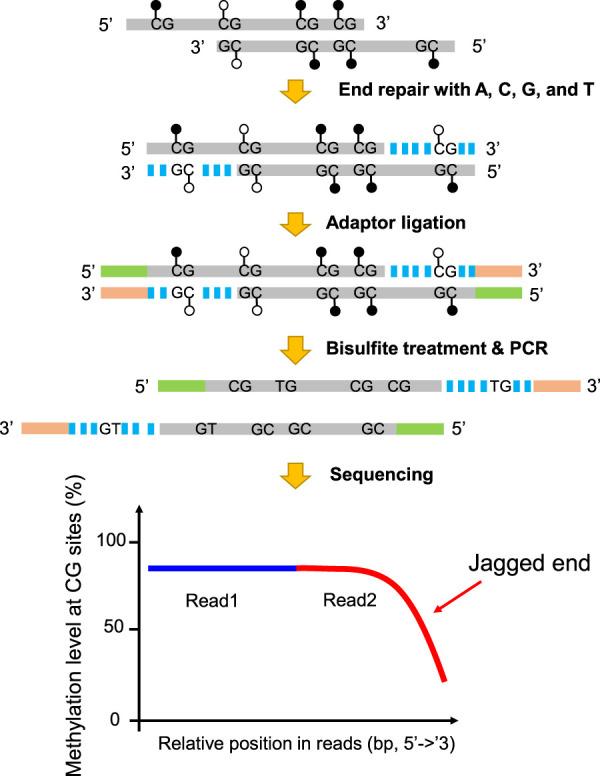
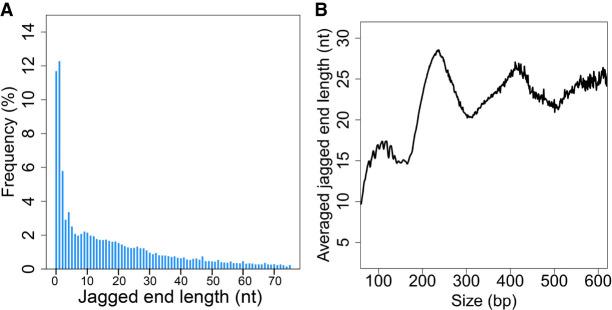
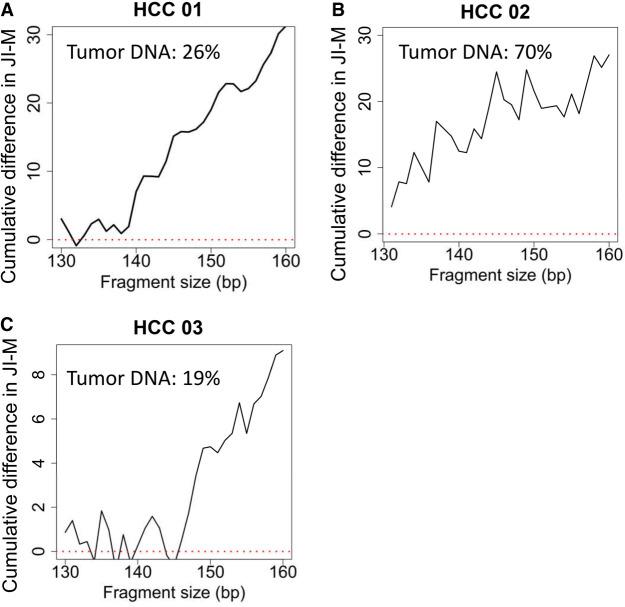
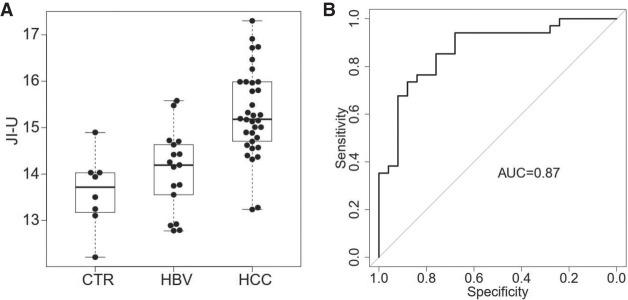
Cell-free DNA in plasma has been used for noninvasive prenatal testing and cancer liquid biopsy. The physical properties of cell-free DNA fragments in plasma, such as fragment sizes and ends, have attracted much recent interest, leading to the emerging field of cell-free DNA fragmentomics. However, one aspect of plasma DNA fragmentomics as to whether double-stranded plasma molecules might carry single-stranded ends, termed a jagged end in this study, remains underexplored. We have developed two approaches for investigating the presence of jagged ends in a plasma DNA pool. These approaches utilized DNA end repair to introduce differential methylation signals between the original sequence and the jagged ends, depending on whether unmethylated or methylated cytosines were used in the DNA end-repair procedure. The majority of plasma DNA molecules (87.8%) were found to bear jagged ends. The jaggedness varied according to plasma DNA fragment sizes and appeared to be in association with nucleosomal patterns. In the plasma of pregnant women, the jaggedness of fetal DNA molecules was higher than that of the maternal counterparts. The jaggedness of plasma DNA correlated with the fetal DNA fraction. Similarly, in the plasma of cancer patients, tumor-derived DNA molecules in patients with hepatocellular carcinoma showed an elevated jaggedness compared with nontumoral DNA. In mouse models, knocking out of the gene reduced jaggedness, whereas knocking out of the gene enhanced jaggedness. Hence, plasma DNA jagged ends represent an intrinsic property of plasma DNA and provide a link between nuclease activities and the fragmentation of plasma DNA.
血浆中的游离 DNA 已被用于非侵入性产前检测和癌症液体活检。血浆中游离 DNA 片段的物理特性,如片段大小和末端,近来引起了广泛关注,导致了游离 DNA 片段组学这一新兴领域的出现。然而,血浆 DNA 片段组学的一个方面,即双链血浆分子是否可能带有单链末端,在本研究中称为锯齿状末端,仍未得到充分探索。我们开发了两种方法来研究血浆 DNA 池中的锯齿状末端是否存在。这两种方法都利用 DNA 末端修复,根据 DNA 末端修复过程中使用的未甲基化或甲基化胞嘧啶,在原始序列和锯齿状末端之间引入不同的甲基化信号。研究发现,大多数血浆 DNA 分子(87.8%)都带有锯齿状末端。锯齿状程度根据血浆 DNA 片段大小而变化,并且似乎与核小体模式有关。在孕妇的血浆中,胎儿 DNA 分子的锯齿状程度高于母体对应物。血浆 DNA 的锯齿状程度与胎儿 DNA 分数相关。同样,在肝癌患者的血浆中,与非肿瘤 DNA 相比,肿瘤衍生的 DNA 分子显示出更高的锯齿状程度。在小鼠模型中,基因敲除会降低锯齿状程度,而基因敲除会增强锯齿状程度。因此,血浆 DNA 锯齿状末端代表血浆 DNA 的固有特性,并为核酸酶活性与血浆 DNA 片段化之间提供了联系。




 Zotero 插件