
肾脏损伤、炎症及疾病中的线粒体功能障碍:潜在治疗方法
Mitochondrial dysfunction in kidney injury, inflammation, and disease: Potential therapeutic approaches.
作者信息
Bhatia Divya, Capili Allyson, Choi Mary E
机构信息
Division of Nephrology and Hypertension, Joan and Sanford I. Weill Department of Medicine, New York, NY, USA.
Department of Medicine, NewYork-Presbyterian Hospital/Weill Cornell Medicine, New York, NY, USA.
出版信息
Kidney Res Clin Pract. 2020 Sep 30;39(3):244-258. doi: 10.23876/j.krcp.20.082.
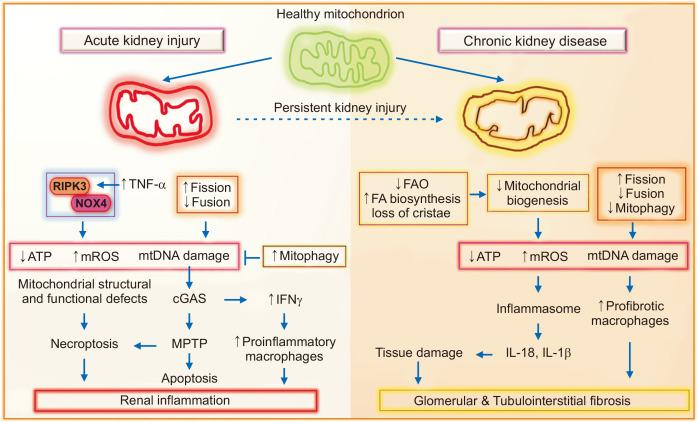
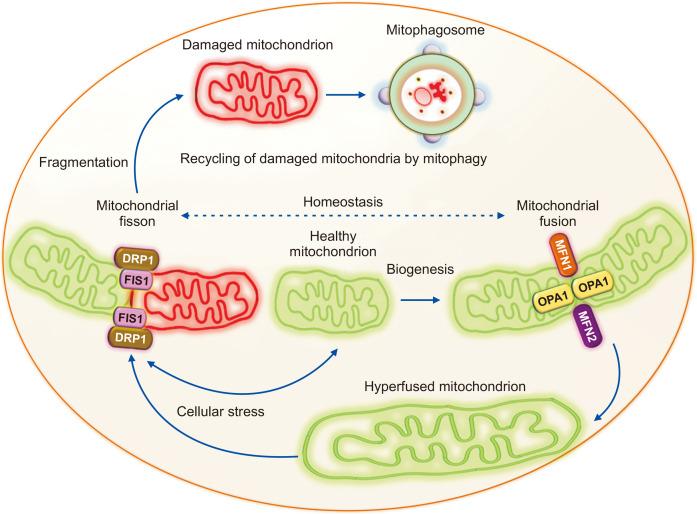
Mitochondria are energy-producing organelles that not only satisfy the high metabolic demands of the kidney but sense and respond to kidney injury-induced oxidative stress and inflammation. Kidneys are rich in mitochondria. Mitochondrial dysfunction plays a critical role in the progression of acute kidney injury and chronic kidney disease. Mitochondrial responses to specific stimuli are highly regulated and synergistically modulated by tightly interconnected processes, including mitochondrial dynamics (fission, fusion) and mitophagy. The counterbalance between these processes is essential in maintaining a healthy network of mitochondria. Recent literature suggests that alterations in mitochondrial dynamics are implicated in kidney injury and the progression of kidney diseases. A decrease in mitochondrial fusion promotes fission-induced mitochondrial fragmentation, but a reduction in mitochondrial fission produces excessive mitochondrial elongation. The removal of dysfunctional mitochondria by mitophagy is crucial for their quality control. Defective mitochondrial function disrupts cellular redox potential and can cause cell death. Mitochondrial DNA derived from damaged cells also act as damage-associated molecular patterns to recruit immune cells and the inflammatory response can further exaggerate kidney injury. This review provides a comprehensive overview of the role of mitochondrial dysfunction in acute kidney injury and chronic kidney disease. We discuss the processes that control mitochondrial stress responses to kidney injury and review recent advances in understanding the role of mitochondrial dysfunction in inflammation and tissue damage through the use of different experimental models of kidney disease. We also describe potential mitochondria-targeted therapeutic approaches.
线粒体是产生能量的细胞器,不仅能满足肾脏对高代谢的需求,还能感知并应对肾脏损伤诱导的氧化应激和炎症。肾脏富含线粒体。线粒体功能障碍在急性肾损伤和慢性肾病的进展中起着关键作用。线粒体对特定刺激的反应受到高度调控,并通过紧密相连的过程协同调节,包括线粒体动力学(分裂、融合)和线粒体自噬。这些过程之间的平衡对于维持健康的线粒体网络至关重要。最近的文献表明,线粒体动力学的改变与肾脏损伤和肾脏疾病的进展有关。线粒体融合减少会促进分裂诱导的线粒体碎片化,但线粒体分裂减少会导致线粒体过度伸长。通过线粒体自噬清除功能失调的线粒体对其质量控制至关重要。线粒体功能缺陷会破坏细胞氧化还原电位并可能导致细胞死亡。来自受损细胞的线粒体DNA也作为损伤相关分子模式招募免疫细胞,炎症反应会进一步加剧肾脏损伤。本综述全面概述了线粒体功能障碍在急性肾损伤和慢性肾病中的作用。我们讨论了控制线粒体对肾脏损伤应激反应的过程,并回顾了通过使用不同的肾病实验模型在理解线粒体功能障碍在炎症和组织损伤中的作用方面的最新进展。我们还描述了潜在的针对线粒体的治疗方法。
 Zotero 插件