
新型 NSAID-CAI 杂合化合物在炎症和肺纤维化中的作用。
Effects of New NSAID-CAI Hybrid Compounds in Inflammation and Lung Fibrosis.
机构信息
Department of Neuroscience, Psychology, Drug Research and Child Health (NEUROFARBA), Pharmacology and Toxicology Section, University of Florence, Viale G. Pieraccini n. 6, 50139 Florence, Italy.
Faculty of Pharmacy, Department of Pharmaceutical Chemistry, Ege University Bornova, 35100 Izmir, Turkey.
出版信息
Biomolecules. 2020 Sep 10;10(9):1307. doi: 10.3390/biom10091307.
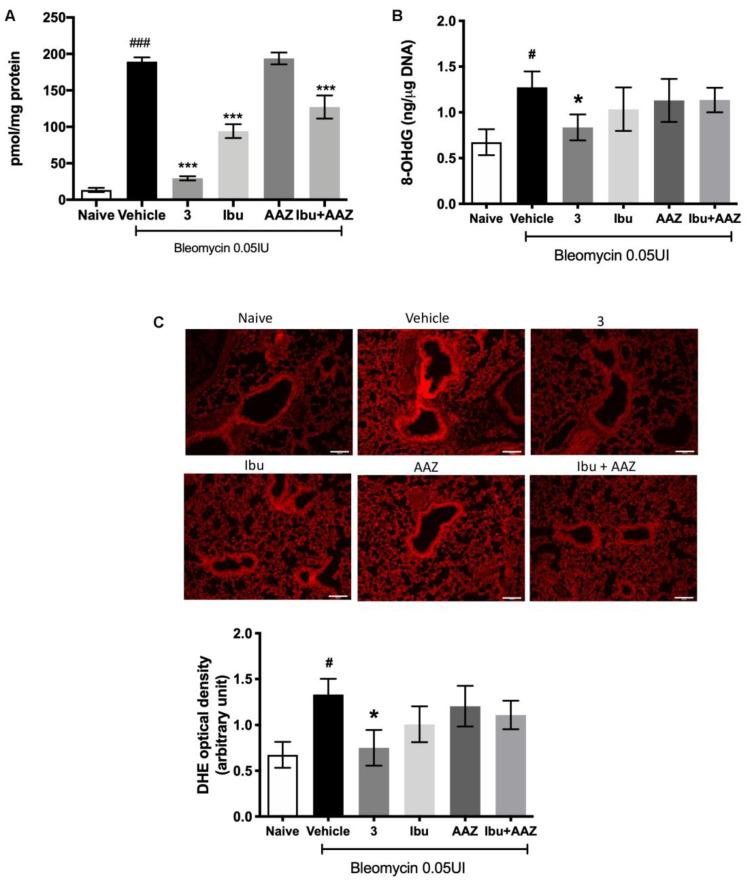
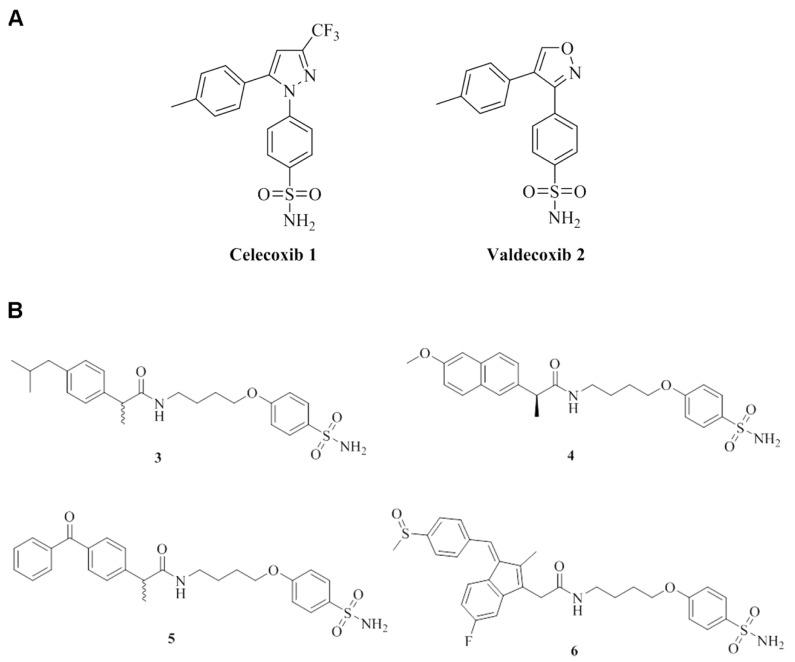
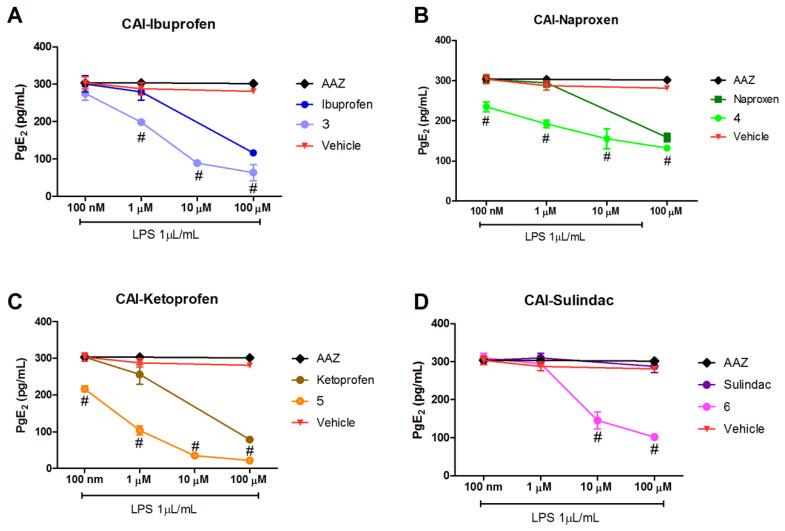
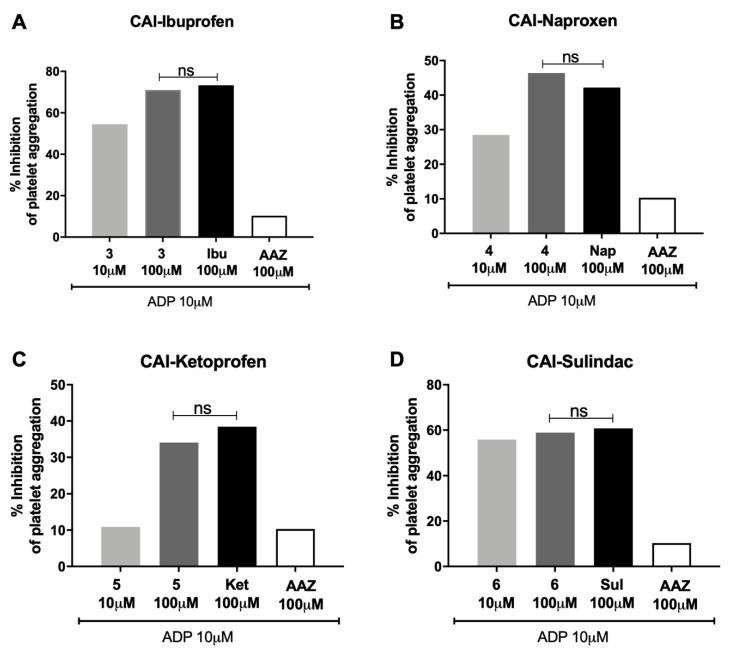
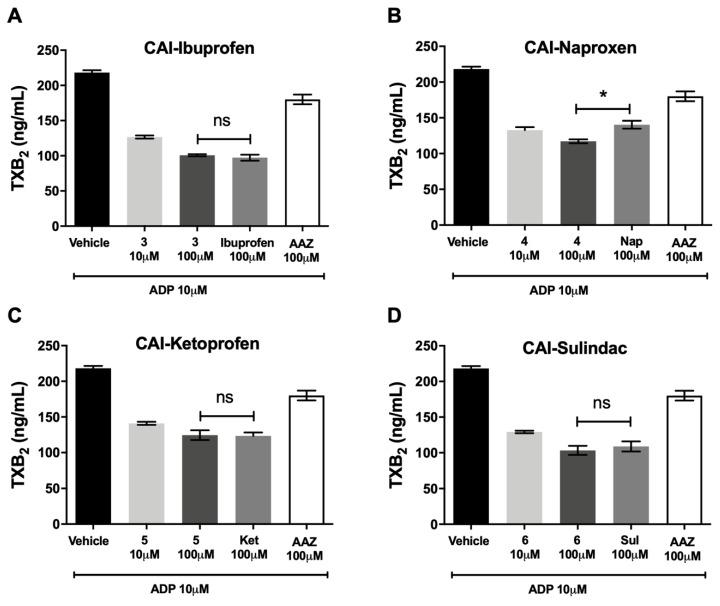
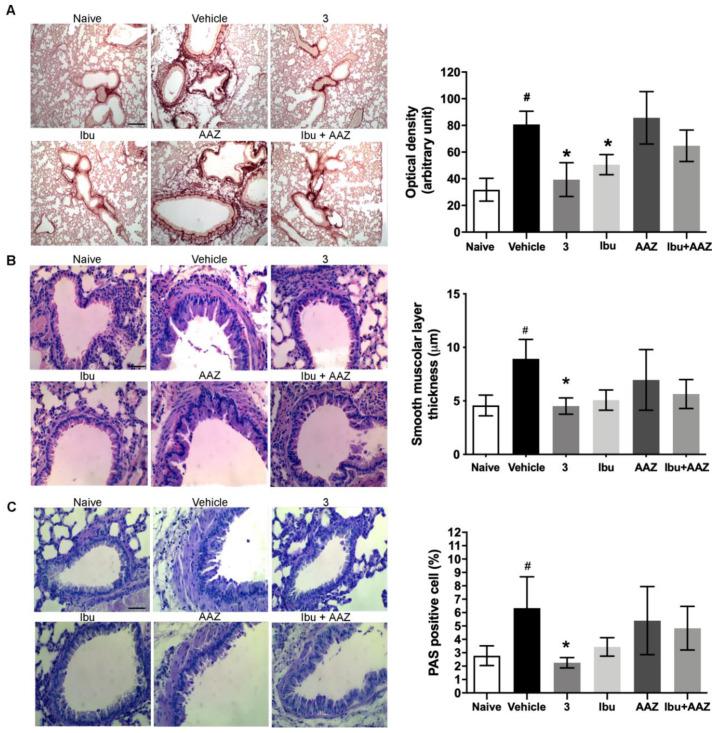
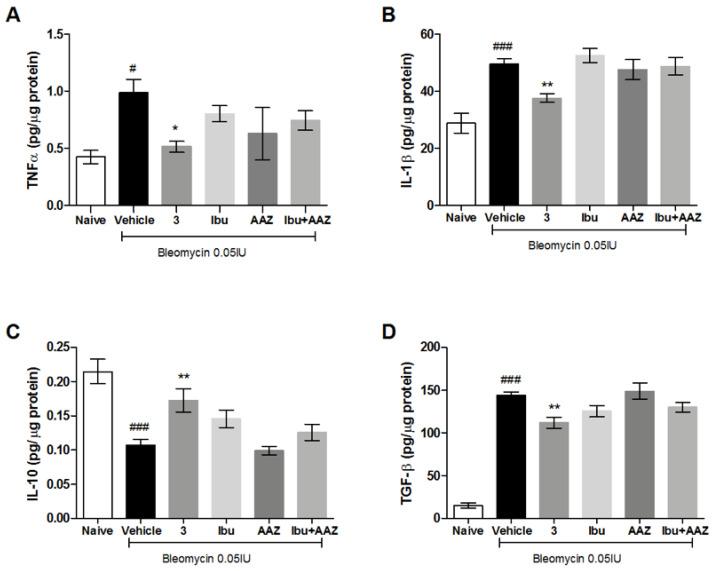
Pulmonary fibrosis is a severe lung disease with progressive worsening of dyspnea, characterized by chronic inflammation and remodeling of lung parenchyma. Carbonic anhydrases are a family of zinc-metallo-enzymes that catalyze the reversible interconversion of carbon-dioxide and water to bicarbonate and protons. Carbonic Anhydrase Inhibitor (CAI) exhibited anti-inflammatory effects in animals with permanent-middle-cerebral artery occlusion, arthritis and neuropathic pain. The pharmacological profile of a new class of hybrid compounds constituted by a CAI connected to a Nonsteroidal-Anti-Inflammatory Drug (NSAID) was studied in the modulation of inflammation and fibrosis. In-vitro tests were performed to assess their effects on cyclo-oxygenase enzyme (COX)-1 and COX-2, namely inhibition of platelet aggregation and thromboxane B2 production in the human-platelet-rich plasma, and reduction of Prostaglandin-E2 production in lipopolysaccharide-treated-RAW-264.7 macrophage cell line. The activity of compound , one of the most active, was studied in a model of bleomycin-induced lung fibrosis in C57BL/6 mice. The hybrid compounds showed a higher potency in inhibiting PGE production, but not in modifying the platelet aggregation and the TXB production in comparison to the reference molecules, indicating an increased activity in COX-2 inhibition. In the in-vivo murine model, the compound was more effective in decreasing inflammation, lung stiffness and oxidative stress in comparison to the reference drugs given alone or in association. In conclusion, these CAI-NSAID hybrid compounds are promising new anti-inflammatory drugs for the treatment of lung chronic inflammatory diseases.
肺纤维化是一种严重的肺部疾病,其特征是呼吸困难逐渐加重,表现为肺部慢性炎症和重塑。碳酸酐酶是一类锌金属酶,可催化二氧化碳和水可逆地相互转化为碳酸氢盐和质子。碳酸酐酶抑制剂(CAI)在永久性大脑中动脉闭塞、关节炎和神经病理性疼痛的动物模型中表现出抗炎作用。研究了一类新型混合化合物的药理学特性,该化合物由连接到非甾体抗炎药(NSAID)的 CAI 组成,用于调节炎症和纤维化。进行了体外试验以评估它们对环加氧酶酶(COX)-1 和 COX-2 的影响,即在富含人血小板的血浆中抑制血小板聚集和血栓素 B2 的产生,以及在脂多糖处理的 RAW-264.7 巨噬细胞系中减少前列腺素 E2 的产生。最活跃的化合物之一的活性在博来霉素诱导的 C57BL/6 小鼠肺纤维化模型中进行了研究。与参考分子相比,混合化合物在抑制 PGE 产生方面具有更高的效力,但在改变血小板聚集和 TXB 产生方面没有效力,表明 COX-2 抑制活性增加。在体内小鼠模型中,与单独或联合使用的参考药物相比,化合物 可更有效地降低炎症、肺僵硬和氧化应激。总之,这些 CAI-NSAID 混合化合物是治疗肺部慢性炎症性疾病的有前途的新型抗炎药物。

 Zotero 插件