
检测创伤性脑损伤小鼠模型中的细胞外三磷酸腺苷。
Detection of Extracellular Adenosine Triphosphate in a Mouse Model of Traumatic Brain Injury.
机构信息
Department of Neuroscience, Mayo Clinic Graduate School of Biomedical Sciences, Mayo Clinic College of Medicine, Mayo Clinic, Jacksonville, Florida, USA.
Neuroscience PhD Program, Mayo Clinic Graduate School of Biomedical Sciences, Mayo Clinic College of Medicine, Mayo Clinic, Jacksonville, Florida, USA.
出版信息
J Neurotrauma. 2021 Mar;38(5):655-664. doi: 10.1089/neu.2020.7226. Epub 2020 Oct 19.
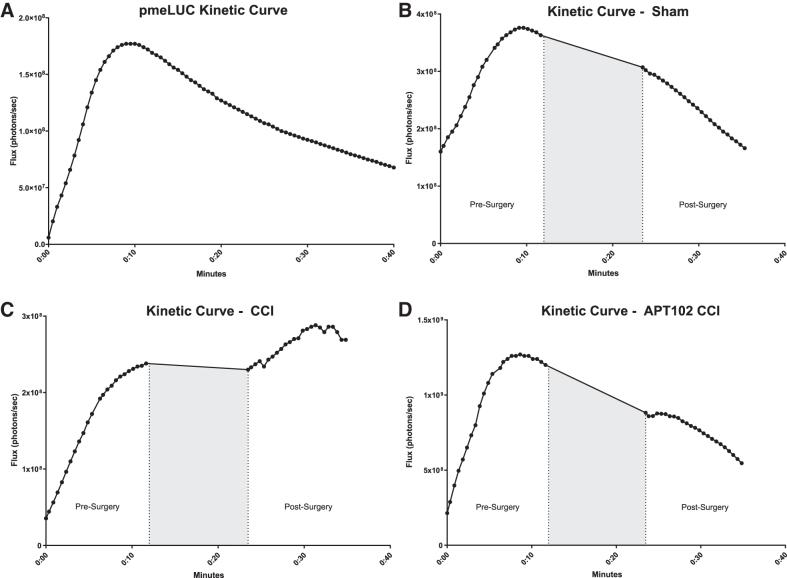
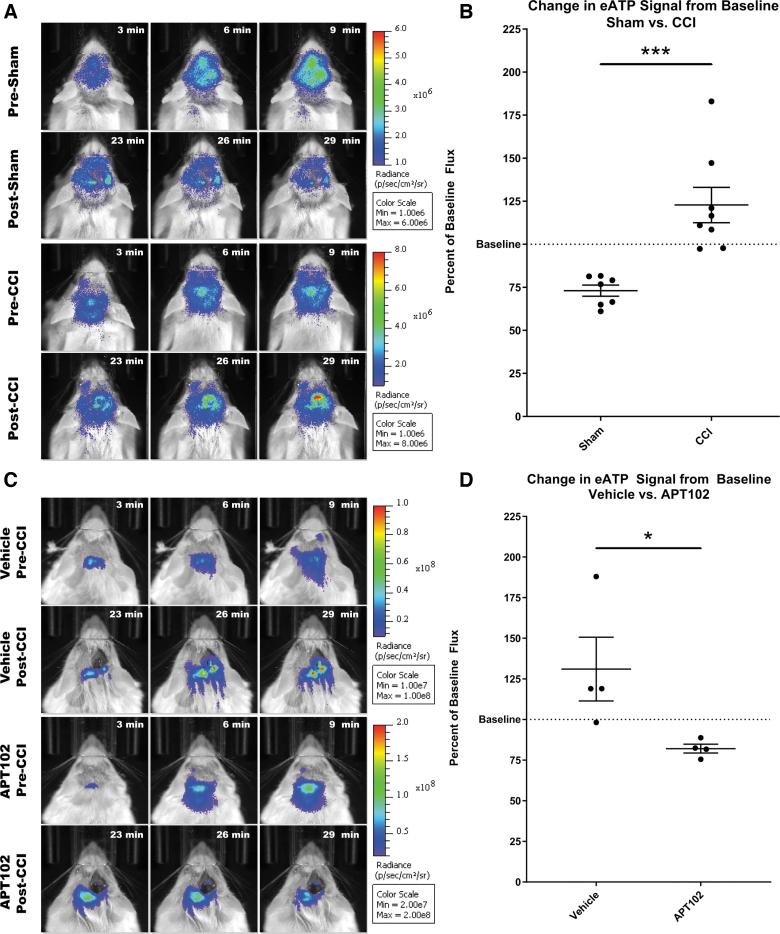
Traumatic brain injury (TBI) is traditionally characterized by primary and secondary injury phases, both contributing to pathological and morphological changes. The mechanisms of damage and chronic consequences of TBI remain to be fully elucidated, but synaptic homeostasis disturbances and impaired energy metabolism are proposed to be a major contributor. It has been proposed that an increase of extracellular (eATP) adenosine triphosphate (ATP) in the area immediately surrounding impact may play a pivotal role in this sequence of events. After tissue injury, rupture of cell membranes allows release of intracellular ATP into the extracellular space, triggering a cascade of toxic events and inflammation. ATP is a ubiquitous messenger; however, simple and reliable techniques to measure its concentration have proven elusive. Here, we integrate a sensitive bioluminescent eATP sensor known as pmeLUC, with a controlled cortical impact mouse model to monitor eATP changes in a living animal after injury. Using the pmeLUC probe, a rapid increase of eATP is observed proximal to the point of impact within minutes of the injury. This event is significantly attenuated when animals are pretreated with an ATP hydrolyzing agent (apyrase) before surgery, confirming the contribution of eATP. This new eATP reporter could be useful for understanding the role of eATP in the pathogenesis in TBI and may identify a window of opportunity for therapeutic intervention.
创伤性脑损伤 (TBI) 传统上分为原发性和继发性损伤两个阶段,两者都导致了病理和形态学的变化。TBI 的损伤机制和慢性后果仍有待充分阐明,但突触稳态紊乱和能量代谢受损被认为是主要原因。有人提出,损伤区域周围细胞外 (eATP) 三磷酸腺苷 (ATP) 的增加可能在这一系列事件中起关键作用。组织损伤后,细胞膜破裂会导致细胞内 ATP 释放到细胞外空间,引发一连串的毒性事件和炎症。ATP 是一种无处不在的信使;然而,证明简单可靠的技术来测量其浓度是难以实现的。在这里,我们将一种称为 pmeLUC 的敏感生物发光 eATP 传感器与受控皮质撞击小鼠模型相结合,以监测损伤后活体内 eATP 的变化。使用 pmeLUC 探针,在损伤后几分钟内即可观察到靠近撞击点的 eATP 迅速增加。当动物在手术前用 ATP 水解酶 (apyrase) 预处理时,这种情况会明显减轻,这证实了 eATP 的作用。这种新的 eATP 报告器可用于了解 eATP 在 TBI 发病机制中的作用,并可能为治疗干预提供机会窗口。

 Zotero 插件