
高脂饮食大鼠肝脏组织中运动和雷帕霉素对能量代谢基因表达的作用。
Role of exercise and rapamycin on the expression of energy metabolism genes in liver tissues of rats fed a high‑fat diet.
机构信息
Department of Sports Medicine, Guangzhou Sport University, Guangzhou, Guangdong 510150, P.R. China.
出版信息
Mol Med Rep. 2020 Oct;22(4):2932-2940. doi: 10.3892/mmr.2020.11362. Epub 2020 Jul 28.
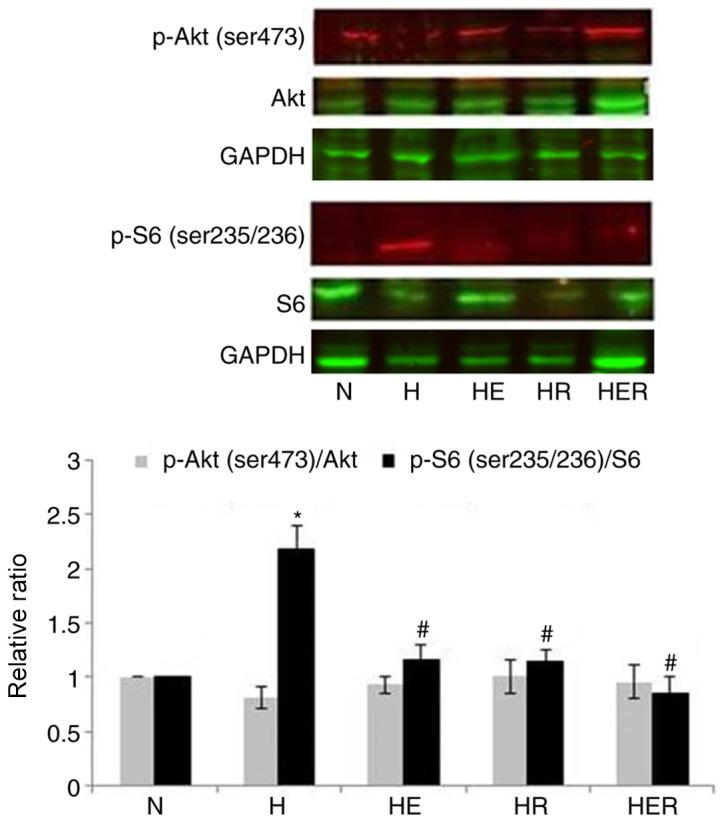
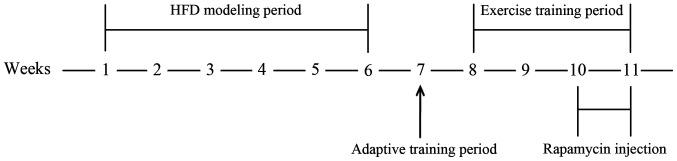
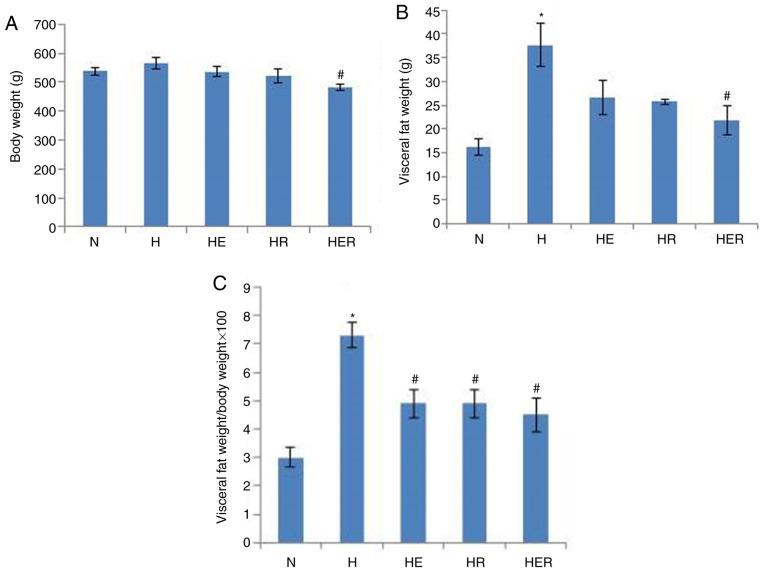
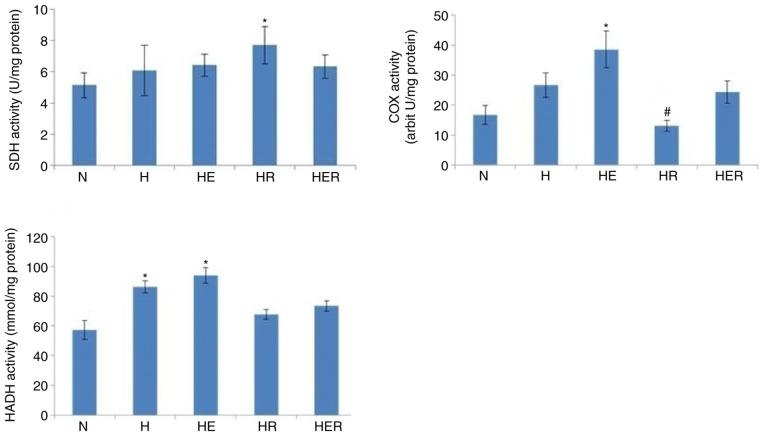
The mTOR pathway serves an important role in the development of insulin resistance induced by obesity. Exercise improves obesity‑associated insulin resistance and hepatic energy metabolism; however, the precise mechanism of this process remains unknown. Therefore, the present study investigated the role of rapamycin, an inhibitor of mTOR, on exercise‑induced expression of hepatic energy metabolism genes in rats fed a high‑fat diet (HFD). A total of 30 male rats were divided into the following groups: Normal group (n=6) fed chow diets and HFD group (n=24) fed an HFD for 6 weeks. The HFD rats performed exercise adaptation for 1 week and were randomly divided into the four following groups (each containing six rats): i) Group of HFD rats with sedentary (H group); ii) group of HFD rats with exercise (HE group); iii) group of HFD rats with rapamycin (HR group); and iv) group of HFD rats with exercise and rapamycin (HER group). Both HE and HER rats were placed on incremental treadmill training for 4 weeks (from week 8‑11). Both HR and HER rats were injected with rapamycin intraperitoneally at the dose of 2 mg/kg once a day for 2 weeks (from week 10‑11). All rats were sacrificed following a 12‑16 h fasting period at the end of week 11. The levels of mitochondrial and oxidative enzyme activities, as well as of the expression of genes involved in energy metabolism were assessed in liver tissues. Biochemical assays and oil red staining were used to assess the content of hepatic triglycerides (TGs). The results indicated that exercise, but not rapamycin, reduced TG content in the liver of HFD rats. Further analysis indicated that rapamycin reduced the activity of cytochrome c oxidase, but not the activities of succinate dehydrogenase and β‑hydroxyacyl‑CoA dehydrogenase in the liver of HFD rats. Exercise significantly upregulated the mRNA expression of peroxisome proliferator‑activated receptor γ coactivator 1 β, while rapamycin exhibited no effect on the mRNA expression levels of hepatic transcription factors associated with energy metabolism enzymes in the liver of HFD rats. Collectively, the results indicated that exercise reduced TG content and upregulated mitochondrial metabolic gene expression in the liver of HFD rats. Moreover, this mechanism may not involve the mTOR pathway.
mTOR 通路在肥胖诱导的胰岛素抵抗的发展中起着重要作用。运动可改善肥胖相关的胰岛素抵抗和肝脏能量代谢;然而,这一过程的确切机制尚不清楚。因此,本研究探讨了雷帕霉素(mTOR 的抑制剂)在高脂饮食喂养大鼠运动诱导的肝脏能量代谢基因表达中的作用。
将 30 只雄性大鼠分为以下两组:正常组(n=6)给予常规饮食和高脂饮食组(n=24)给予高脂饮食 6 周。高脂饮食大鼠进行 1 周的运动适应,然后随机分为以下 4 组(每组 6 只):i)高脂饮食大鼠静息组(H 组);ii)高脂饮食大鼠运动组(HE 组);iii)高脂饮食大鼠雷帕霉素组(HR 组);iv)高脂饮食大鼠运动和雷帕霉素组(HER 组)。HE 和 HER 大鼠均进行递增式跑步机训练 4 周(第 8-11 周)。HR 和 HER 大鼠在第 10-11 周每天腹腔注射雷帕霉素 2mg/kg,共 2 周。所有大鼠在第 11 周禁食 12-16h 后处死。检测肝组织中线粒体和氧化酶活性以及能量代谢相关基因的表达水平。生化测定和油红染色法检测肝组织中肝三酰甘油(TG)含量。
结果表明,运动而非雷帕霉素可降低高脂饮食大鼠肝组织中 TG 的含量。进一步分析表明,雷帕霉素降低了高脂饮食大鼠肝组织中细胞色素 c 氧化酶的活性,但不降低琥珀酸脱氢酶和β-羟酰基辅酶 A 脱氢酶的活性。运动显著上调过氧化物酶体增殖物激活受体 γ 共激活因子 1β的 mRNA 表达,而雷帕霉素对高脂饮食大鼠肝组织中与能量代谢酶相关的肝转录因子的 mRNA 表达水平无影响。
综上所述,运动降低了高脂饮食大鼠肝组织中 TG 含量,上调了线粒体代谢基因的表达。此外,这一机制可能不涉及 mTOR 通路。



 Zotero 插件