
缺乏激酶 S6k1 可模拟慢性耐力运动对葡萄糖耐量和肌肉氧化应激的影响。
Absence of the kinase S6k1 mimics the effect of chronic endurance exercise on glucose tolerance and muscle oxidative stress.
机构信息
Institute for Clinical Biochemistry and Pathobiochemistry, German Diabetes Center, Düsseldorf, Germany; German Center for Diabetes Research, München-Neuherberg, Germany.
Institute for Clinical Diabetology, German Diabetes Center, Düsseldorf, Germany; German Center for Diabetes Research, München-Neuherberg, Germany.
出版信息
Mol Metab. 2017 Nov;6(11):1443-1453. doi: 10.1016/j.molmet.2017.08.008. Epub 2017 Aug 25.
OBJECTIVE
Ribosomal protein S6 Kinase-1 (S6K1) has been linked to resistance exercise-mediated improvements in glycemia. We hypothesized that S6K1 may also play a role in regulating glycemic control in response to endurance exercise training.
METHODS
S6k1-knockout (S6K1KO) and WT mice on a 60 cal% high-fat diet were trained for 4 weeks on treadmills, metabolically phenotyped, and compared to sedentary controls.
RESULTS
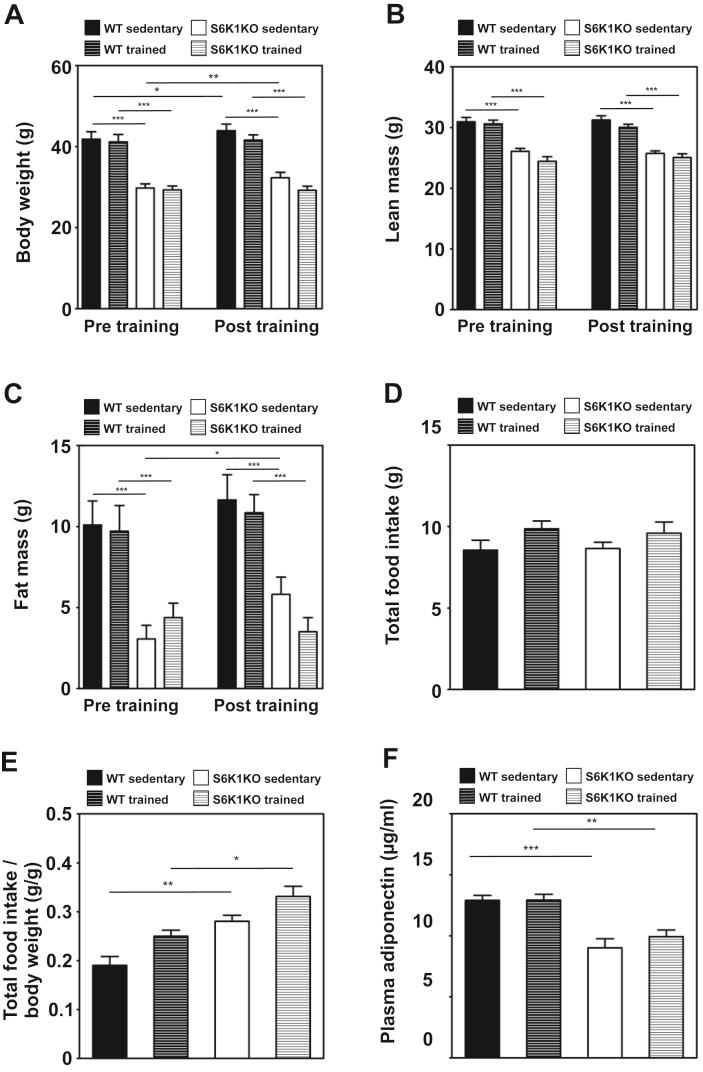
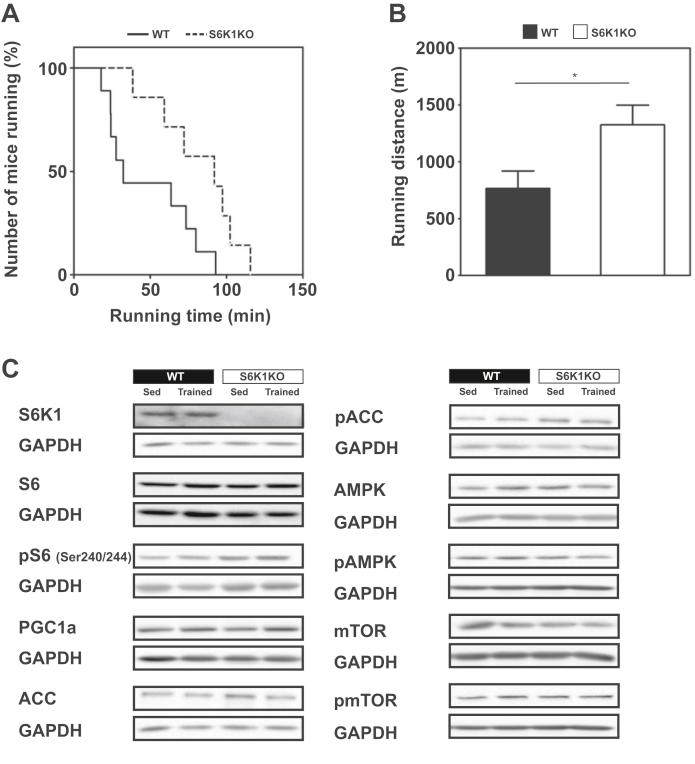
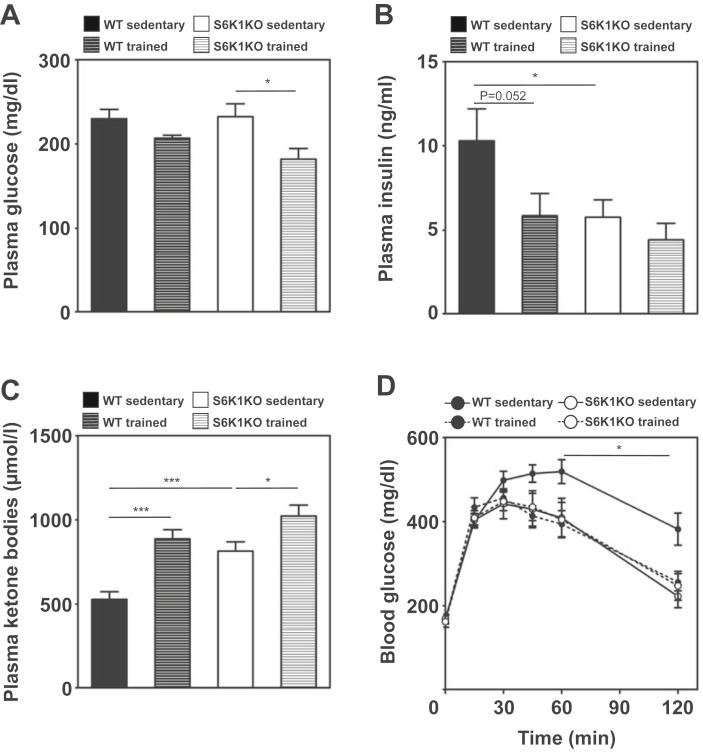
WT mice showed improved glucose tolerance after training. In contrast, S6K1KO mice displayed equally high glucose tolerance already in the sedentary state with no further improvement after training. Similarly, training decreased mitochondrial ROS production in skeletal muscle of WT mice, whereas ROS levels were already low in the sedentary S6K1KO mice with no further decrease after training. Nevertheless, trained S6K1KO mice displayed an increased running capacity compared to trained WT mice, as well as substantially reduced triglyceride contents in liver and skeletal muscle. The improvements in glucose handling and running endurance in S6K1KO mice were associated with markedly increased ketogenesis and a higher respiratory exchange ratio.
CONCLUSIONS
In high-fat fed mice, loss of S6K1 mimics endurance exercise training by reducing mitochondrial ROS production and upregulating oxidative utilization of ketone bodies. Pharmacological targeting of S6K1 may improve the outcome of exercise-based interventions in obesity and diabetes.
目的
核糖体蛋白 S6 激酶-1(S6K1)与抵抗运动介导的血糖改善有关。我们假设 S6K1 也可能在调节对耐力运动训练的血糖控制中发挥作用。
方法
在高脂肪饮食(60%卡路里)上的 S6k1 敲除(S6K1KO)和 WT 小鼠在跑步机上接受了 4 周的训练,进行了代谢表型分析,并与久坐对照组进行了比较。
结果
WT 小鼠在训练后表现出改善的葡萄糖耐量。相比之下,S6K1KO 小鼠在久坐状态下已经表现出同样高的葡萄糖耐量,训练后没有进一步改善。同样,训练降低了 WT 小鼠骨骼肌中的线粒体 ROS 产生,而在久坐的 S6K1KO 小鼠中,ROS 水平已经较低,训练后没有进一步降低。然而,与训练后的 WT 小鼠相比,训练后的 S6K1KO 小鼠表现出更高的跑步能力,以及肝脏和骨骼肌中甘油三酯含量的显著降低。S6K1KO 小鼠在葡萄糖处理和跑步耐力方面的改善与酮体生成的显著增加和呼吸交换率的升高有关。
结论
在高脂肪喂养的小鼠中,S6K1 的缺失通过降低线粒体 ROS 产生和上调酮体的氧化利用来模拟耐力运动训练。S6K1 的药理学靶向可能改善肥胖和糖尿病患者基于运动的干预措施的结果。



 Zotero 插件