
COVID19XrayNet:一种基于少量胸部 X 光图像的 COVID-19 检测问题的两步迁移学习模型。
COVID19XrayNet: A Two-Step Transfer Learning Model for the COVID-19 Detecting Problem Based on a Limited Number of Chest X-Ray Images.
机构信息
BioKnow Health Informatics Lab, College of Computer Science and Technology, Key Laboratory of Symbolic Computation and Knowledge Engineering of Ministry of Education, Jilin University, Changchun, 130012, Jilin, China.
School of Computing and Information, University of Pittsburgh, 135 N Bellefield Ave, Pittsburgh, PA, 15213, USA.
出版信息
Interdiscip Sci. 2020 Dec;12(4):555-565. doi: 10.1007/s12539-020-00393-5. Epub 2020 Sep 21.
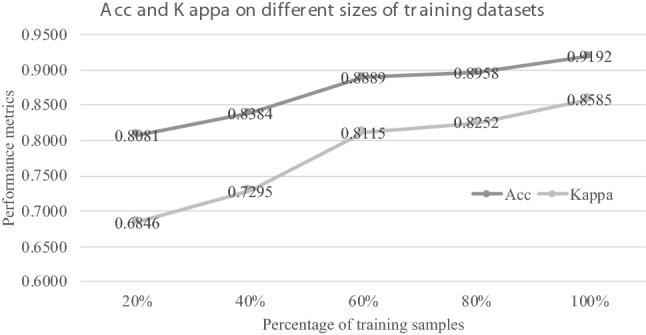
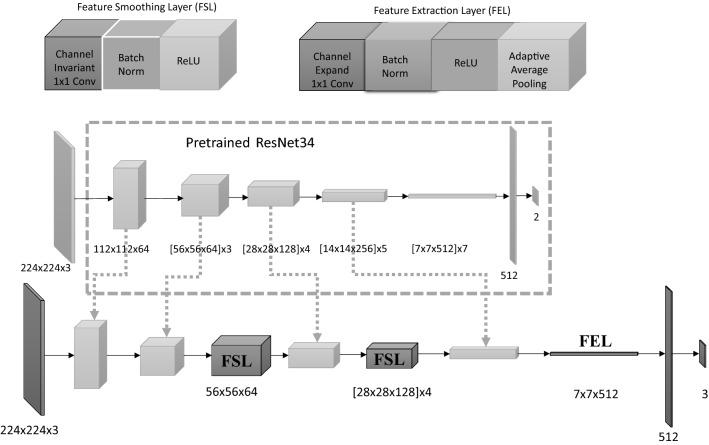
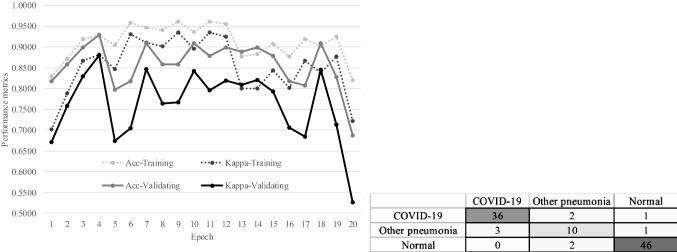
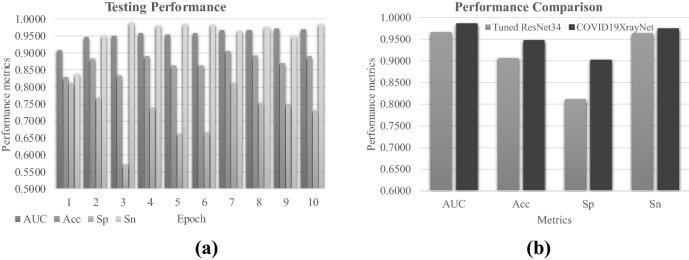
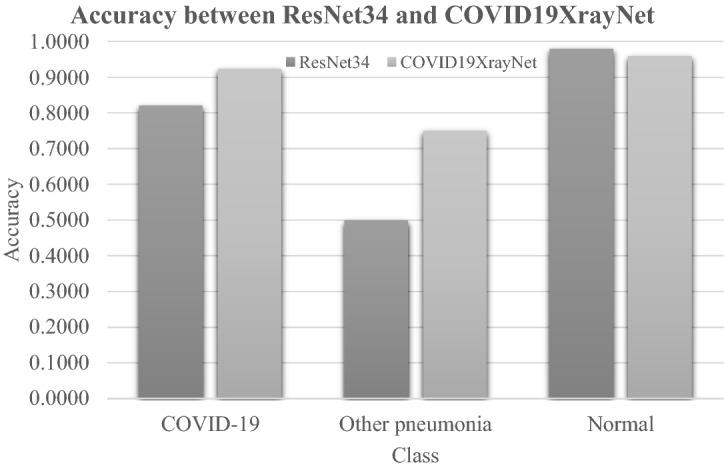
The novel coronavirus severe acute respiratory syndrome coronavirus 2 (SARS-CoV-2) has caused a major pandemic outbreak recently. Various diagnostic technologies have been under active development. The novel coronavirus disease (COVID-19) may induce pulmonary failures, and chest X-ray imaging becomes one of the major confirmed diagnostic technologies. The very limited number of publicly available samples has rendered the training of the deep neural networks unstable and inaccurate. This study proposed a two-step transfer learning pipeline and a deep residual network framework COVID19XrayNet for the COVID-19 detection problem based on chest X-ray images. COVID19XrayNet firstly tunes the transferred model on a large dataset of chest X-ray images, which is further tuned using a small dataset of annotated chest X-ray images. The final model achieved 0.9108 accuracy. The experimental data also suggested that the model may be improved with more training samples being released. COVID19XrayNet, a two-step transfer learning framework designed for biomedical images.
新型冠状病毒严重急性呼吸综合征冠状病毒 2(SARS-CoV-2)最近引发了重大的大流行疫情爆发。各种诊断技术正在积极开发中。新型冠状病毒病(COVID-19)可能导致肺部衰竭,胸部 X 射线成像成为主要的确诊诊断技术之一。非常有限的公开可用样本数量使得深度神经网络的训练不稳定且不准确。本研究提出了一种两步迁移学习管道和一个深度残差网络框架 COVID19XrayNet,用于基于胸部 X 射线图像的 COVID-19 检测问题。COVID19XrayNet 首先在一个大型胸部 X 射线图像数据集上调整转移模型,然后使用一个小型注释胸部 X 射线图像数据集进一步调整。最终模型达到了 0.9108 的准确率。实验数据还表明,随着更多训练样本的发布,该模型可能会得到进一步改进。COVID19XrayNet 是一个专为生物医学图像设计的两步迁移学习框架。


 Zotero 插件