
染色体构象捕获的宏观与微观
The macro and micro of chromosome conformation capture.
机构信息
Department of Biological Engineering, Massachusetts Institute of Technology, Cambridge, Massachusetts, USA.
出版信息
Wiley Interdiscip Rev Dev Biol. 2021 Nov;10(6):e395. doi: 10.1002/wdev.395. Epub 2020 Sep 28.
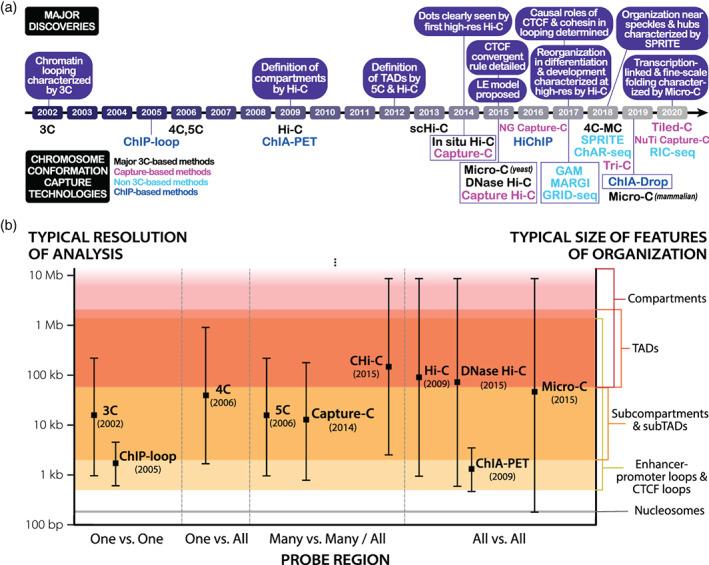
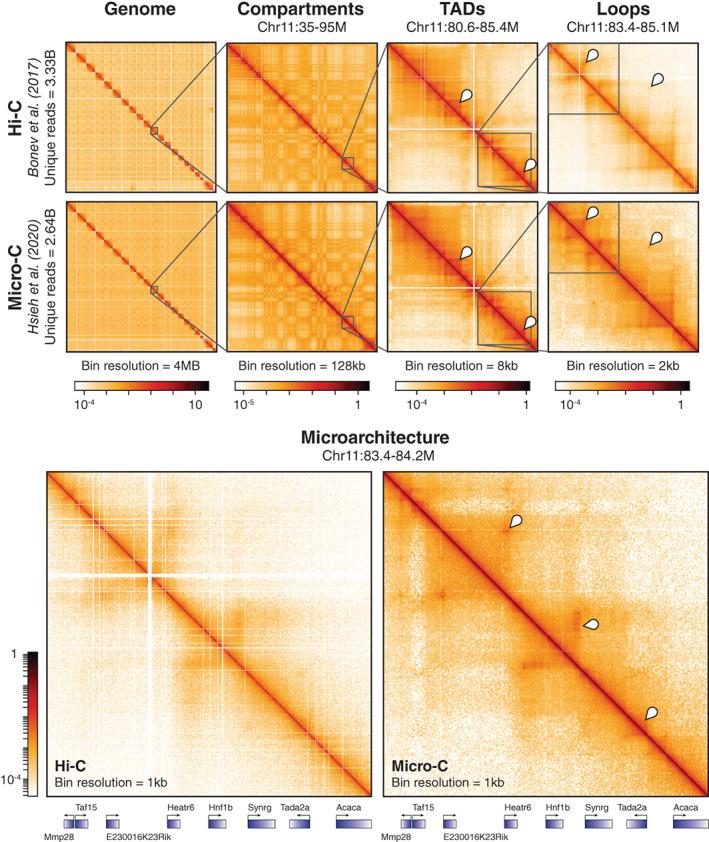
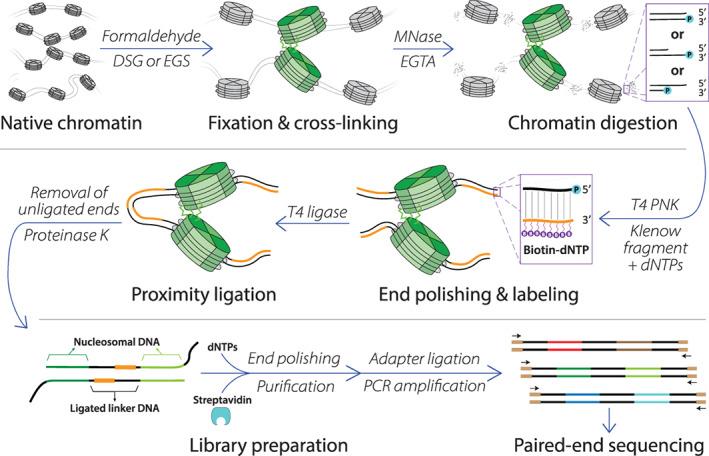
The 3D organization of the genome facilitates gene regulation, replication, and repair, making it a key feature of genomic function and one that remains to be properly understood. Over the past two decades, a variety of chromosome conformation capture (3C) methods have delineated genome folding from megabase-scale compartments and topologically associating domains (TADs) down to kilobase-scale enhancer-promoter interactions. Understanding the functional role of each layer of genome organization is a gateway to understanding cell state, development, and disease. Here, we discuss the evolution of 3C-based technologies for mapping 3D genome organization. We focus on genomics methods and provide a historical account of the development from 3C to Hi-C. We also discuss ChIP-based techniques that focus on 3D genome organization mediated by specific proteins, capture-based methods that focus on particular regions or regulatory elements, 3C-orthogonal methods that do not rely on restriction digestion and proximity ligation, and methods for mapping the DNA-RNA and RNA-RNA interactomes. We consider the biological discoveries that have come from these methods, examine the mechanistic contributions of CTCF, cohesin, and loop extrusion to genomic folding, and detail the 3D genome field's current understanding of nuclear architecture. Finally, we give special consideration to Micro-C as an emerging frontier in chromosome conformation capture and discuss recent Micro-C findings uncovering fine-scale chromatin organization in unprecedented detail. This article is categorized under: Gene Expression and Transcriptional Hierarchies > Regulatory Mechanisms Gene Expression and Transcriptional Hierarchies > Gene Networks and Genomics.
基因组的 3D 组织有助于基因调控、复制和修复,是基因组功能的一个关键特征,也是一个有待深入理解的特征。在过去的二十年中,各种染色体构象捕获(3C)方法已经从兆碱基级别的隔室和拓扑关联域(TADs)描绘出基因组折叠到千碱基级别的增强子-启动子相互作用。了解基因组组织的每个层次的功能作用是理解细胞状态、发育和疾病的关键。在这里,我们讨论了基于 3C 的技术在绘制 3D 基因组组织方面的发展。我们专注于基因组学方法,并提供了从 3C 到 Hi-C 的发展历史。我们还讨论了基于 ChIP 的技术,这些技术专注于由特定蛋白质介导的 3D 基因组组织,基于捕获的方法专注于特定区域或调节元件,不依赖于限制酶消化和邻近连接的 3C 正交方法,以及用于绘制 DNA-RNA 和 RNA-RNA 互作组的方法。我们考虑了这些方法带来的生物学发现,研究了 CTCF、黏连蛋白和环挤出对基因组折叠的机制贡献,并详细介绍了 3D 基因组领域对核架构的当前理解。最后,我们特别考虑了 Micro-C 作为染色体构象捕获的新兴前沿,并讨论了最近的 Micro-C 发现,这些发现以前所未有的细节揭示了精细尺度的染色质组织。本文归类于:基因表达和转录层次结构 > 调控机制 基因表达和转录层次结构 > 基因网络和基因组学。

 Zotero 插件