
中国教学医院嗜麦芽窄食单胞菌感染的分子流行病学和危险因素。
Molecular epidemiology and risk factors of Stenotrophomonas maltophilia infections in a Chinese teaching hospital.
机构信息
Department of Clinical Laboratory, Obstetrics and Gynecology Hospital of Fudan University, 419 Fangxie Road, Shanghai, 200011, China.
Department of Laboratory Medicine, Renji Hospital, School of Medicine, Shanghai Jiao Tong University, Shanghai, 200001, China.
出版信息
BMC Microbiol. 2020 Sep 29;20(1):294. doi: 10.1186/s12866-020-01985-3.
BACKGROUND
Stenotrophomonas maltophilia (S. maltophilia) is an important opportunistic pathogen that can be isolated in hospitals. With the abuse of broad spectrum antibiotics and invasive surgical devices, the rate of S. maltophilia infection is increasing every year. This study was an epidemiological analysis of the clinical and molecular characteristics of S. maltophilia infection in a Chinese teaching hospital. The goal was to obtain a comprehensive understanding of the status of S. maltophilia infection to provide strong epidemiological data for the prevention and treatment of S. maltophilia infection.
RESULTS
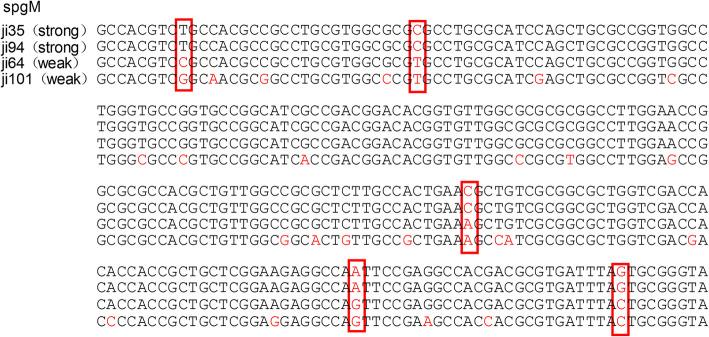
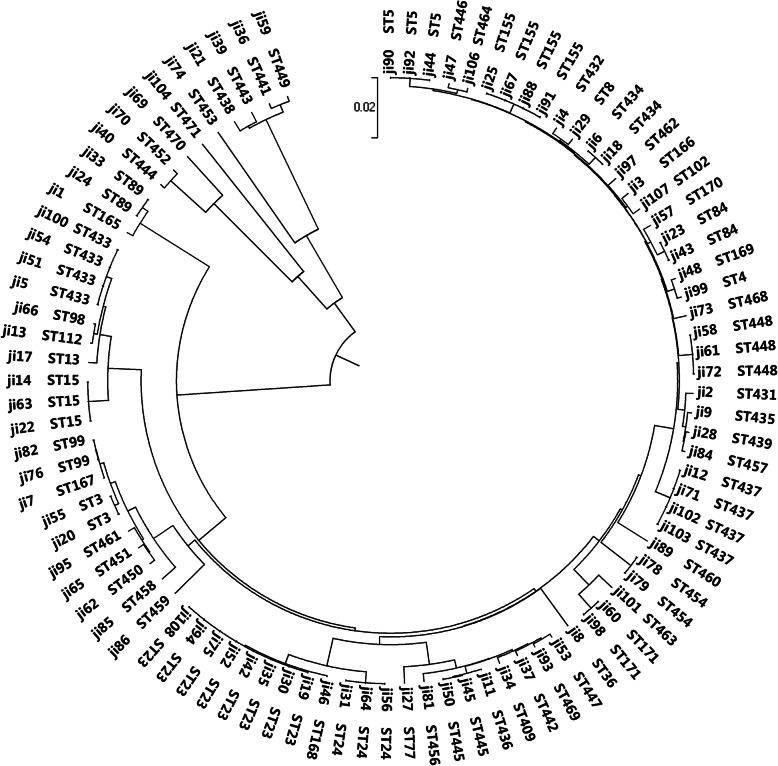
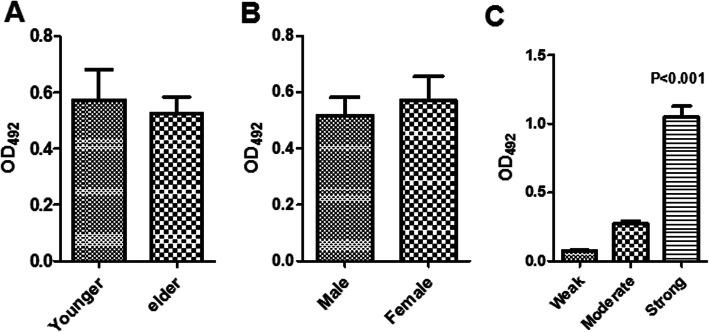
A total of 93 isolates from Renji Hospital affiliated with the Shanghai Jiaotong University School of Medicine were included, in which 62 isolates were from male patients. In addition, 81 isolates were isolated from sputum samples. A total of 86 patients had underlying diseases. All patients received antibiotics. Multilocus sequence typing (MLST) analysis indicated that 61 different sequence types (STs) were found (including 45 novel STs), and MLST did not show significantly dominant STs. Pulsed field gel electrophoresis (PFGE) results showed that 93 isolates could be divided into 73 clusters, and they also showed weak genetic linkages between isolates. The resistant rates to trimethoprim/sulfamethoxazole (TMP/SMX) and levofloxacin were 9.7 and 4.3%, respectively, and all isolates were susceptible to minocycline. Four virulence gene's loci Stmpr1, Stmpr2, Smf-1, and Smlt3773 were positive in 79.6, 91.4, 94.6, and 52.7% of the isolates, respectively. Three biofilm genes rmlA, spgM, and rpfF were positive in 82.8, 92.5, and 64.5% of the isolates, respectively. Mean biofilm forming level of OD was 0.54 ± 0.49. We did not find any significant difference between different genders and different age-groups. We retrospectively analyzed data from patients in the intensive care unit (ICU) and the control group. The independent risk factors of those who were infected in the ICU included immunosuppression and the increased antibiotic usage.
CONCLUSIONS
Most of the patients had prior medical usage histories and baseline diseases. The positive rate of virulence genes was high, the drug resistance rate of S. maltophilia was low, and the biofilm formation ability was strong. The increased use of antibiotics was an independent risk factor for S. maltophilia infection, which should receive more attention. No obvious clonal transmissions were found in the same departments.
背景
嗜麦芽寡养单胞菌(S. maltophilia)是一种重要的机会致病菌,可在医院中分离出来。随着广谱抗生素和侵入性手术器械的滥用,嗜麦芽寡养单胞菌感染的发生率逐年上升。本研究对中国教学医院嗜麦芽寡养单胞菌感染的临床和分子特征进行了流行病学分析,旨在全面了解嗜麦芽寡养单胞菌感染的现状,为嗜麦芽寡养单胞菌感染的防治提供有力的流行病学数据。
结果
共纳入上海交通大学医学院附属仁济医院 93 株分离株,其中 62 株来自男性患者。此外,81 株分离自痰标本。共有 86 例患者存在基础疾病,所有患者均接受了抗生素治疗。多位点序列分型(MLST)分析显示,共发现 61 种不同的序列型(ST)(包括 45 种新的 ST),MLST 未显示明显优势 ST。脉冲场凝胶电泳(PFGE)结果显示,93 株可分为 73 个克隆群,菌株之间遗传联系较弱。对甲氧苄啶/磺胺甲噁唑(TMP/SMX)和左氧氟沙星的耐药率分别为 9.7%和 4.3%,所有菌株均对米诺环素敏感。79.6%、91.4%、94.6%和 52.7%的分离株分别携带 Stmpr1、Stmpr2、Smf-1 和 Smlt3773 四个毒力基因座。82.8%、92.5%和 64.5%的分离株携带 rmlA、spgM 和 rpfF 三个生物膜基因。OD 值的平均生物膜形成水平为 0.54±0.49。我们没有发现不同性别和不同年龄组之间有任何显著差异。我们回顾性分析了 ICU 患者和对照组患者的数据。感染 ICU 的独立危险因素包括免疫抑制和抗生素使用增加。
结论
大多数患者有既往医疗用药史和基础疾病。毒力基因阳性率高,嗜麦芽寡养单胞菌耐药率低,生物膜形成能力强。抗生素使用增加是嗜麦芽寡养单胞菌感染的独立危险因素,应引起更多关注。同一科室未发现明显的克隆传播。
 Zotero 插件