
1990年至2017年全球、区域和国家肾癌负担及归因风险因素分析
The global, regional, and national burden of kidney cancer and attributable risk factor analysis from 1990 to 2017.
作者信息
Bai Xianguang, Yi Ming, Dong Bing, Zheng Xinhua, Wu Kongming
机构信息
Medical School of Pingdingshan University, Pingdingshan, Henan China.
Department of Oncology, Tongji Hospital of Tongji Medical College, Huazhong University of Science and Technology, Wuhan, Hubei China.
出版信息
Exp Hematol Oncol. 2020 Sep 29;9:27. doi: 10.1186/s40164-020-00181-3. eCollection 2020.
BACKGROUND
Kidney cancer's incidence and mortality vary in different regions and countries. To compare and interpret kidney cancer's burden and change trends in the globe and in different countries, we conducted this study to report the global kidney cancer burden and attributable risk factors.
METHODS
Data about kidney cancer's incidence, death, disability-adjusted life-year (DALY) were extracted from the Global Burden of Diseases 2017. Besides, social-demographic index (SDI) values were adopted to investigate the correlation between kidney cancer's burden and social development degrees.
RESULTS
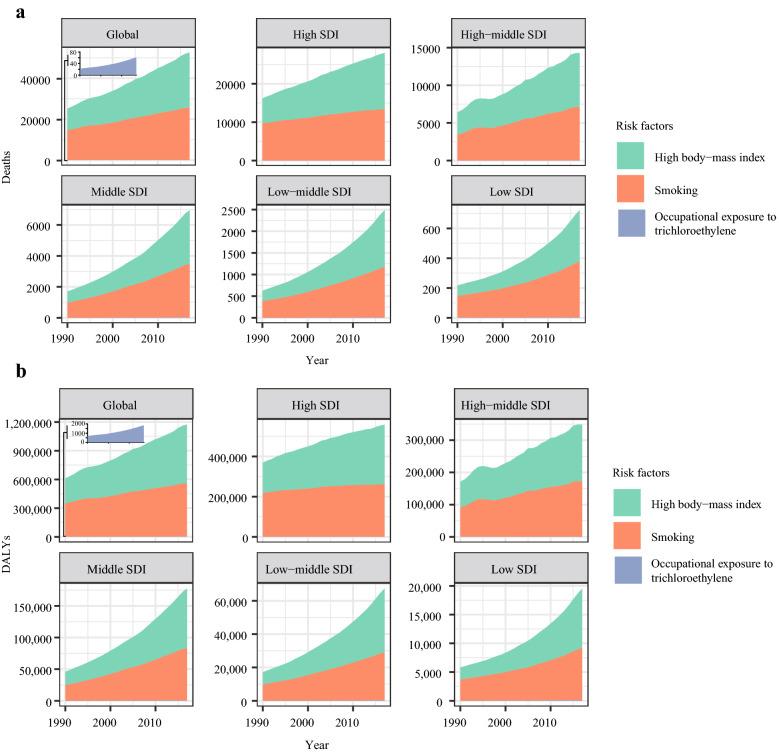
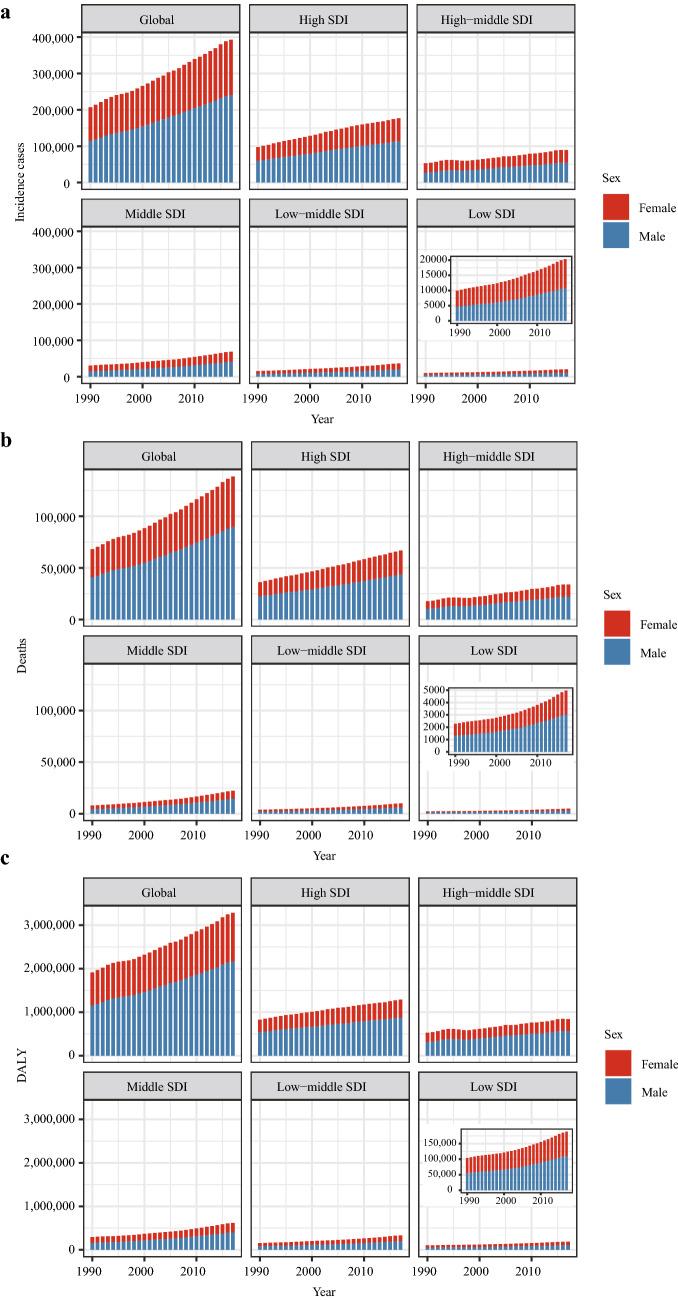
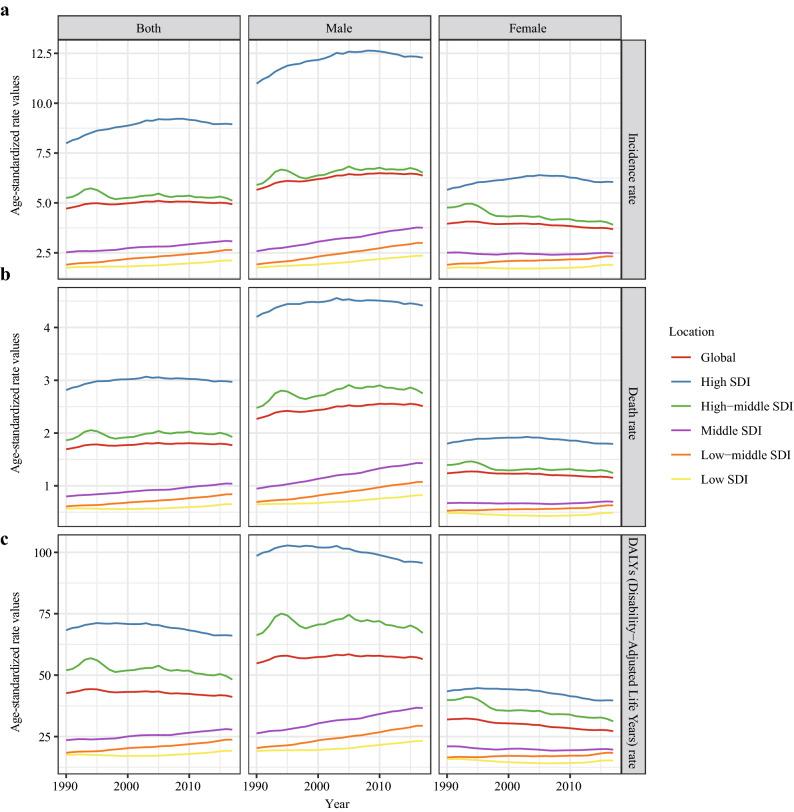
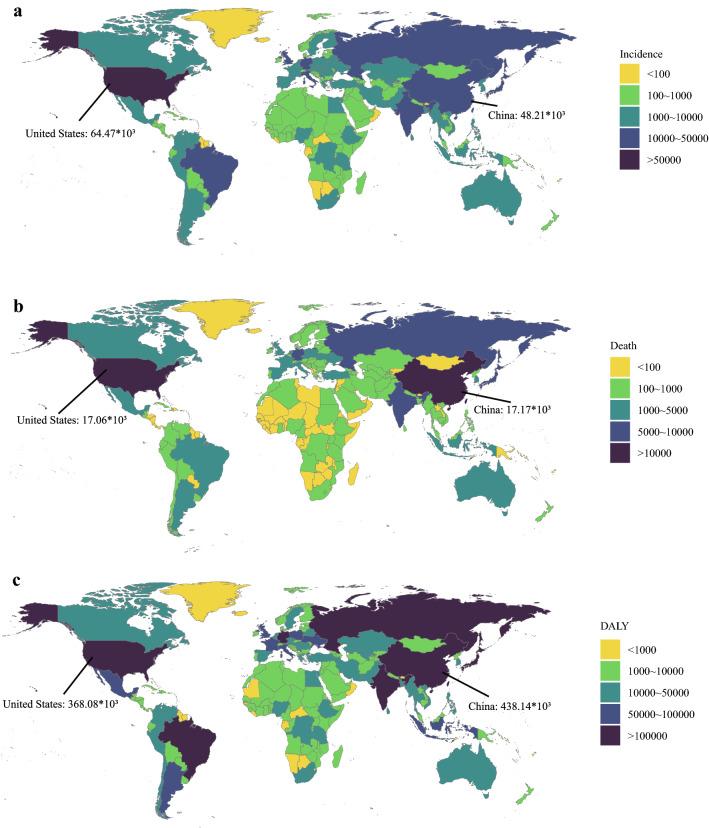
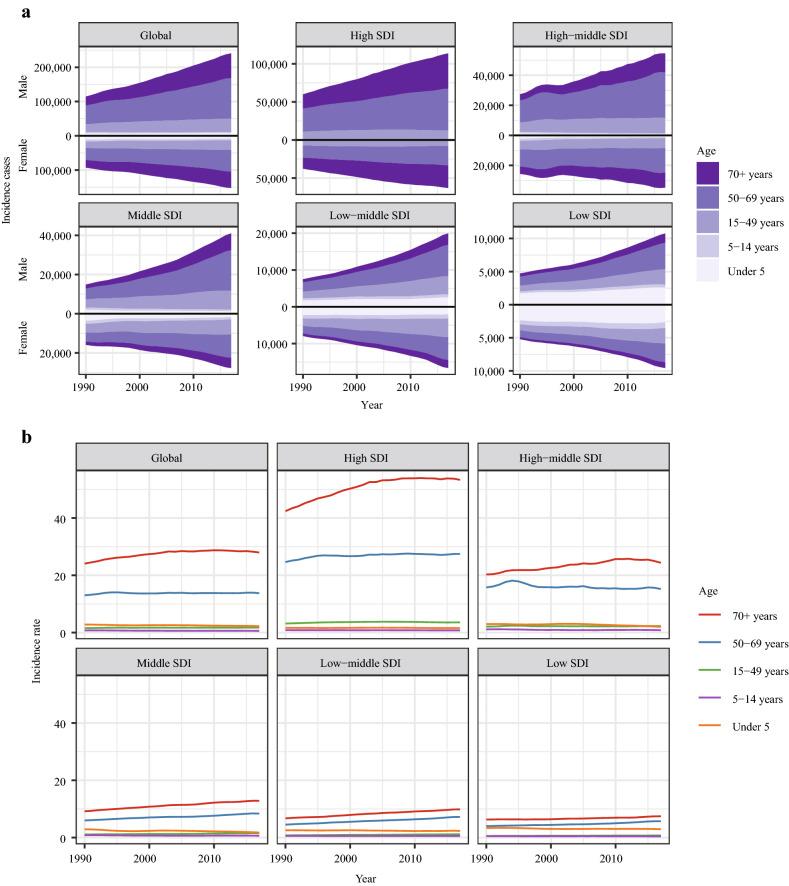
In the globe, the incidence case of kidney cancer increased sharply from 207.3110 in 1990 to 393.0410 in 2017. High SDI countries had the highest kidney cancer's burden with a decreased trend in incidence rate. On the contrary, the incidence rate was rapidly increased in low-middle SDI countries, although their burden of kidney cancer kept relatively low. At the same time, the deaths of kidney cancer increased from 68.1410 to 138.5310, and the kidney cancer-related DALYs increased from 1915.4910 in 1990 to 3284.3210 in 2017. Then, we searched the GBD database for kidney cancer-related risk factor. The high body-mass index and smoking were the main factors contributing to kidney cancer-related mortality.
CONCLUSIONS
Generally, from 1990 to 2017, the incidence rate in developed countries had gone down from the historic peak values while the incidence rate was still on the rise in developing counties. Given the aging trend in the globe, it is necessary to appeal to the public to decrease the exposure of kidney cancer-associated risk factors.
背景
肾癌的发病率和死亡率在不同地区和国家有所不同。为了比较和解读全球及不同国家肾癌的负担和变化趋势,我们开展了本研究以报告全球肾癌负担及可归因风险因素。
方法
从《2017年全球疾病负担》中提取有关肾癌发病率、死亡率、伤残调整生命年(DALY)的数据。此外,采用社会人口指数(SDI)值来研究肾癌负担与社会发展程度之间的相关性。
结果
在全球范围内,肾癌的发病例数从1990年的207.31×10急剧增加到2017年的393.04×10。高SDI国家的肾癌负担最高,但其发病率呈下降趋势。相反,中低SDI国家的发病率迅速上升,尽管其肾癌负担相对较低。同时,肾癌死亡人数从68.14×10增加到138.53×10,与肾癌相关的伤残调整生命年从1990年的1915.49×10增加到2017年的3284.32×10。然后,我们在全球疾病负担数据库中搜索与肾癌相关的风险因素。高体重指数和吸烟是导致肾癌相关死亡的主要因素。
结论
总体而言,从1990年到2017年,发达国家的发病率已从历史峰值下降,而发展中国家的发病率仍在上升。鉴于全球老龄化趋势,有必要呼吁公众减少与肾癌相关的风险因素暴露。


 Zotero 插件