
阿尔茨海默病β淀粉样蛋白特征的啮齿动物模型:建立与潜在治疗意义
Rodent Models of Amyloid-Beta Feature of Alzheimer's Disease: Development and Potential Treatment Implications.
作者信息
Poon Chi Him, Wang Yingyi, Fung Man-Lung, Zhang Chengfei, Lim Lee Wei
机构信息
1School of Biomedical Sciences, Li Ka Shing Faculty of Medicine, The University of Hong Kong, Hong Kong, China.
2Endodontology, Faculty of Dentistry, The University of Hong Kong, Hong Kong, China.
出版信息
Aging Dis. 2020 Oct 1;11(5):1235-1259. doi: 10.14336/AD.2019.1026. eCollection 2020 Oct.
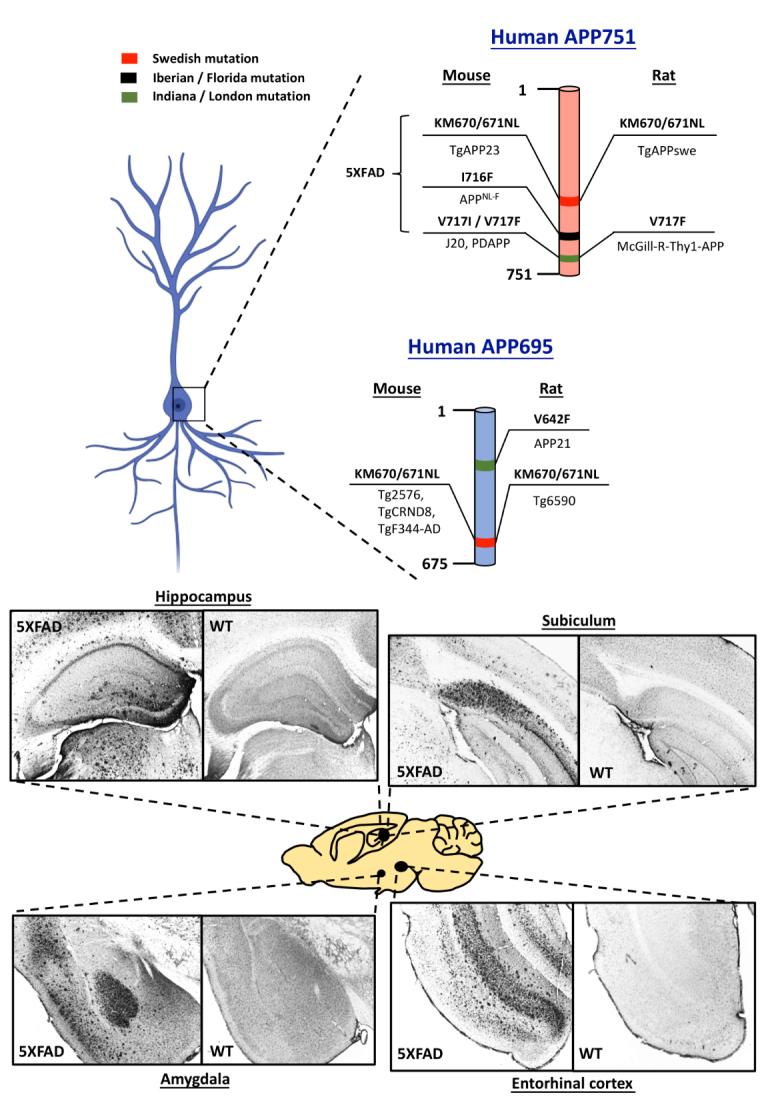
Alzheimer's disease (AD) is the most common neurodegenerative disorder worldwide and causes severe financial and social burdens. Despite much research on the pathogenesis of AD, the neuropathological mechanisms remain obscure and current treatments have proven ineffective. In the past decades, transgenic rodent models have been used to try to unravel this disease, which is crucial for early diagnosis and the assessment of disease-modifying compounds. In this review, we focus on transgenic rodent models used to study amyloid-beta pathology in AD. We also discuss their possible use as promising tools for AD research. There is still no effective treatment for AD and the development of potent therapeutics are urgently needed. Many molecular pathways are susceptible to AD, ranging from neuroinflammation, immune response, and neuroplasticity to neurotrophic factors. Studying these pathways may shed light on AD pathophysiology as well as provide potential targets for the development of more effective treatments. This review discusses the advantages and limitations of these models and their potential therapeutic implications for AD.
阿尔茨海默病(AD)是全球最常见的神经退行性疾病,会造成严重的经济和社会负担。尽管对AD的发病机制进行了大量研究,但其神经病理学机制仍不清楚,目前的治疗方法已被证明无效。在过去几十年中,转基因啮齿动物模型已被用于试图解开这种疾病之谜,这对于早期诊断和评估疾病修饰化合物至关重要。在这篇综述中,我们重点关注用于研究AD中β-淀粉样蛋白病理学的转基因啮齿动物模型。我们还讨论了它们作为AD研究有前景工具的可能用途。目前仍没有针对AD的有效治疗方法,迫切需要开发有效的治疗药物。许多分子途径都易受AD影响,从神经炎症、免疫反应、神经可塑性到神经营养因子。研究这些途径可能有助于揭示AD的病理生理学,并为开发更有效治疗方法提供潜在靶点。本综述讨论了这些模型的优缺点及其对AD的潜在治疗意义。

 Zotero 插件