
沙特阿拉伯西南部医护人员及其他居民对新冠疫情的认知与准备情况:一项横断面调查
Awareness and Preparedness of COVID-19 Outbreak Among Healthcare Workers and Other Residents of South-West Saudi Arabia: A Cross-Sectional Survey.
作者信息
Tripathi Rina, Alqahtani Saad S, Albarraq Ahmed A, Meraya Abdulkarim M, Tripathi Pankaj, Banji David, Alshahrani Saeed, Ahsan Waquar, Alnakhli Fatimah M
机构信息
Department of Clinical Pharmacy, Pharmacy Practice Research Unit (PPRU), College of Pharmacy, Jazan University, Jazan, Saudi Arabia.
Department of Pharmacology, College of Pharmacy, Jazan University, Jazan, Saudi Arabia.
出版信息
Front Public Health. 2020 Aug 18;8:482. doi: 10.3389/fpubh.2020.00482. eCollection 2020.
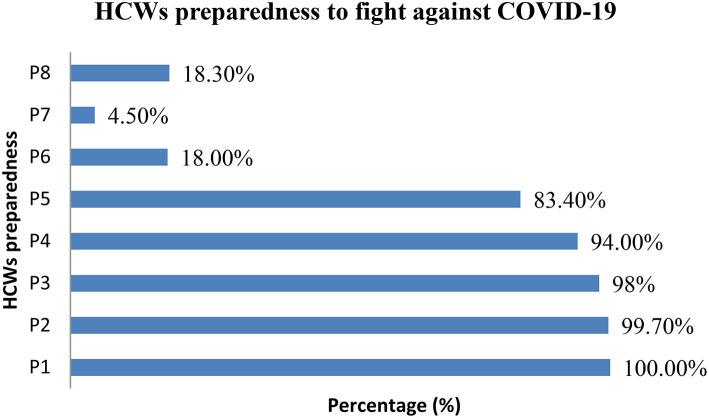
Coronavirus disease-2019 (COVID-19) was declared a "pandemic" by the World Health Organization (WHO) in early March 2020. Globally, extraordinary measures are being adopted to combat the formidable spread of the ongoing outbreak. Under such conditions, people's adherence to preventive measures is greatly affected by their awareness of the disease. This study was aimed to assess the level of awareness and preparedness to fight against COVID-19 among the healthcare workers (HCWs) and other residents of the South-West Saudi Arabia. A community-based, cross-sectional survey was conducted using a self-developed structured questionnaire that was randomly distributed online among HCWs and other residents (age ≥ 12 years) of South-West Saudi Arabia for feedback. The collected data were analyzed using Stata 15 statistical software. Among 1,000 participants, 36.7% were HCWs, 53.9% were female, and 44.1% were aged ≥ 30 years. Majority of respondents showed awareness of COVID-19 (98.7%) as a deadly, contagious, and life-threatening disease (99.6%) that is transmitted through human-to-human contact (97.7%). They were familiar with the associated symptoms and common causes of COVID-19. Health organizations were chosen as the most reliable source of information by majority of the participants (89.6%). Hand hygiene (92.7%) and social distancing (92.3%) were the most common preventive measures taken by respondents that were followed by avoiding traveling (86.9%) to an infected area or country and wearing face masks (86.5%). Significant proportions of HCWs ( < 0.05) and more educated participants ( < 0.05) showed considerable knowledge of the disease, and all respondents displayed good preparedness for the prevention and control of COVID-19. Age, gender, and area were non-significant predictors of COVID-19 awareness. As the global threat of COVID-19 continues to emerge, it is critical to improve the awareness and preparedness of the targeted community members, especially the less educated ones. Educational interventions are urgently needed to reach the targeted residents beyond borders and further measures are warranted. The outcome of this study highlighted a growing need for the adoption of innovative local strategies to improve awareness in general population related to COVID-19 and its preventative practices in order to meet its elimination goals.
2020年3月初,世界卫生组织(WHO)宣布新型冠状病毒肺炎(COVID-19)为“大流行病”。在全球范围内,正在采取非常措施来应对当前疫情的迅猛传播。在这种情况下,人们对预防措施的遵守情况受到其对该疾病认知程度的极大影响。本研究旨在评估沙特阿拉伯西南部医护人员(HCWs)和其他居民对COVID-19的认知水平及抗击准备情况。采用自行编制的结构化问卷进行了一项基于社区的横断面调查,该问卷通过网络随机分发给沙特阿拉伯西南部的医护人员和其他居民(年龄≥12岁)以获取反馈。使用Stata 15统计软件对收集到的数据进行分析。在1000名参与者中,36.7%为医护人员,53.9%为女性,44.1%年龄≥30岁。大多数受访者知晓COVID-19是一种致命、具有传染性且危及生命的疾病(99.6%),可通过人际接触传播(97.7%),98.7%的受访者了解这一点。他们熟悉COVID-19的相关症状和常见病因。大多数参与者(89.6%)选择卫生组织作为最可靠的信息来源。手部卫生(92.7%)和社交距离(92.3%)是受访者采取的最常见预防措施,其次是避免前往(86.9%)感染地区或国家以及佩戴口罩(86.5%)。相当比例的医护人员(<0.05)和受教育程度较高的参与者(<0.05)对该疾病表现出相当的了解,并且所有受访者对COVID-19的预防和控制都有良好的准备。年龄、性别和地区并非COVID-19认知的显著预测因素。随着COVID-19的全球威胁持续显现,提高目标社区成员尤其是受教育程度较低者的认知和准备情况至关重要。迫切需要开展教育干预以覆盖境外目标居民,并且有必要采取进一步措施。本研究结果凸显了越来越需要采用创新的地方策略来提高普通民众对COVID-19及其预防措施的认知,以实现消除目标。
 Zotero 插件