
野生苦瓜通过上调脊髓损伤后损伤减弱的 CISD2 表达发挥抗炎作用。
Wild Bitter Melon Exerts Anti-Inflammatory Effects by Upregulating Injury-Attenuated CISD2 Expression following Spinal Cord Injury.
机构信息
Department of Exercise and Health Promotion, College of Kinesiology and Health, Chinese Culture University, Taipei 11114, Taiwan.
Department of Biotechnology and Animal Science, College of Bioresources, National Ilan University, Yilan 26047, Taiwan.
出版信息
Behav Neurol. 2020 Sep 30;2020:1080521. doi: 10.1155/2020/1080521. eCollection 2020.
BACKGROUND
Spinal cord injuries (SCIs) induce secondary neuroinflammation through astrocyte reactivation, which adversely affects neuronal survival and eventually causes long-term disability. CDGSH iron sulfur domain 2 (CISD2), which has been reported to be involved in mediating the anti-inflammatory responses, can serve as a target in SCI therapy. Wild bitter melon (WBM; Linn. var. abbreviata Ser.) contains an anti-inflammatory agent called alpha-eleostearic acid (-ESA), a peroxisome proliferator-activated receptor- (PPAR-) ligand. Activated PPAR- inhibits the nuclear factor B (NF-B) signaling pathway via the inhibition of IB (inhibitor of NF-B) degradation. The role of astrocyte deactivation and CISD2 in anti-inflammatory mechanisms of WBM in acute SCIs is unknown.
MATERIALS AND METHODS
A mouse model of SCI was generated via spinal cord hemisection. The SCI mice were administered WBM intraperitoneally (500 mg/kg bodyweight). Lipopolysaccharide- (LPS-) stimulated ALT cells (astrocytes) were used as an model for studying astrocyte-mediated inflammation post-SCI. The roles of CISD2 and PPAR- in inflammatory signaling were examined using LPS-stimulated SH-SY5Y cells transfected with si-CISD2 or scramble RNA.
RESULTS
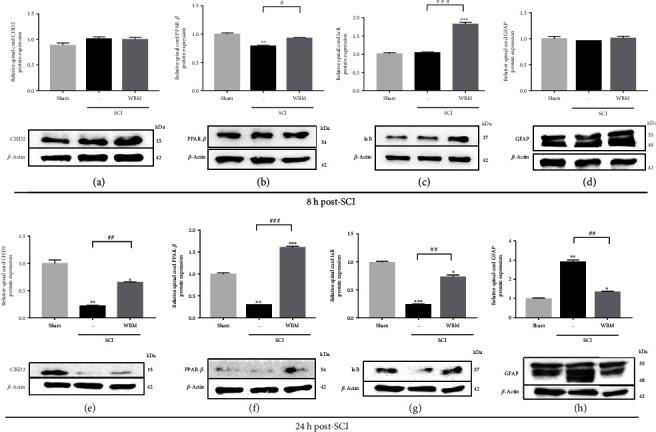
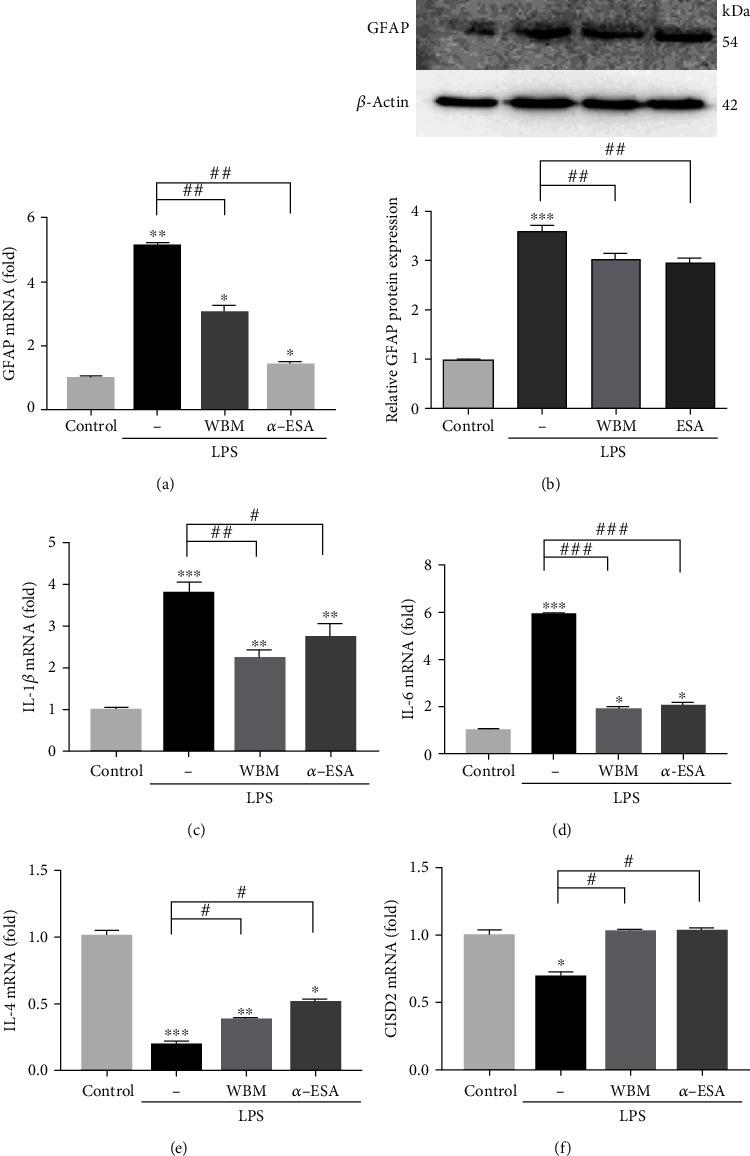
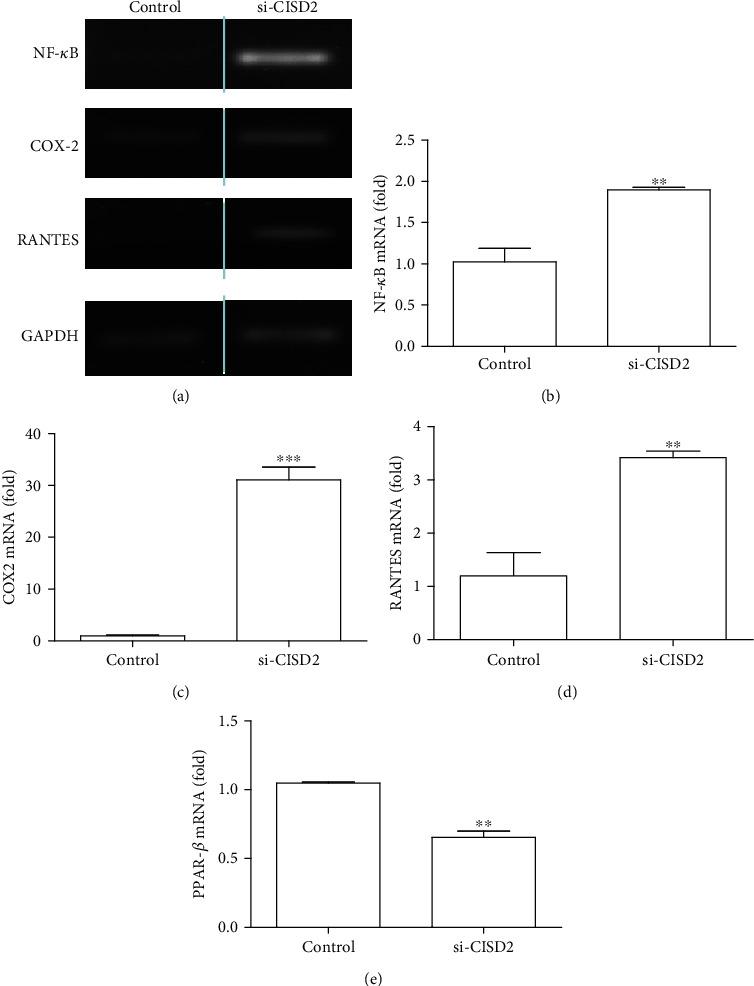
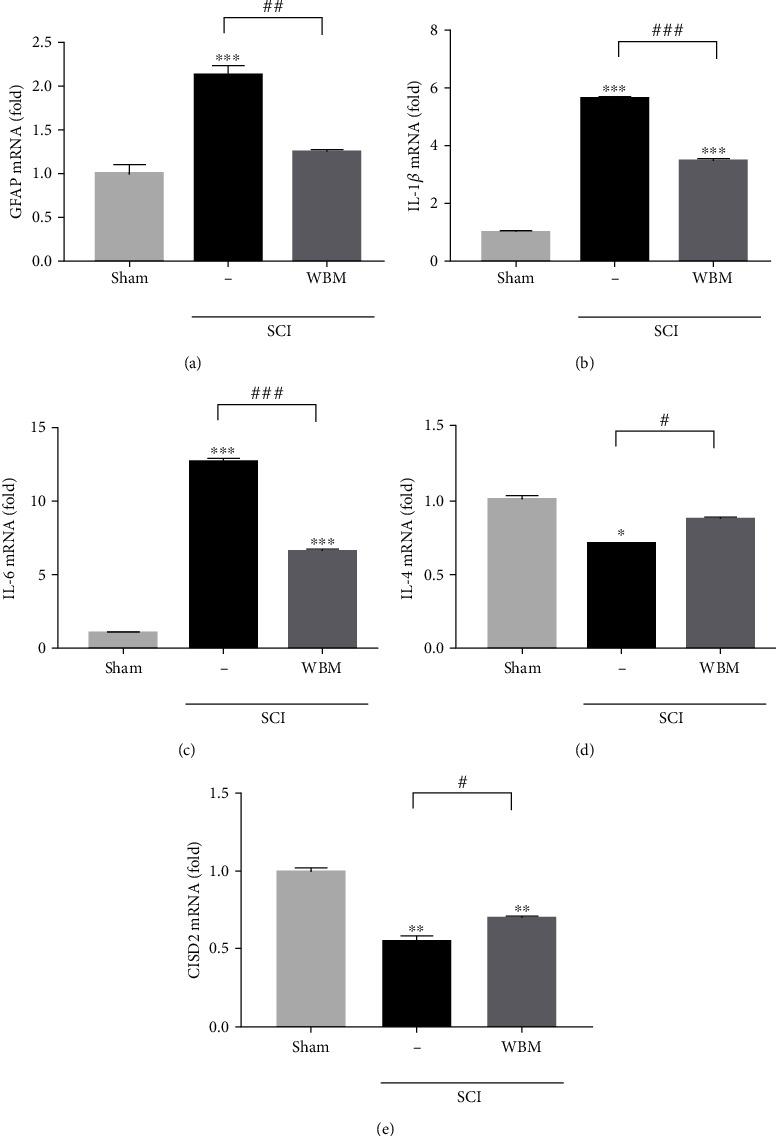
WBM mitigated the SCI-induced downregulation of CISD2, PPAR-, and IB and upregulation of glial fibrillary acidic protein (GFAP; marker of astrocyte reactivation) in the spinal cord of SCI mice. Additionally, WBM (1 g/mL) mitigated LPS-induced CISD2 downregulation. Furthermore, SH-SY5Y neural cells with CISD2 knockdown exhibited decreased PPAR- expression and augmented NF-B signaling.
CONCLUSION
To the best of our knowledge, this is the first study to report that CISD2 is an upstream modulator of the PPAR-/NF-B proinflammatory signaling pathway in neural cells, and that WBM can mitigate the injury-induced downregulation of CISD2 in SCI mice and LPS-stimulated ALT astrocytes.
背景
脊髓损伤(SCI)通过星形胶质细胞的再激活引发继发性神经炎症,这对神经元的存活产生不利影响,最终导致长期残疾。CDGSH 铁硫域 2(CISD2)已被报道参与介导抗炎反应,可作为 SCI 治疗的靶点。野生苦瓜(WBM;Linn. var. abbreviata Ser.)含有一种抗炎剂,称为α-亚麻酸(-ESA),是过氧化物酶体增殖物激活受体-(PPAR-)配体。激活的 PPAR- 通过抑制 NF-B(核因子 B)信号通路来抑制 IB(NF-B 抑制剂)的降解。WBM 在急性 SCI 中星形胶质细胞失活和 CISD2 的抗炎机制的作用尚不清楚。
材料和方法
通过脊髓半切术建立 SCI 小鼠模型。SCI 小鼠经腹腔给予 WBM(500mg/kg 体重)。脂多糖-(LPS-)刺激的 ALT 细胞(星形胶质细胞)用于研究 SCI 后星形胶质细胞介导的炎症模型。使用 LPS 刺激的转染 si-CISD2 或 scramble RNA 的 SH-SY5Y 细胞检测 CISD2 和 PPAR-在炎症信号中的作用。
结果
WBM 减轻了 SCI 诱导的 CISD2、PPAR-和 IB 下调以及 GFAP(星形胶质细胞再激活标志物)在 SCI 小鼠脊髓中的上调。此外,WBM(1μg/mL)减轻了 LPS 诱导的 CISD2 下调。此外,CISD2 敲低的 SH-SY5Y 神经细胞表现出 PPAR-表达降低和 NF-B 信号增强。
结论
据我们所知,这是第一项报道 CISD2 是神经细胞中 PPAR-/NF-B 促炎信号通路的上游调节剂的研究,并且 WBM 可以减轻 SCI 小鼠和 LPS 刺激的 ALT 星形胶质细胞中损伤诱导的 CISD2 下调。

 Zotero 插件