
二甲双胍可降低神经生长因子诱导的上皮性卵巢癌细胞中的肿瘤促进作用。
Metformin Reduces NGF-Induced Tumour Promoter Effects in Epithelial Ovarian Cancer Cells.
作者信息
Garrido Maritza P, Salvatierra Renato, Valenzuela-Valderrama Manuel, Vallejos Christopher, Bruneau Nicole, Hernández Andrea, Vega Margarita, Selman Alberto, Quest Andrew F G, Romero Carmen
机构信息
Laboratorio de Endocrinología y Biología de la Reproducción, Hospital Clínico Universidad de Chile, Santiago 8380456, Chile.
Departamento de Obstetricia y Ginecología, Facultad de Medicina, Universidad de Chile, Santiago 8380453, Chile.
出版信息
Pharmaceuticals (Basel). 2020 Oct 16;13(10):315. doi: 10.3390/ph13100315.
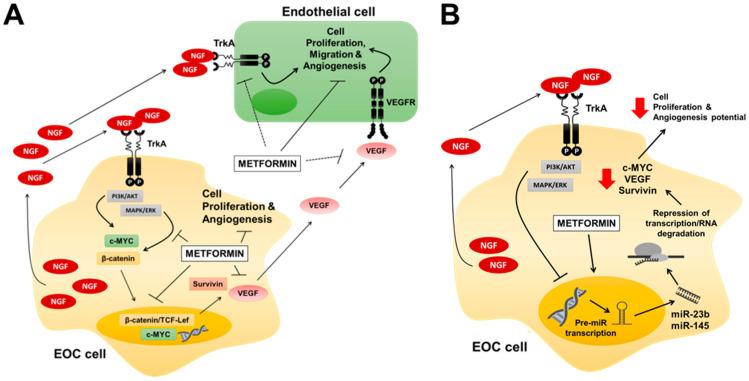
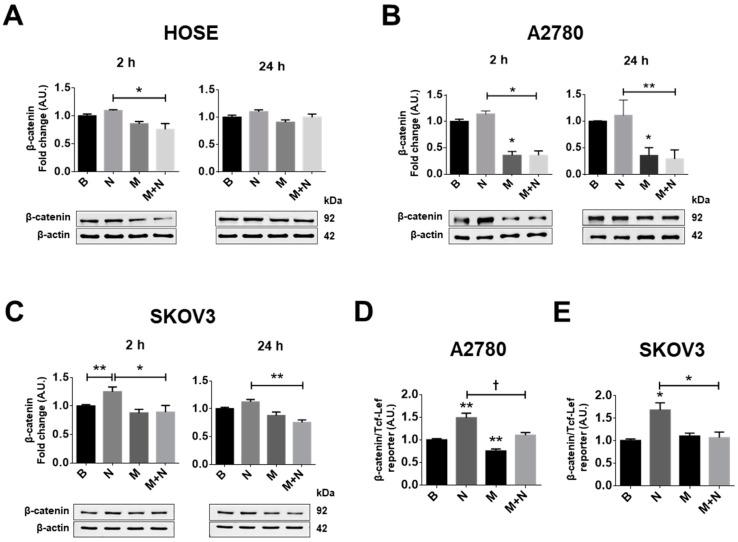
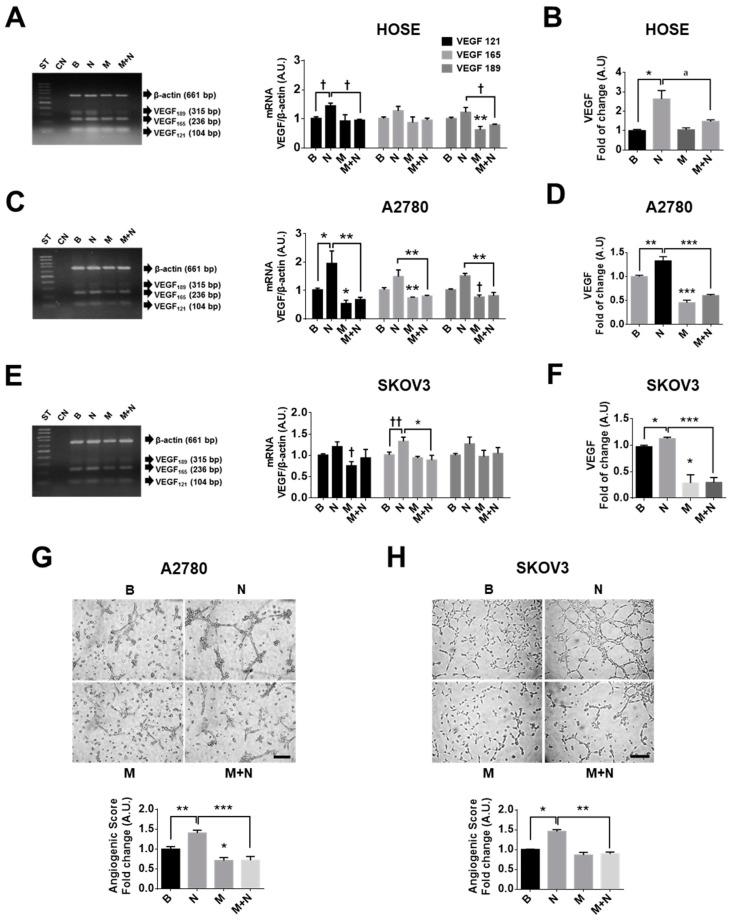
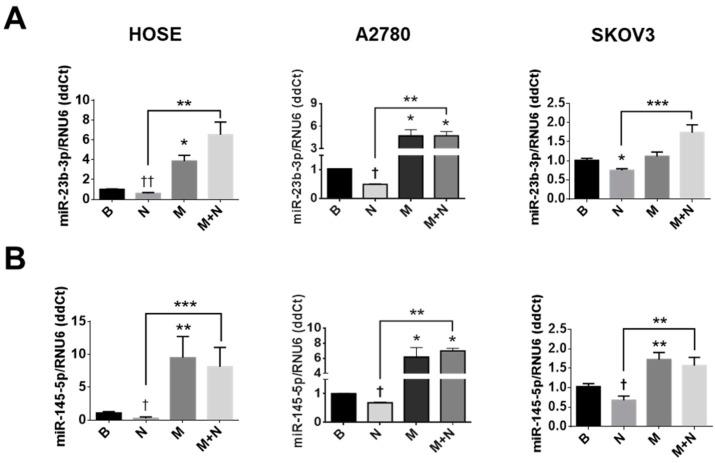
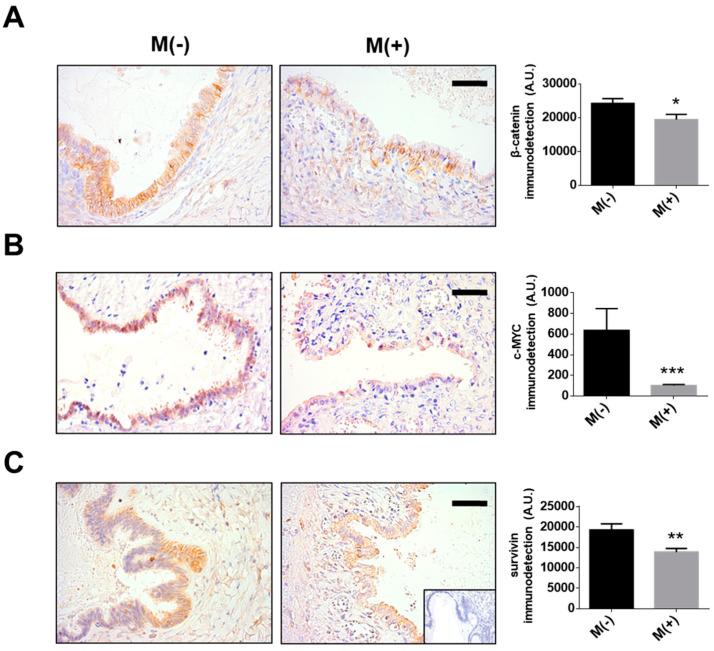
Epithelial ovarian cancer (EOC) is a lethal gynaecological neoplasm characterized by rapid growth and angiogenesis. Nerve growth factor (NGF) and its high affinity receptor tropomyosin receptor kinase A (TRKA) contribute to EOC progression by increasing the expression of c-MYC, survivin and vascular endothelial growth factor (VEGF) along with a decrease in microRNAs (miR) 23b and 145. We previously reported that metformin prevents NGF-induced proliferation and angiogenic potential of EOC cells. In this study, we sought to obtain a better understanding of the mechanism(s) by which metformin blocks these NGF-induced effects in EOC cells. Human ovarian surface epithelial (HOSE) and EOC (A2780/SKOV3) cells were stimulated with NGF and/or metformin to assess the expression of c-MYC, β-catenin, survivin and VEGF and the abundance of the tumor suppressor miRs 23b and 145. Metformin decreased the NGF-induced transcriptional activity of MYC and β-catenin/T-cell factor/lymphoid enhancer-binding factor (TCF-Lef), as well as the expression of c-MYC, survivin and VEGF in EOC cells, while it increased miR-23b and miR-145 levels. The preliminary analysis of ovarian biopsies from women users or non-users of metformin was consistent with these in vitro results. Our observations shed light on the mechanisms by which metformin may suppress tumour growth in EOC and suggest that metformin should be considered as a possible complementary therapy in EOC treatment.
上皮性卵巢癌(EOC)是一种致命的妇科肿瘤,其特征是生长迅速且有血管生成。神经生长因子(NGF)及其高亲和力受体原肌球蛋白受体激酶A(TRKA)通过增加c-MYC、生存素和血管内皮生长因子(VEGF)的表达以及降低微小RNA(miR)23b和145的水平来促进EOC进展。我们之前报道过二甲双胍可阻止NGF诱导的EOC细胞增殖和血管生成潜能。在本研究中,我们试图更好地了解二甲双胍阻断EOC细胞中这些NGF诱导效应的机制。用人卵巢表面上皮(HOSE)细胞和EOC(A2780/SKOV3)细胞分别用NGF和/或二甲双胍刺激,以评估c-MYC、β-连环蛋白、生存素和VEGF的表达以及肿瘤抑制性miR 23b和145的丰度。二甲双胍降低了NGF诱导的EOC细胞中MYC和β-连环蛋白/T细胞因子/淋巴样增强因子结合因子(TCF-Lef)的转录活性,以及c-MYC、生存素和VEGF的表达,同时提高了miR-23b和miR-145的水平。对使用或未使用二甲双胍的女性卵巢活检样本的初步分析结果与这些体外实验结果一致。我们的观察结果揭示了二甲双胍可能抑制EOC肿瘤生长的机制,并表明二甲双胍应被视为EOC治疗中一种可能的辅助治疗方法。


 Zotero 插件