
具有改性剂的功能性银纳米颗粒和微粒的合成及其抗菌、抗癌和抗氧化活性评估
Synthesis of Functional Silver Nanoparticles and Microparticles with Modifiers and Evaluation of Their Antimicrobial, Anticancer, and Antioxidant Activity.
作者信息
Dilshad Erum, Bibi Mehmoona, Sheikh Nadeem Ahmed, Tamrin Khairul Fikri, Mansoor Qaisar, Maqbool Qaisar, Nawaz Muhammad
机构信息
Department of Bioinformatics and Biosciences, Faculty of Health and Life Sciences, Capital University of Science and Technology (CUST), 44000 Islamabad, Pakistan.
Department of Mechanical Engineering, Faculty of Engineering and Technology, International Islamic University, 44000 Islamabad, Pakistan.
出版信息
J Funct Biomater. 2020 Oct 23;11(4):76. doi: 10.3390/jfb11040076.
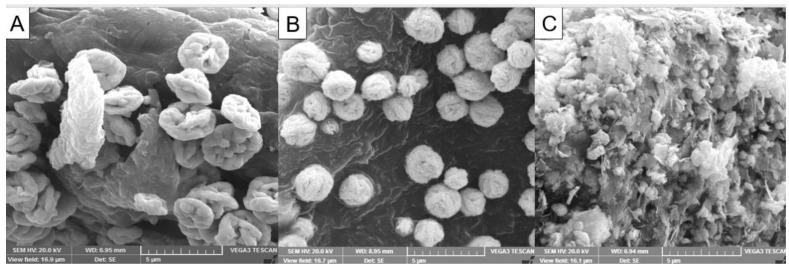
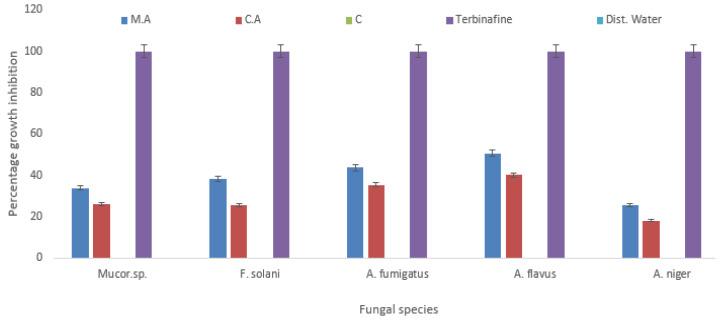
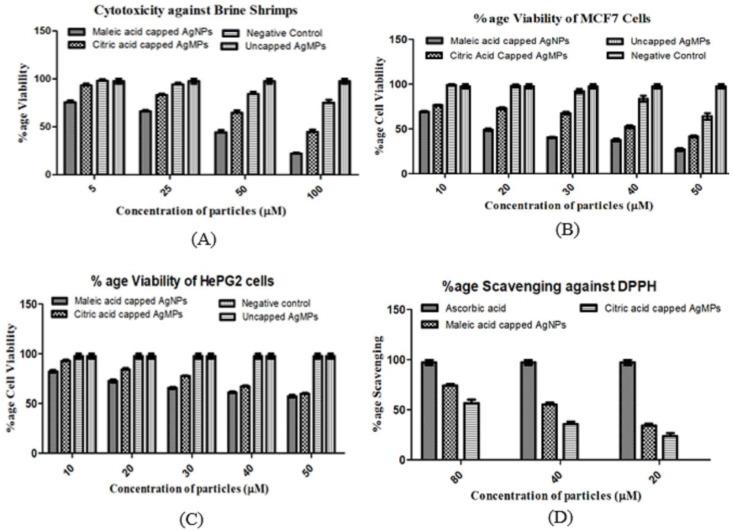
An accumulating body of evidence reports the synthesis and biomedical applications of silver nanoparticles. However, the studies regarding the use of maleic acid and citric acid in the synthesis of nano-sized silver particles (AgNPs) and micro-sized silver particles (AgMPs) as well as their antibacterial, antifungal, and anticancer activities have not been reported. In the current study, we synthesized AgNPs and AgMPs using maleic acid and citric acid as capping agents and have characterized them by UV-Vis, energy-dispersive X-Ray spectroscopy (EDS), X-Ray diffraction (XRD), and scanning electron microscope (SEM) analysis. The capped silver particles were examined for their antimicrobial activity and cytotoxicity against bacteria, fungi, and brine shrimp. Additionally, the anticancer activity of these particles was tested against human breast and liver cancer cell lines. The free radical scavenging activity of capped silver particles was evaluated by 2,2-diphenyl-1-picrylhydrazyl (DPPH) assay. SEM analysis revealed a round plate-like morphology of maleic acid capped particles with an average size of 39 ± 4 nm, whereas citric acid capped particles display flower-shaped morphology with rough surfaces and an average size of 250 ± 5 nm. The uncapped AgMPs were hexagonal with 500 ± 4 nm size. EDS and XRD analysis confirmed the presence of Ag and face-centered cubic crystalline nature, respectively. Functionally, capped silver particles exhibited antibacterial activity against Gram-positive ( and ) and Gram-negative bacteria ( and ). The bactericidal activity was more active against Gram-negative bacteria with minimum inhibitory concentration (MIC) as low as 5 ppm as compared to 25 ppm for Gram-positive. Similarly, the silver particles demonstrated antifungal activity by inhibiting the growth of five fungal strains ( and ) up to 50% at the concentration of 500 ppm. Additionally, these particles showed substantial toxicity against brine shrimp and also significantly inhibited the proliferation of breast cancer (MCF7) and liver cancer (HePG2) cell lines (IC 8.9-18.56 µM). Uncapped AgMPs were less effective, inhibiting only the proliferation of MCF7 cells with IC 46.54 µM. Besides cytotoxicity, these particles acted as potential antioxidants, showing free radical scavenging up to 74.4% in a concentration-dependent manner. Taken together, our results showed that the modifiers affect the shape and size of silver particles and may, in part, contribute to the antimicrobial and antioxidant activity of silver particles. However, the contribution of maleic acid and citric acid in enhancing the antimicrobial, anticancer, and antioxidant potential independent of silver nano and microparticles needs to be studied further. In vivo experiments may determine the therapeutic effectiveness of silver particles capped with these modifiers.
越来越多的证据报道了银纳米颗粒的合成及其生物医学应用。然而,关于使用马来酸和柠檬酸合成纳米级银颗粒(AgNPs)和微米级银颗粒(AgMPs)以及它们的抗菌、抗真菌和抗癌活性的研究尚未见报道。在本研究中,我们使用马来酸和柠檬酸作为封端剂合成了AgNPs和AgMPs,并通过紫外可见光谱、能量色散X射线光谱(EDS)、X射线衍射(XRD)和扫描电子显微镜(SEM)分析对其进行了表征。检测了封端银颗粒对细菌、真菌和卤虫的抗菌活性和细胞毒性。此外,还测试了这些颗粒对人乳腺癌和肝癌细胞系的抗癌活性。通过2,2-二苯基-1-苦基肼(DPPH)法评估封端银颗粒的自由基清除活性。SEM分析显示,马来酸封端的颗粒呈圆盘状,平均尺寸为39±4nm,而柠檬酸封端的颗粒呈花状,表面粗糙,平均尺寸为250±5nm。未封端的AgMPs为六边形,尺寸为500±4nm。EDS和XRD分析分别证实了银的存在和面心立方晶体性质。在功能上,封端银颗粒对革兰氏阳性菌(和)和革兰氏阴性菌(和)具有抗菌活性。杀菌活性对革兰氏阴性菌更有效,最低抑菌浓度(MIC)低至5ppm,而革兰氏阳性菌为25ppm。同样,银颗粒在500ppm浓度下抑制了五种真菌菌株(和)的生长,抑制率高达50%,表现出抗真菌活性。此外,这些颗粒对卤虫显示出显著毒性,并显著抑制乳腺癌(MCF7)和肝癌(HePG2)细胞系的增殖(IC8.9 - 18.56μM)。未封端的AgMPs效果较差,仅在IC为46.54μM时抑制MCF7细胞的增殖。除细胞毒性外,这些颗粒还作为潜在抗氧化剂,以浓度依赖方式显示高达74.4%的自由基清除率。综上所述,我们的结果表明,改性剂会影响银颗粒的形状和大小,并且可能在一定程度上有助于银颗粒的抗菌和抗氧化活性。然而,马来酸和柠檬酸在增强抗菌、抗癌和抗氧化潜力方面独立于银纳米颗粒和微米颗粒的贡献需要进一步研究。体内实验可能会确定用这些改性剂封端的银颗粒的治疗效果。



 Zotero 插件