
基于聚合物的微针阵列作为药物递送系统开发中的潜在平台。
Polymeric-based microneedle arrays as potential platforms in the development of drugs delivery systems.
作者信息
Meng Fansu, Hasan Anwarul, Mahdi Nejadi Babadaei Mohammad, Hashemi Kani Pegah, Jouya Talaei Amir, Sharifi Majid, Cai Tiange, Falahati Mojtaba, Cai Yu
机构信息
Zhongshan Hospital of Traditional Chinese Medicine Affiliated to Guangzhou University of TCM, Zhongshan, Guangdong 528400, China.
Biomedical Research Center, Qatar University, Doha 2713, Qatar.
出版信息
J Adv Res. 2020 Aug 1;26:137-147. doi: 10.1016/j.jare.2020.07.017. eCollection 2020 Nov.
BACKGROUND
Microscopic patches as quite promising platforms in transdermal drug delivery suffer from conventional injections. In other hand, a wide range of pharmacokinetics, ranging from fast oral administration to sustained drug delivery, can be implemented with the help of microneedle arrays (MNAs).
AIM OF REVIEW
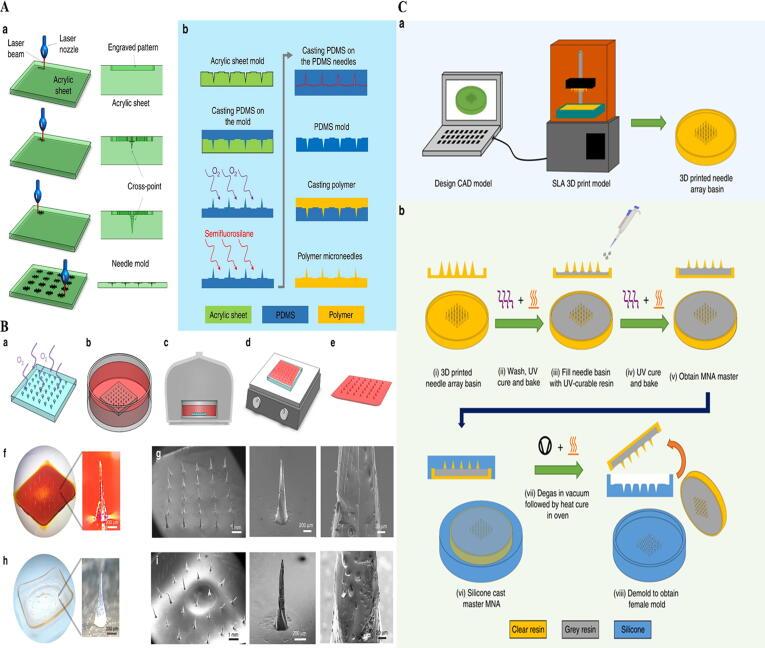
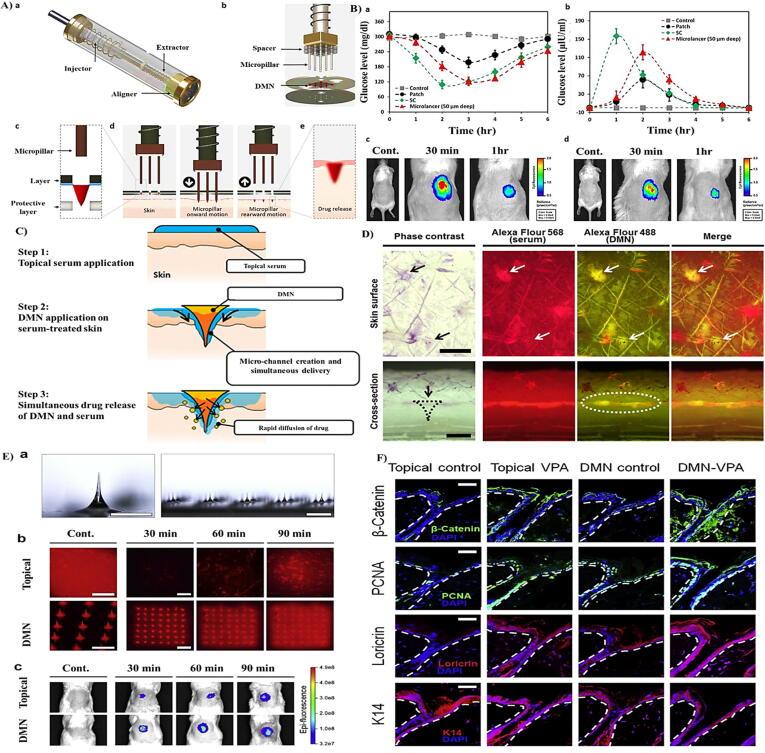
Hence, in this paper, we overviewed different kinds of MNAs such as solid/coated, hollow, porous, hydrogel/swellable, and merged-tip geometry followed by introducing different types of material (silicon, glass, ceramics, dissolving and biodegradable polymers, and hydrogel) used for fabrication of MNAs. Afterwards, some conventional and brand-new simple and customizable MN mold fabrication techniques were surveyed. Polymeric MNAs have received a great deal of attention due to their potential biocompatibility and biodegradability in comparison to other materials. Therefore, we also covered different kinds of polymers such as hydrogel/swellable, dissolving and biodegradable analogues used for the development of MNAs as potential candidates in drug delivery systems (DDSs). Finally, we discussed different challenges and future perspectives in the aspect of MNAs-based drug delivery platforms.
KEY SCIENTIFIC CONCEPTS OF REVIEW
This review may provide guidelines for the rational design of polymeric MNAs-based DDSs for promising programmable drug release and enhanced therapeutic effect.
背景
作为透皮给药中颇具前景的平台,微观贴片存在传统注射的问题。另一方面,借助微针阵列(MNAs)可以实现从快速口服给药到持续药物递送的广泛药代动力学。
综述目的
因此,在本文中,我们概述了不同种类的微针阵列,如实心/涂层、空心、多孔、水凝胶/可膨胀和合并尖端几何形状,随后介绍了用于制造微针阵列的不同类型材料(硅、玻璃、陶瓷、可溶解和可生物降解的聚合物以及水凝胶)。之后,调查了一些传统的和全新的简单且可定制的微针模具制造技术。与其他材料相比,聚合物微针阵列因其潜在的生物相容性和生物可降解性而受到了广泛关注。因此,我们还涵盖了用于开发微针阵列作为药物递送系统(DDSs)潜在候选物的不同种类聚合物,如水凝胶/可膨胀、可溶解和可生物降解类似物。最后,我们讨论了基于微针阵列的药物递送平台方面的不同挑战和未来前景。
综述的关键科学概念
本综述可为基于聚合物微针阵列的药物递送系统的合理设计提供指导,以实现有前景的可编程药物释放和增强治疗效果。


 Zotero 插件