
鉴定耳蜗核中的一种抑制性神经元亚型,L-星状细胞。
Identification of an inhibitory neuron subtype, the L-stellate cell of the cochlear nucleus.
机构信息
Oregon Hearing Research Center and Vollum Institute, Oregon Health and Science University, Portland, United States.
Physiology and Pharmacology Graduate Program, Oregon Health and Science University, Portland, United States.
出版信息
Elife. 2020 Nov 3;9:e54350. doi: 10.7554/eLife.54350.
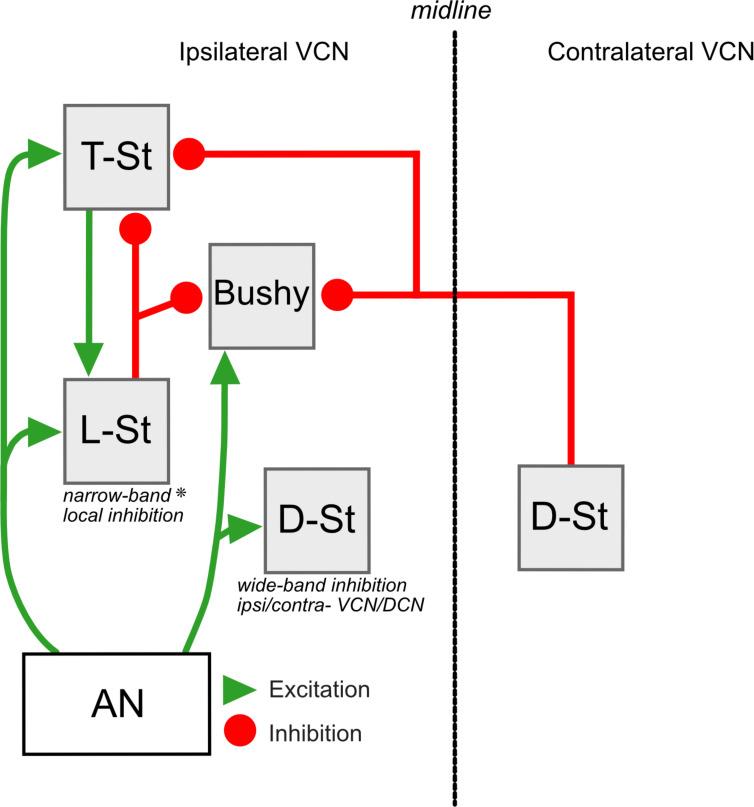
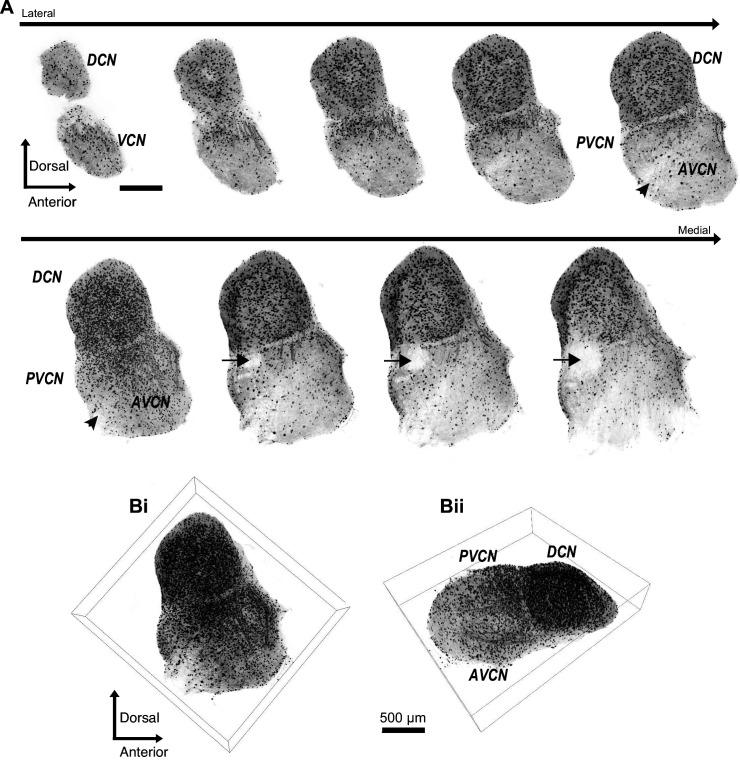
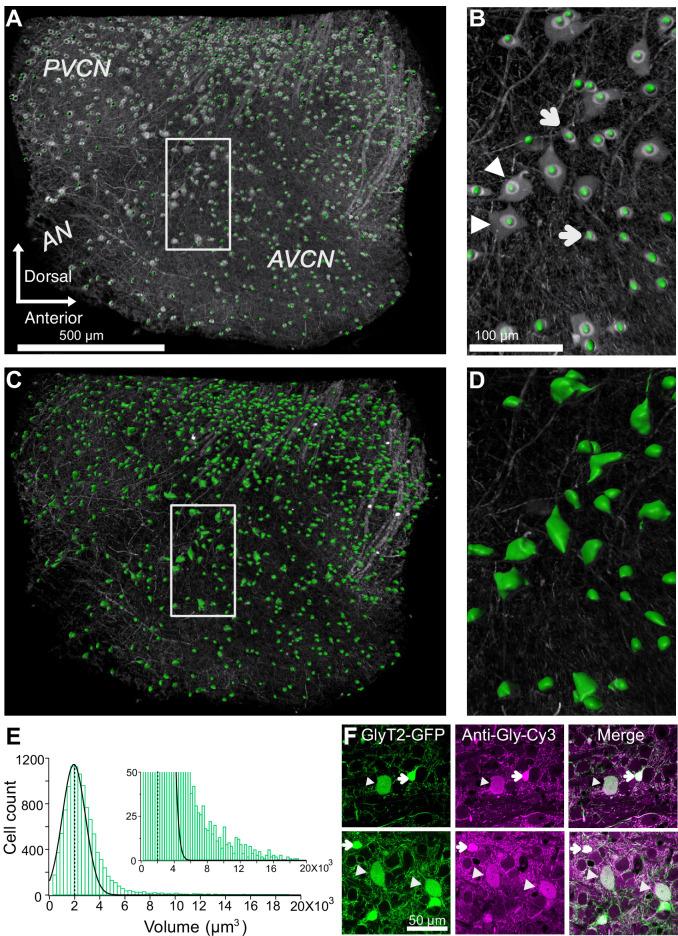
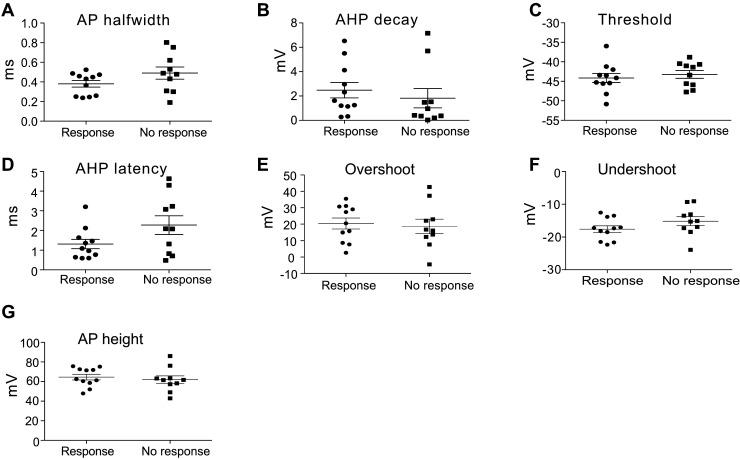
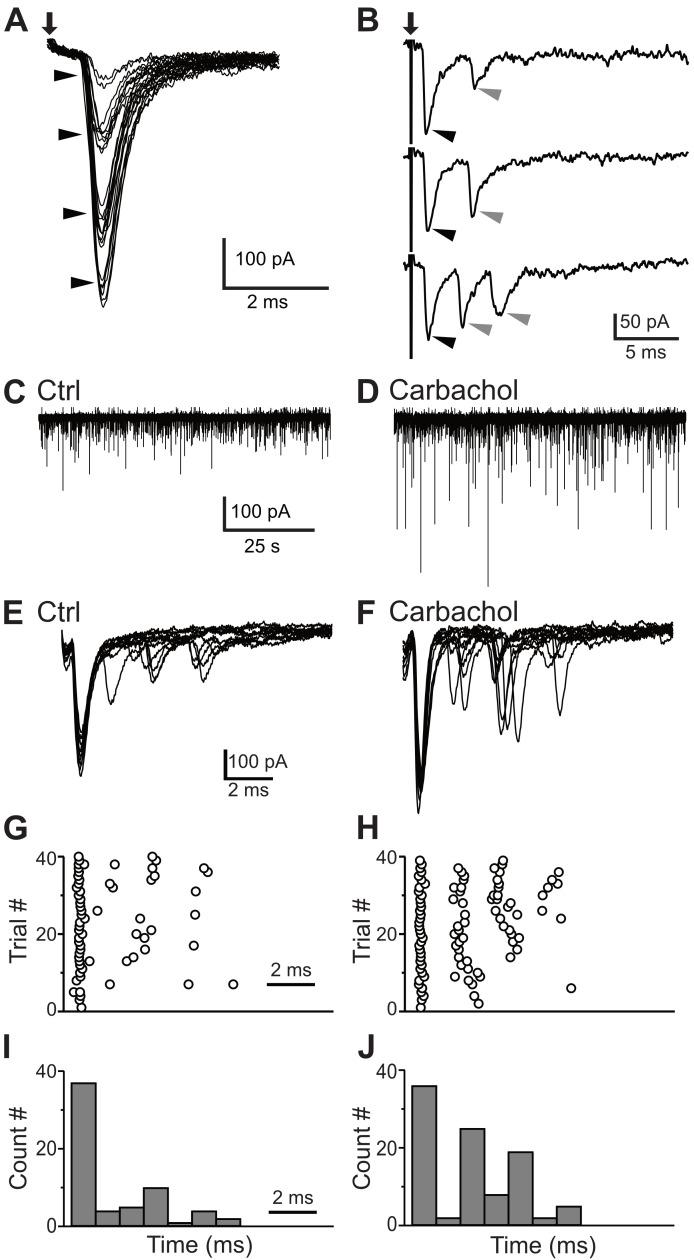
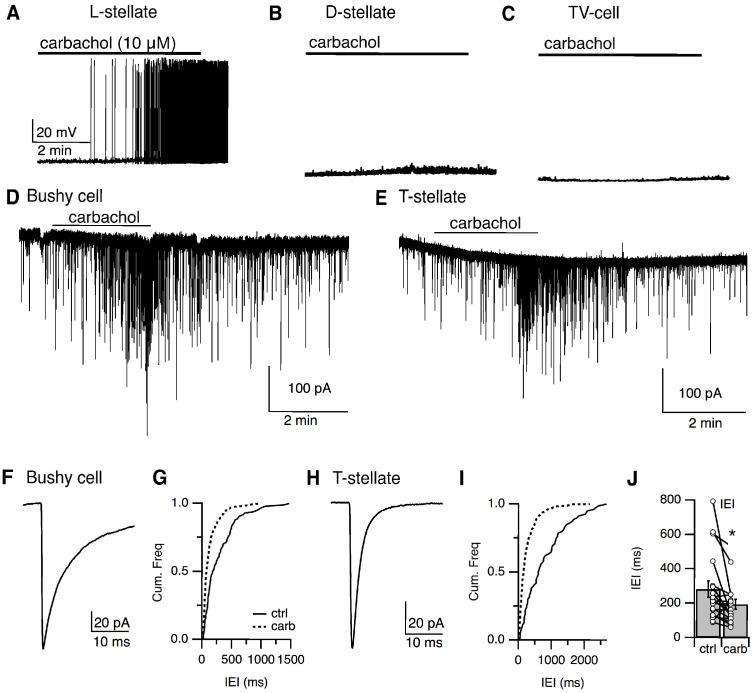
Auditory processing depends upon inhibitory signaling by interneurons, even at its earliest stages in the ventral cochlear nucleus (VCN). Remarkably, to date only a single subtype of inhibitory neuron has been documented in the VCN, a projection neuron termed the D-stellate cell. With the use of a transgenic mouse line, optical clearing, and imaging techniques, combined with electrophysiological tools, we revealed a population of glycinergic cells in the VCN distinct from the D-stellate cell. These multipolar glycinergic cells were smaller in soma size and dendritic area, but over ten-fold more numerous than D-stellate cells. They were activated by auditory nerve and T-stellate cells, and made local inhibitory synaptic contacts on principal cells of the VCN. Given their abundance, combined with their narrow dendritic fields and axonal projections, it is likely that these neurons, here termed L-stellate cells, play a significant role in frequency-specific processing of acoustic signals.
听觉处理依赖于中间神经元的抑制性信号,即使在耳蜗腹核 (VCN) 的最早阶段也是如此。值得注意的是,迄今为止,仅在 VCN 中记录到一种抑制性神经元亚型,即称为 D-星状细胞的投射神经元。通过使用转基因小鼠系、光学透明和成像技术以及电生理工具,我们揭示了 VCN 中存在一群不同于 D-星状细胞的甘氨酸能细胞。这些多极甘氨酸能细胞的胞体和树突区域较小,但数量比 D-星状细胞多十倍以上。它们被听神经和 T-星状细胞激活,并在 VCN 的主要细胞上形成局部抑制性突触接触。鉴于它们的丰富程度,加上它们狭窄的树突场和轴突投射,这些神经元很可能在声信号的频率特异性处理中发挥重要作用,我们将其称为 L-星状细胞。




 Zotero 插件