
增殖性玻璃体视网膜病变中视网膜色素上皮细胞的极性和上皮-间质转化
Polarity and epithelial-mesenchymal transition of retinal pigment epithelial cells in proliferative vitreoretinopathy.
作者信息
Zou Hui, Shan Chenli, Ma Linlin, Liu Jia, Yang Ning, Zhao Jinsong
机构信息
Eye Center, The Second Hospital of Jilin University, Changchun, China.
出版信息
PeerJ. 2020 Oct 20;8:e10136. doi: 10.7717/peerj.10136. eCollection 2020.
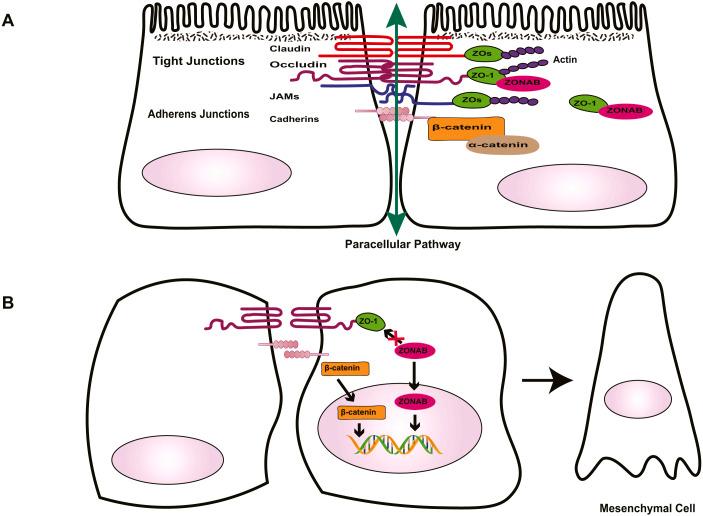
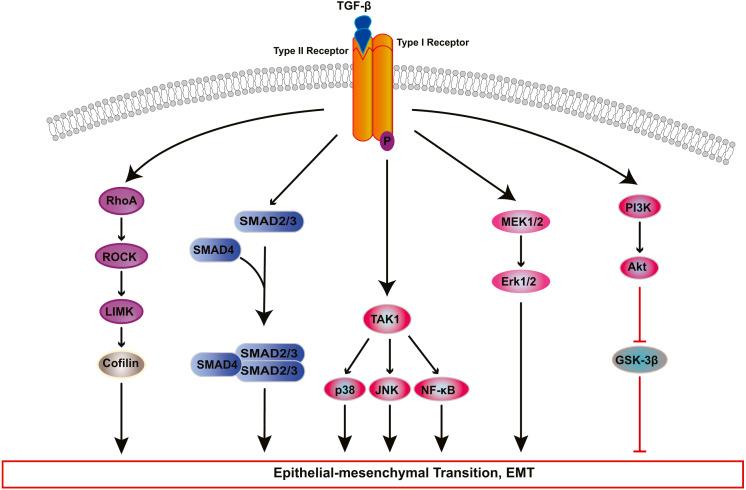
Under physiological conditions, retinal pigment epithelium (RPE) is a cellular monolayer composed of mitotically quiescent cells. Tight junctions and adherens junctions maintain the polarity of RPE cells, and are required for cellular functions. In proliferative vitreoretinopathy (PVR), upon retinal tear, RPE cells lose cell-cell contact, undergo epithelial-mesenchymal transition (EMT), and ultimately transform into myofibroblasts, leading to the formation of fibrocellular membranes on both surfaces of the detached retina and on the posterior hyaloids, which causes tractional retinal detachment. In PVR, RPE cells are crucial contributors, and multiple signaling pathways, including the SMAD-dependent pathway, Rho pathway, MAPK pathways, Jagged/Notch pathway, and the Wnt/β-catenin pathway are activated. These pathways mediate the EMT of RPE cells, which play a key role in the pathogenesis of PVR. This review summarizes the current body of knowledge on the polarized phenotype of RPE, the role of cell-cell contact, and the molecular mechanisms underlying the RPE EMT in PVR, emphasizing key insights into potential approaches to prevent PVR.
在生理条件下,视网膜色素上皮(RPE)是由有丝分裂静止细胞组成的细胞单层。紧密连接和黏附连接维持RPE细胞的极性,并且是细胞功能所必需的。在增殖性玻璃体视网膜病变(PVR)中,视网膜撕裂后,RPE细胞失去细胞间接触,经历上皮-间质转化(EMT),最终转变为肌成纤维细胞,导致在脱离视网膜的两个表面以及玻璃体后皮质上形成纤维细胞膜,从而引起牵拉性视网膜脱离。在PVR中,RPE细胞是关键的促成因素,包括SMAD依赖途径、Rho途径、丝裂原活化蛋白激酶(MAPK)途径、锯齿状蛋白/Notch途径和Wnt/β-连环蛋白途径在内的多种信号通路被激活。这些途径介导RPE细胞的EMT,其在PVR的发病机制中起关键作用。本综述总结了目前关于RPE极化表型、细胞间接触的作用以及PVR中RPE EMT潜在分子机制的知识体系,强调了对预防PVR潜在方法的关键见解。

 Zotero 插件