
双(单酰基甘油)磷酸酯,一种在宿主内吞机制中被 SARS-CoV-2 及相关病毒劫持的重要因子。
Bis(monoacylglycero)phosphate, an important actor in the host endocytic machinery hijacked by SARS-CoV-2 and related viruses.
机构信息
Univ-Lyon, CarMeN Laboratory, Inserm U1060, INRAe U1397, INSA Lyon, Villeurbanne, France.
Univ-Lyon, CarMeN Laboratory, Inserm U1060, INRAe U1397, INSA Lyon, Villeurbanne, France.
出版信息
Biochimie. 2020 Dec;179:247-256. doi: 10.1016/j.biochi.2020.10.018. Epub 2020 Nov 5.
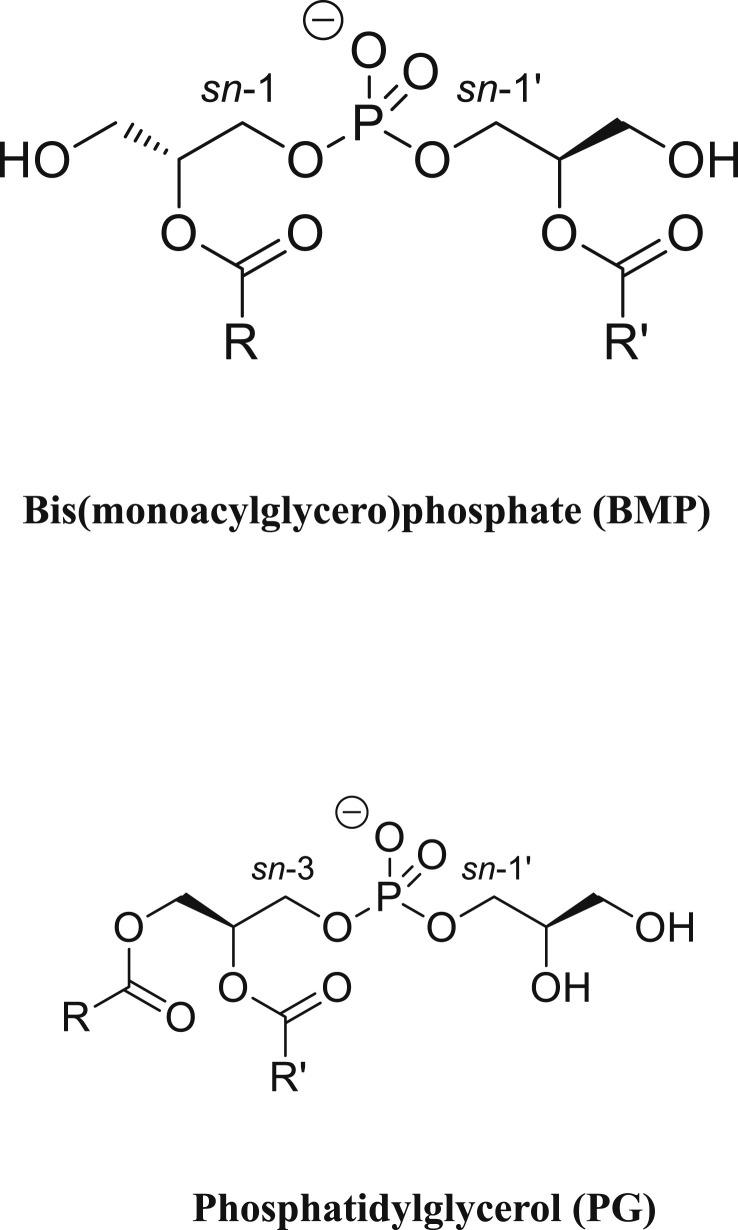
Viruses, including the novel coronavirus SARS-CoV-2, redirect infected cell metabolism to their own purposes. After binding to its receptor angiotensin-converting enzyme 2 (ACE2) on the cell surface, the SARS-CoV-2 is taken up by receptor-mediated endocytosis ending in the acidic endolysosomal compartment. The virus hijacks the endosomal machinery leading to fusion of viral and endosomal membranes and release of the viral RNA into the cytosol. This mini-review specifically highlights the membrane lipid organization of the endosomal system focusing on the unconventional and late endosome/lysosome-specific phospholipid, bis(monoacylglycero)phosphate (BMP). BMP is enriched in alveolar macrophages of lung, one of the target tissue of SARS-CoV-2. This review details the BMP structure, its unsaturated fatty acid composition and fusogenic properties that are essential for the highly dynamic formation of the intraluminal vesicles inside the endosomes. Interestingly, BMP is necessary for infection and replication of enveloped RNA virus such as SARS-CoV-1 and Dengue virus. We also emphasize the role of BMP in lipid sorting and degradation, especially cholesterol transport in cooperation with Niemann Pick type C proteins (NPC 1 and 2) and with some oxysterol-binding protein (OSBP)-related proteins (ORPs) as well as in sphingolipid degradation. Interestingly, numerous virus infection required NPC1 as well as ORPs along the endocytic pathway. Furthermore, BMP content is increased during pathological endosomal lipid accumulation in various lysosomal storage disorders. This is particularly important knowing the high percentage of patients with metabolic disorders among the SARS-CoV-2 infected patients presenting severe forms of COVID-19.
病毒,包括新型冠状病毒 SARS-CoV-2,会将受感染细胞的代谢重定向到它们自己的用途。SARS-CoV-2 在与细胞表面的血管紧张素转换酶 2(ACE2)结合后,通过受体介导的内吞作用被摄取,最终进入酸性内体溶酶体区室。病毒劫持了内体机制,导致病毒和内体膜融合,并将病毒 RNA 释放到细胞质中。本综述特别强调了内体系统的膜脂组织,重点介绍了非常规的晚期内体/溶酶体特异性磷脂,双(单酰基甘油)磷酸酯(BMP)。BMP 在肺的肺泡巨噬细胞中丰富,而肺泡巨噬细胞是 SARS-CoV-2 的靶组织之一。本综述详细介绍了 BMP 的结构、其不饱和脂肪酸组成和融合特性,这些对于内体腔内的腔内小泡的高度动态形成是必不可少的。有趣的是,BMP 是包膜 RNA 病毒(如 SARS-CoV-1 和登革热病毒)感染和复制所必需的。我们还强调了 BMP 在脂质分选和降解中的作用,特别是与尼曼-匹克 C 蛋白(NPC1 和 2)以及一些甾醇结合蛋白(OSBP)相关蛋白(ORP)合作的胆固醇转运,以及鞘脂降解。有趣的是,许多病毒感染需要 NPC1 以及沿内吞途径的 ORP。此外,在各种溶酶体贮积症中,病理内体脂质积累期间 BMP 含量增加。考虑到 COVID-19 严重患者中存在大量代谢紊乱患者,这一点尤为重要。


 Zotero 插件