
COVID-19 诱导的急性呼吸窘迫综合征与表达 CD11a 的活化记忆/效应 T 细胞频率降低有关。
COVID-19-Induced ARDS Is Associated with Decreased Frequency of Activated Memory/Effector T Cells Expressing CD11a.
机构信息
Center for Translational Medicine and Immune Diagnostics Laboratory, Medical Department I, Marien Hospital Herne, University Hospital of the Ruhr University Bochum, Hölkeskampring 40, 44625 Herne, Germany.
Department of Infectious Diseases, West German Centre of Infectious Diseases, University Hospital Essen, University Duisburg-Essen, Hufelandstraße 55, 45147 Essen, Germany.
出版信息
Mol Ther. 2020 Dec 2;28(12):2691-2702. doi: 10.1016/j.ymthe.2020.10.001. Epub 2020 Oct 8.
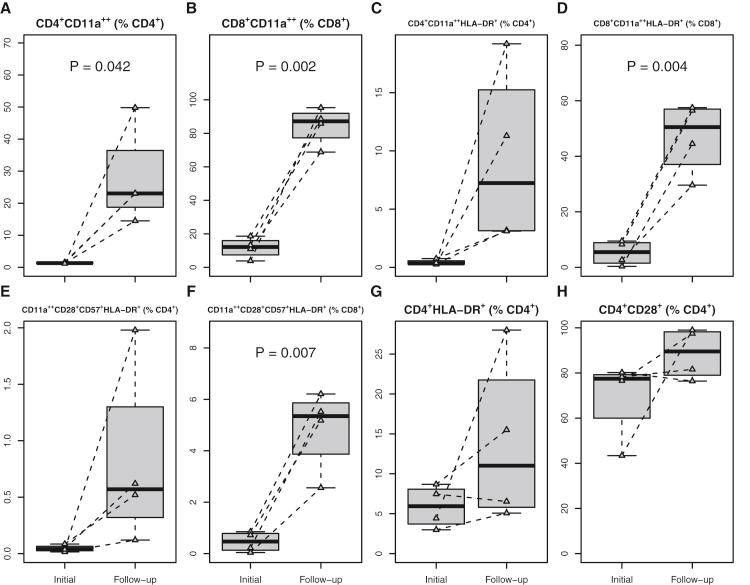
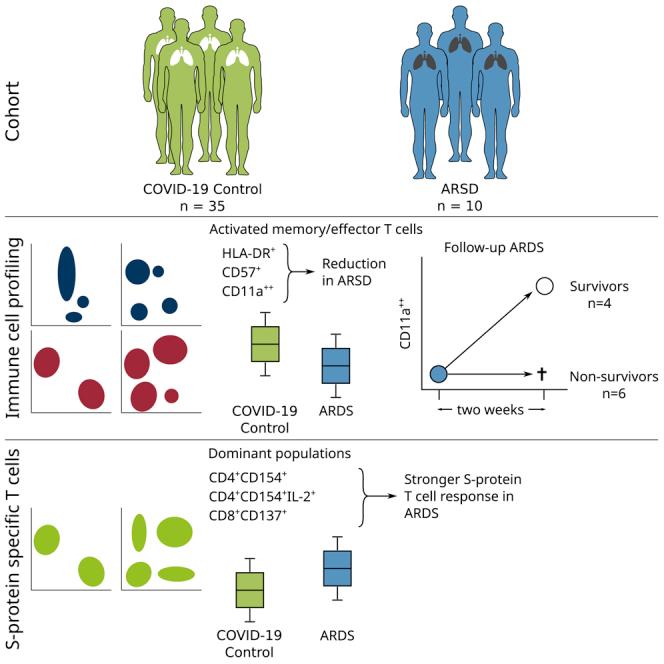
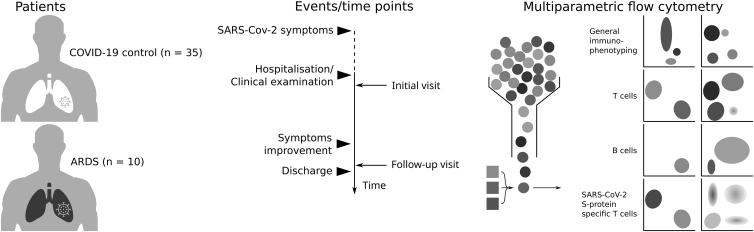
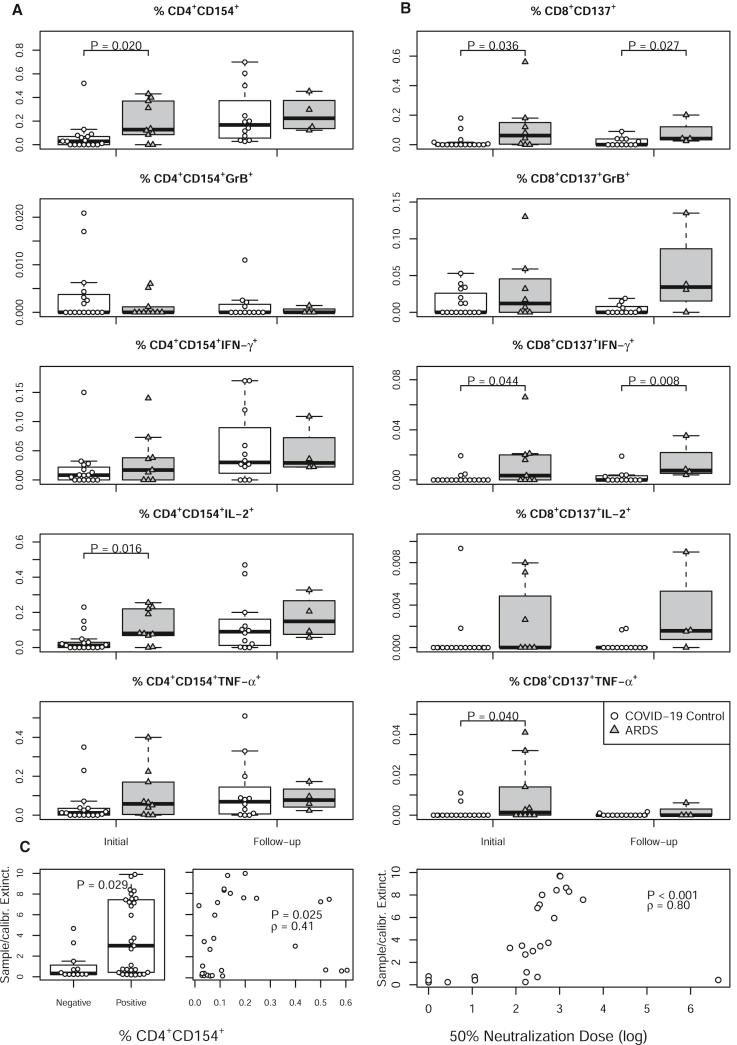
Preventing the progression to acute respiratory distress syndrome (ARDS) in COVID-19 is an unsolved challenge. The involvement of T cell immunity in this exacerbation remains unclear. To identify predictive markers of COVID-19 progress and outcome, we analyzed peripheral blood of 10 COVID-19-associated ARDS patients and 35 mild/moderate COVID-19 patients, not requiring intensive care. Using multi-parametric flow cytometry, we compared quantitative, phenotypic, and functional characteristics of circulating bulk immune cells, as well as SARS-CoV-2 S-protein-reactive T cells between the two groups. ARDS patients demonstrated significantly higher S-protein-reactive CD4 and CD8 T cells compared to non-ARDS patients. Of interest, comparison of circulating bulk T cells in ARDS patients to non-ARDS patients demonstrated decreased frequencies of CD4 and CD8 T cell subsets, with activated memory/effector T cells expressing tissue migration molecule CD11a. Importantly, survival from ARDS (4/10) was accompanied by a recovery of the CD11a T cell subsets in peripheral blood. Conclusively, data on S-protein-reactive polyfunctional T cells indicate the ability of ARDS patients to generate antiviral protection. Furthermore, decreased frequencies of activated memory/effector T cells expressing tissue migratory molecule CD11a observed in circulation of ARDS patients might suggest their involvement in ARDS development and propose the CD11a-based immune signature as a possible prognostic marker.
预防 COVID-19 急性呼吸窘迫综合征(ARDS)的进展是一个尚未解决的挑战。T 细胞免疫在此恶化中的参与仍不清楚。为了确定 COVID-19 进展和结果的预测标志物,我们分析了 10 例 COVID-19 相关 ARDS 患者和 35 例无需重症监护的轻度/中度 COVID-19 患者的外周血。使用多参数流式细胞术,我们比较了两组患者循环总免疫细胞的定量、表型和功能特征,以及 SARS-CoV-2 S 蛋白反应性 T 细胞。与非 ARDS 患者相比,ARDS 患者的 S 蛋白反应性 CD4 和 CD8 T 细胞明显更高。有趣的是,与非 ARDS 患者相比,ARDS 患者循环总 T 细胞的比较显示 CD4 和 CD8 T 细胞亚群的频率降低,表达组织迁移分子 CD11a 的激活记忆/效应 T 细胞。重要的是,从 ARDS 中存活(4/10)伴随着外周血中 CD11a T 细胞亚群的恢复。总之,关于 S 蛋白反应性多功能 T 细胞的数据表明 ARDS 患者能够产生抗病毒保护。此外,在 ARDS 患者循环中观察到表达组织迁移分子 CD11a 的激活记忆/效应 T 细胞的频率降低,可能表明它们参与了 ARDS 的发展,并提出基于 CD11a 的免疫特征作为可能的预后标志物。

 Zotero 插件