
新型冠状病毒肺炎住院患者和无症状感染者体内的抗刺突蛋白、抗核衣壳蛋白抗体及中和抗体
Anti-spike, Anti-nucleocapsid and Neutralizing Antibodies in SARS-CoV-2 Inpatients and Asymptomatic Individuals.
作者信息
Brochot Etienne, Demey Baptiste, Touzé Antoine, Belouzard Sandrine, Dubuisson Jean, Schmit Jean-Luc, Duverlie Gilles, Francois Catherine, Castelain Sandrine, Helle Francois
机构信息
Department of Virology, Amiens University Medical Center, Amiens, France.
AGIR Research Unit, UR UPJV 4294, Jules Verne University of Picardie, Amiens, France.
出版信息
Front Microbiol. 2020 Oct 19;11:584251. doi: 10.3389/fmicb.2020.584251. eCollection 2020.
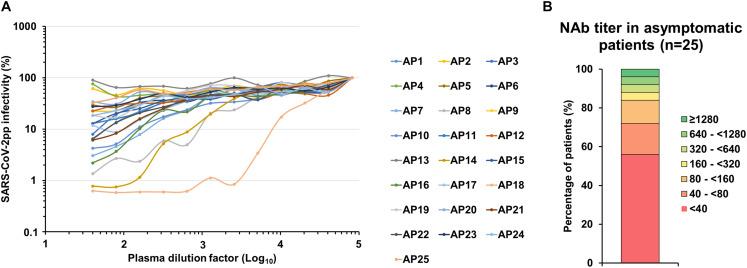
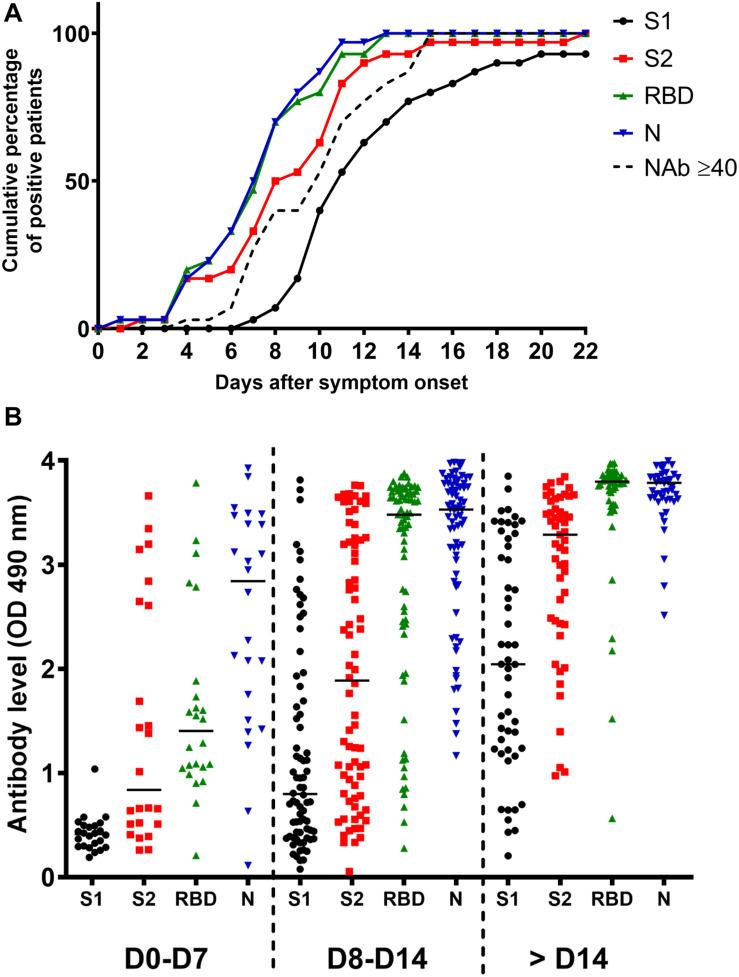
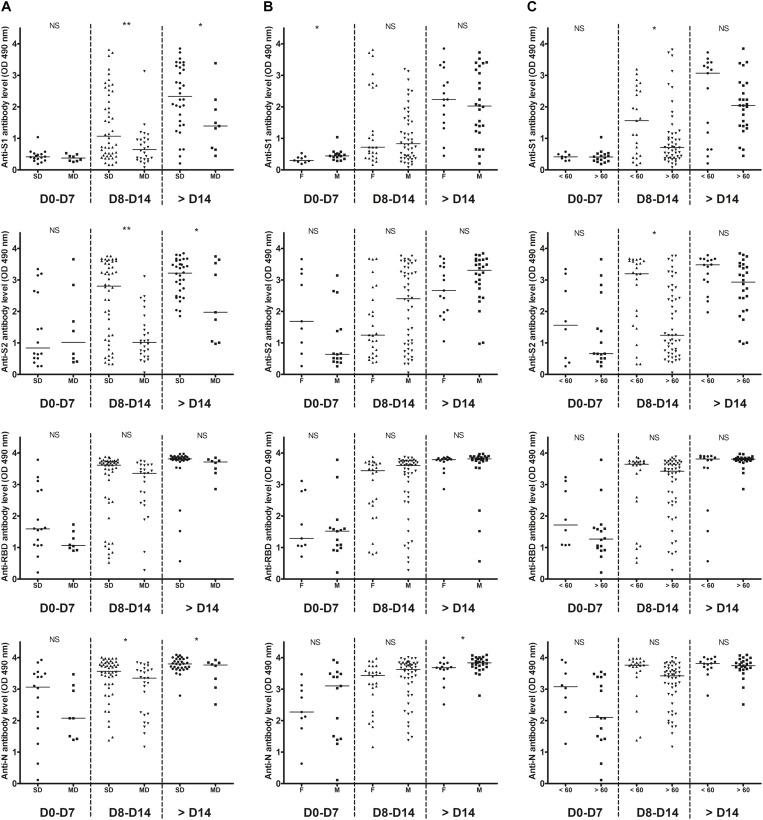
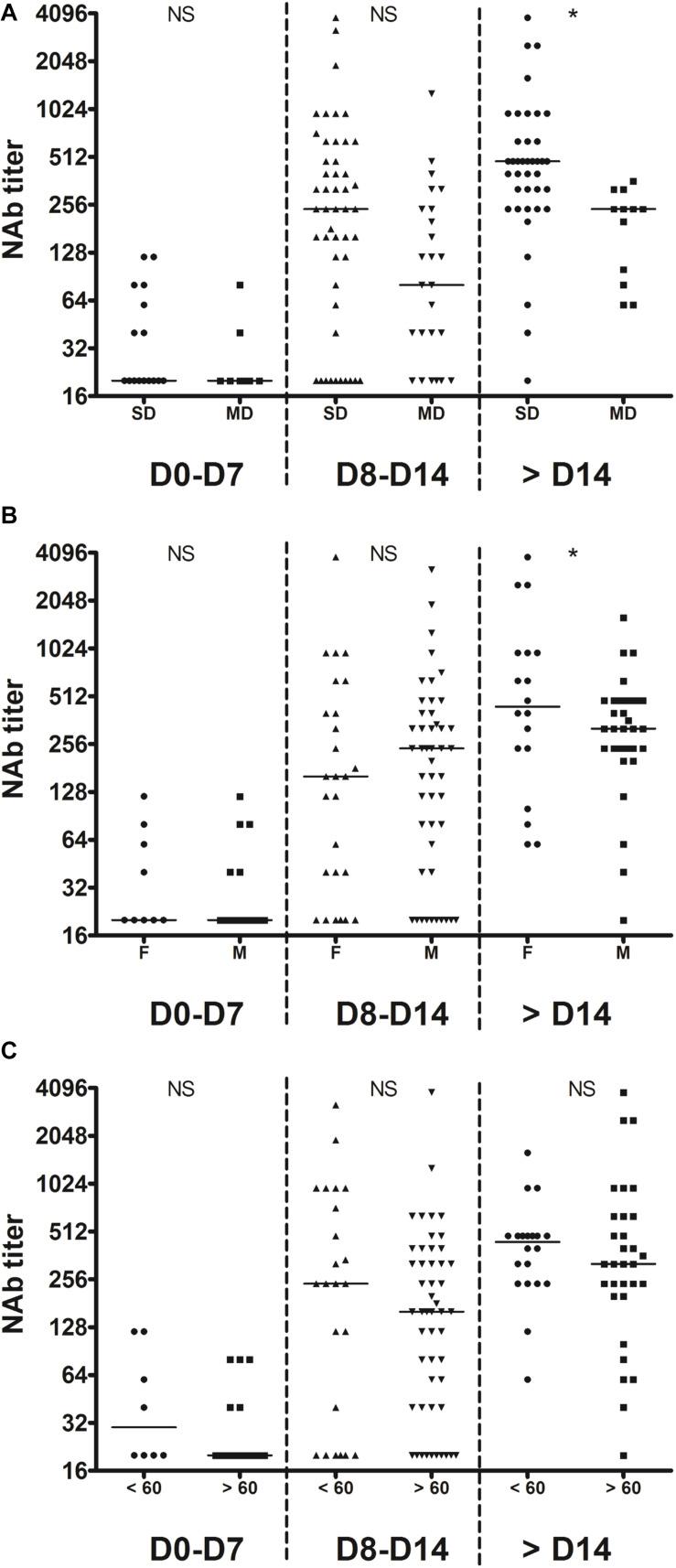
A better understanding of the anti-SARS-CoV-2 immune response is necessary to finely evaluate commercial serological assays but also to predict protection against reinfection and to help the development of vaccines. For this reason, we monitored the anti-SARS-CoV-2 antibody response in infected patients. In order to assess the time of seroconversion, we used 151 samples from 30 COVID-19 inpatients and monitored the detection kinetics of anti-S1, anti-S2, anti-RBD and anti-N antibodies with in-house ELISAs. We observed that specific antibodies were detectable in all inpatients 2 weeks post-symptom onset and that the detection of the SARS-CoV-2 Nucleocapsid and RBD was more sensitive than the detection of the S1 or S2 subunits. Using retroviral particles pseudotyped with the spike of the SARS-CoV-2, we also monitored the presence of neutralizing antibodies in these samples as well as 25 samples from asymptomatic individuals that were shown SARS-CoV-2 seropositive using commercial serological tests. Neutralizing antibodies reached a plateau 2 weeks post-symptom onset and then declined in the majority of inpatients but they were undetectable in 56% of asymptomatic patients. Our results indicate that the SARS-CoV-2 does not induce a prolonged neutralizing antibody response. They also suggest that induction of neutralizing antibodies is not the only strategy to adopt for the development of a vaccine. Finally, they imply that anti-SARS-CoV-2 neutralizing antibodies should be titrated to optimize convalescent plasma therapy.
更好地了解抗SARS-CoV-2免疫反应对于精确评估商业血清学检测、预测预防再次感染的能力以及助力疫苗研发都很有必要。因此,我们监测了感染患者体内的抗SARS-CoV-2抗体反应。为了评估血清转化时间,我们使用了30名COVID-19住院患者的151份样本,并通过内部酶联免疫吸附测定法监测抗S1、抗S2、抗受体结合域(RBD)和抗核衣壳(N)抗体的检测动力学。我们观察到,所有住院患者在症状出现后2周均可检测到特异性抗体,且SARS-CoV-2核衣壳和RBD的检测比S1或S2亚基的检测更敏感。我们还使用假型化有SARS-CoV-2刺突蛋白的逆转录病毒颗粒,监测了这些样本以及25份来自无症状个体的样本中中和抗体的存在情况,这些无症状个体使用商业血清学检测显示为SARS-CoV-2血清阳性。中和抗体在症状出现后2周达到平台期,然后在大多数住院患者中下降,但在56%的无症状患者中无法检测到。我们的结果表明,SARS-CoV-2不会诱导长期的中和抗体反应。它们还表明,诱导中和抗体不是疫苗研发唯一可采用的策略。最后,它们意味着应滴定抗SARS-CoV-2中和抗体以优化康复期血浆治疗。

 Zotero 插件