
细胞外囊泡 (EVs) 在骨代谢和骨质疏松症的表观遗传调控中的作用。
The Role of Extracellular Vesicles (EVs) in the Epigenetic Regulation of Bone Metabolism and Osteoporosis.
机构信息
Department of Women's and Children's Health, University of Padova, 35122 Padova, Italy.
Research Laboratories, Department of Onco-hematology, Pediatric Hospital Bambino Gesù, 00146 Rome, Italy.
出版信息
Int J Mol Sci. 2020 Nov 17;21(22):8682. doi: 10.3390/ijms21228682.
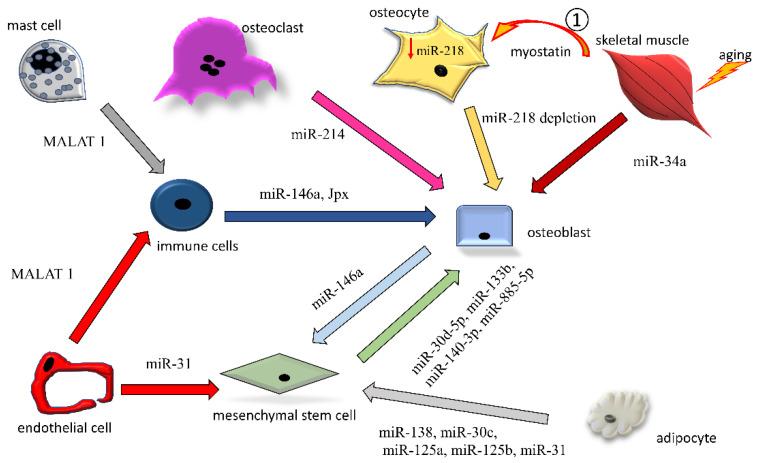
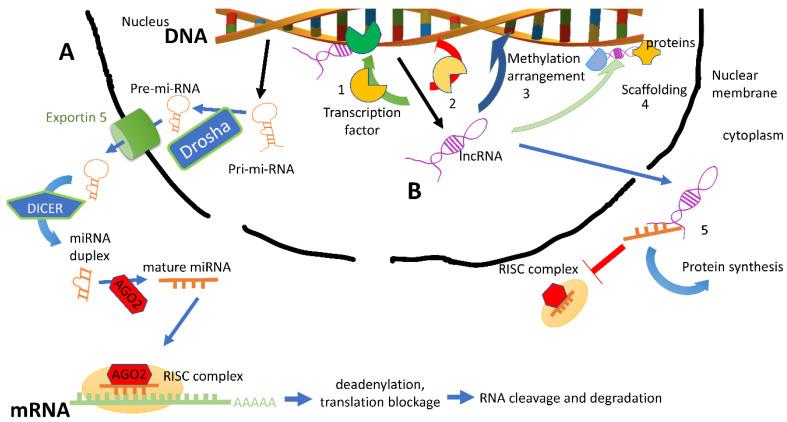
Extracellular vesicles (EVs) are complex phospholipidic structures actively released by cells. EVs are recognized as powerful means of intercellular communication since they contain many signaling molecules (including lipids, proteins, and nucleic acids). In parallel, changes in epigenetic processes can lead to changes in gene function and finally lead to disease onset and progression. Recent breakthroughs have revealed the complex roles of non-coding RNAs (microRNAs (miRNAs) and long non-coding RNAs (lncRNAs)) in epigenetic regulation. Moreover, a substantial body of evidence demonstrates that non-coding RNAs can be shuttled among the cells and tissues via EVs, allowing non-coding RNAs to reach distant cells and exert systemic effects. Resident bone cells, including osteoclasts, osteoblasts, osteocytes, and endothelial cells, are tightly regulated by non-coding RNAs, and many of them can be exported from the cells to neighboring ones through EVs, triggering pathological conditions. For these reasons, researchers have also started to exploit EVs as a theranostic tool to address osteoporosis. In this review, we summarize some recent findings regarding the EVs' involvement in the fine regulation of non-coding RNAs in the context of bone metabolism and osteoporosis.
细胞外囊泡 (EVs) 是细胞主动释放的复杂磷脂结构。EVs 被认为是细胞间通讯的有力手段,因为它们包含许多信号分子(包括脂质、蛋白质和核酸)。同时,表观遗传过程的变化会导致基因功能的改变,最终导致疾病的发生和发展。最近的突破揭示了非编码 RNA(microRNAs (miRNAs) 和长非编码 RNA (lncRNAs))在表观遗传调控中的复杂作用。此外,大量证据表明,非编码 RNA 可以通过 EV 在细胞和组织之间穿梭,使非编码 RNA 能够到达远处的细胞并发挥系统作用。驻留于骨组织中的细胞,包括破骨细胞、成骨细胞、骨细胞和内皮细胞,受到非编码 RNA 的严格调控,其中许多非编码 RNA 可以通过 EV 从细胞输出到邻近细胞,引发病理状态。出于这些原因,研究人员也开始利用 EV 作为治疗和诊断工具来治疗骨质疏松症。在这篇综述中,我们总结了一些关于 EV 在骨代谢和骨质疏松症背景下参与非编码 RNA 的精细调控的最新发现。

 Zotero 插件