
优化聚乳酸-羟基乙酸共聚物-聚乙二醇纳米颗粒的大小和分布以增强药物对炎症性肠屏障的靶向作用。
Optimising PLGA-PEG Nanoparticle Size and Distribution for Enhanced Drug Targeting to the Inflamed Intestinal Barrier.
作者信息
Mohan Lauren J, McDonald Lauren, Daly Jacqueline S, Ramtoola Zebunnissa
机构信息
Division of Biology, Department of Anatomy and Regenerative Medicine, RCSI University of Medicine and Health Sciences, Dublin 2 D02 YN77, Ireland.
School of Pharmacy and Biological Sciences, RCSI University of Medicine and Health Sciences, Dublin 2 D02 YN77, Ireland.
出版信息
Pharmaceutics. 2020 Nov 19;12(11):1114. doi: 10.3390/pharmaceutics12111114.
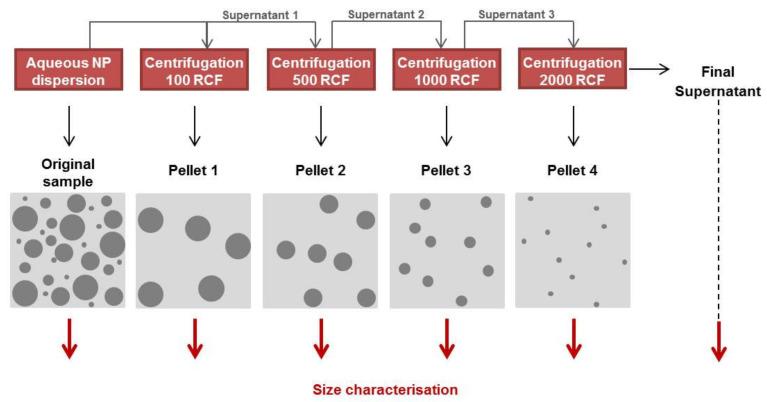
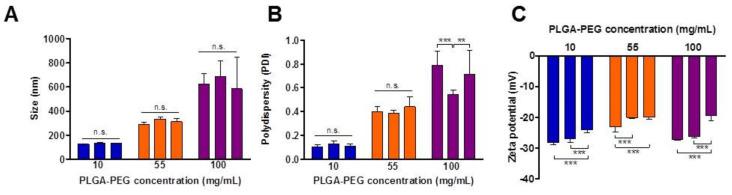
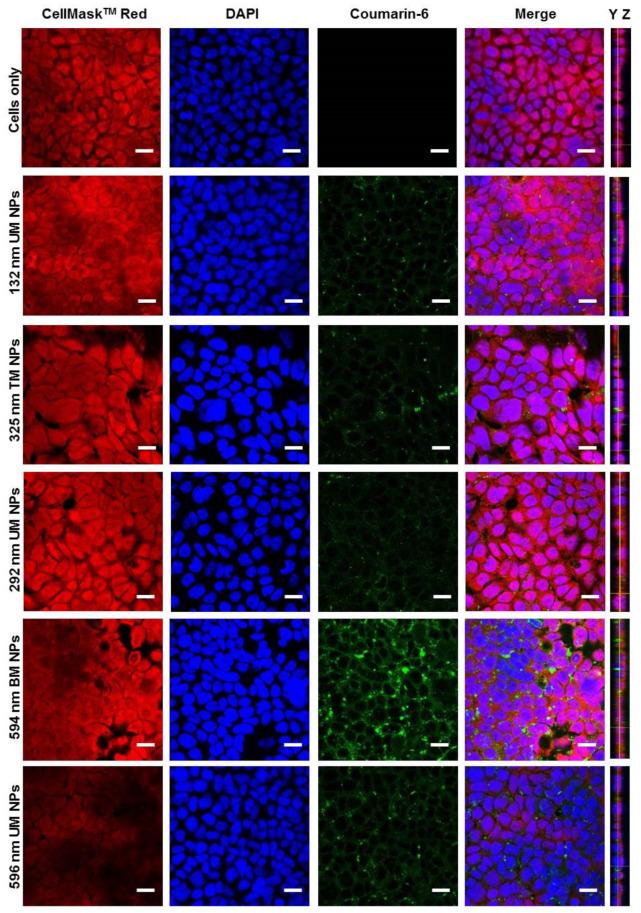
Oral nanomedicines are being investigated as an innovative strategy for targeted drug delivery to treat inflammatory bowel diseases. Preclinical studies have shown that nanoparticles (NPs) can preferentially penetrate inflamed intestinal tissues, allowing for targeted drug delivery. NP size is a critical factor affecting their interaction with the inflamed intestinal barrier and this remains poorly defined. In this study we aimed to assess the impact of NP particle size (PS) and polydispersity (PDI) on cell interaction and uptake in an inflamed epithelial cell model. Using 10, 55 and 100 mg/mL poly(lactic-co-glycolic acid)-polyethylene glycol (PLGA-PEG), NPs of 131, 312 and 630 nm PS, respectively, were formulated by solvent dispersion. NP recovery was optimised by differential centrifugation to yield NPs of decreased and unimodal size distribution. NP-cell interaction was assessed in healthy and inflamed caco-2 cell monolayers. Results show that NP interaction with caco-2 cells increased with increasing PS and PDI and was significantly enhanced in inflamed cells. Trypan blue quenching revealed that a significant proportion of multimodal NPs were primarily membrane bound, while monomodal NPs were internalized within cells. These results are interesting as the PS and PDI of NPs can be optimised to allow targeting of therapeutic agents to the epithelial membrane and/or intracellular targets in the inflamed intestinal epithelium.
口服纳米药物正作为一种靶向给药的创新策略进行研究,用于治疗炎症性肠病。临床前研究表明,纳米颗粒(NPs)能够优先穿透发炎的肠道组织,实现靶向给药。NP大小是影响其与发炎肠道屏障相互作用的关键因素,而这一点仍未明确界定。在本研究中,我们旨在评估NP粒径(PS)和多分散性(PDI)对发炎上皮细胞模型中细胞相互作用和摄取的影响。使用10、55和100mg/mL的聚乳酸-乙醇酸-聚乙二醇(PLGA-PEG),分别通过溶剂分散法制备了PS为131、312和630nm的NPs。通过差速离心优化NP回收率,以获得粒径减小且单峰分布的NPs。在健康和发炎的caco-2细胞单层中评估NP-细胞相互作用。结果表明,NP与caco-2细胞的相互作用随着PS和PDI的增加而增强,并且在发炎细胞中显著增强。台盼蓝淬灭显示,相当一部分多峰NP主要与膜结合,而单峰NP则被细胞内化。这些结果很有意思,因为可以优化NP的PS和PDI,使治疗剂能够靶向发炎肠道上皮中的上皮膜和/或细胞内靶点。





 Zotero 插件