
聚乳酸-乙醇酸纳米和微粒在递送调节炎症不同阶段的药物中的应用。
Use of Poly Lactic-co-glycolic Acid Nano and Micro Particles in the Delivery of Drugs Modulating Different Phases of Inflammation.
作者信息
Puricelli Chiara, Gigliotti Casimiro Luca, Stoppa Ian, Sacchetti Sara, Pantham Deepika, Scomparin Anna, Rolla Roberta, Pizzimenti Stefania, Dianzani Umberto, Boggio Elena, Sutti Salvatore
机构信息
Department of Health Sciences, Università del Piemonte Orientale, Via Solaroli 17, 28100 Novara, Italy.
Maggiore della Carità University Hospital, Corso Mazzini 18, 28100 Novara, Italy.
出版信息
Pharmaceutics. 2023 Jun 20;15(6):1772. doi: 10.3390/pharmaceutics15061772.
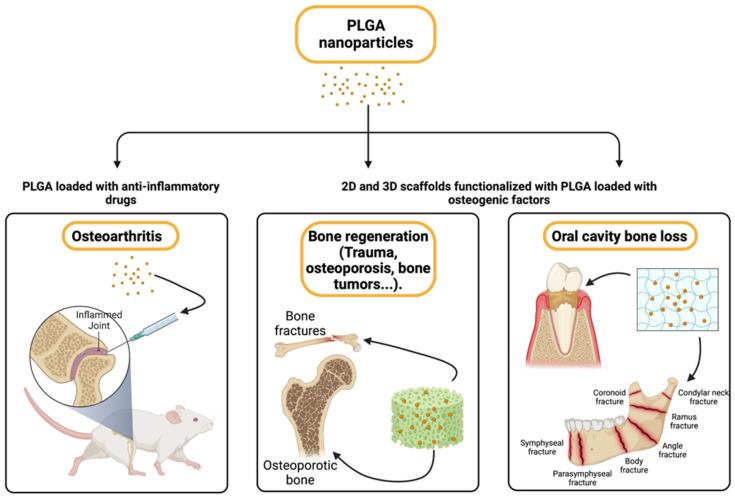
Chronic inflammation contributes to the pathogenesis of many diseases, including apparently unrelated conditions such as metabolic disorders, cardiovascular diseases, neurodegenerative diseases, osteoporosis, and tumors, but the use of conventional anti-inflammatory drugs to treat these diseases is generally not very effective given their adverse effects. In addition, some alternative anti-inflammatory medications, such as many natural compounds, have scarce solubility and stability, which are associated with low bioavailability. Therefore, encapsulation within nanoparticles (NPs) may represent an effective strategy to enhance the pharmacological properties of these bioactive molecules, and poly lactic-co-glycolic acid (PLGA) NPs have been widely used because of their high biocompatibility and biodegradability and possibility to finely tune erosion time, hydrophilic/hydrophobic nature, and mechanical properties by acting on the polymer's composition and preparation technique. Many studies have been focused on the use of PLGA-NPs to deliver immunosuppressive treatments for autoimmune and allergic diseases or to elicit protective immune responses, such as in vaccination and cancer immunotherapy. By contrast, this review is focused on the use of PLGA NPs in preclinical in vivo models of other diseases in which a key role is played by chronic inflammation or unbalance between the protective and reparative phases of inflammation, with a particular focus on intestinal bowel disease; cardiovascular, neurodegenerative, osteoarticular, and ocular diseases; and wound healing.
慢性炎症促成了许多疾病的发病机制,包括一些看似不相关的病症,如代谢紊乱、心血管疾病、神经退行性疾病、骨质疏松症和肿瘤,但鉴于其副作用,使用传统抗炎药治疗这些疾病通常效果不佳。此外,一些替代性抗炎药物,如许多天然化合物,溶解性和稳定性较差,这与低生物利用度相关。因此,纳米颗粒(NPs)包封可能是增强这些生物活性分子药理特性的有效策略,聚乳酸-乙醇酸共聚物(PLGA)纳米颗粒因其高生物相容性和可生物降解性,以及通过改变聚合物组成和制备技术来精细调节侵蚀时间、亲水/疏水性质和机械性能的可能性而被广泛应用。许多研究集中于使用PLGA纳米颗粒为自身免疫性疾病和过敏性疾病提供免疫抑制治疗,或引发保护性免疫反应,如在疫苗接种和癌症免疫治疗中。相比之下,本综述聚焦于PLGA纳米颗粒在其他疾病临床前体内模型中的应用,在这些疾病中,慢性炎症或炎症保护与修复阶段之间的失衡起着关键作用,特别关注肠道疾病、心血管疾病、神经退行性疾病、骨关节疾病和眼部疾病以及伤口愈合。


 Zotero 插件