
达芦那韦纳米制剂可抑制巨噬细胞中的HIV发病机制,并改善药物向小鼠脑部的递送。
Darunavir Nanoformulation Suppresses HIV Pathogenesis in Macrophages and Improves Drug Delivery to the Brain in Mice.
作者信息
Zhou Lina, Godse Sandip, Sinha Namita, Kodidela Sunitha, Singh Udai, Kumar Santosh
机构信息
Department of Pharmaceutical Sciences, University of Tennessee Health Science Center, 881 Madison Ave., Memphis, TN 38163, USA.
出版信息
Pharmaceutics. 2024 Apr 19;16(4):555. doi: 10.3390/pharmaceutics16040555.
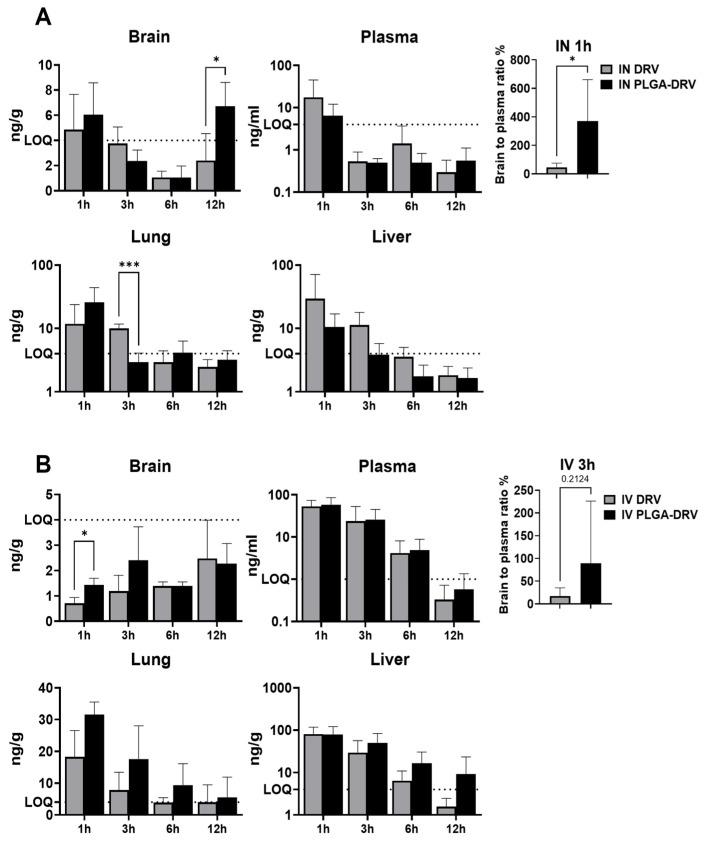
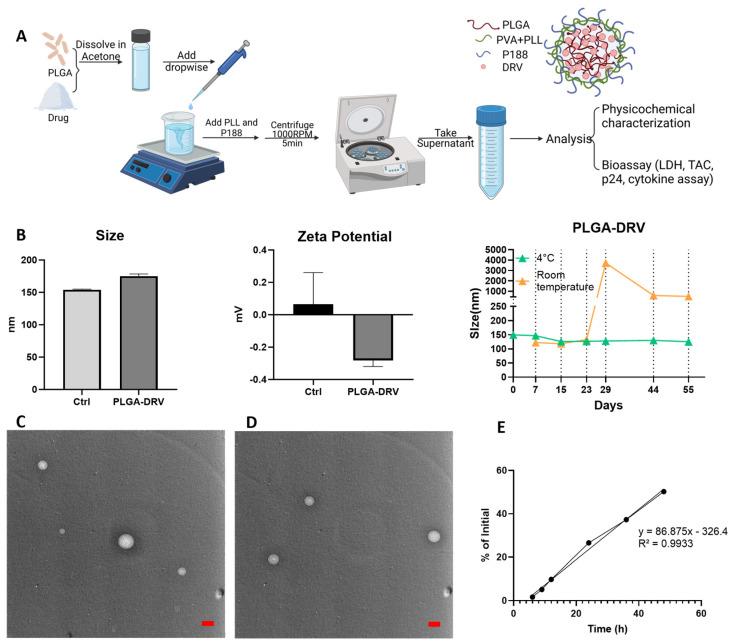
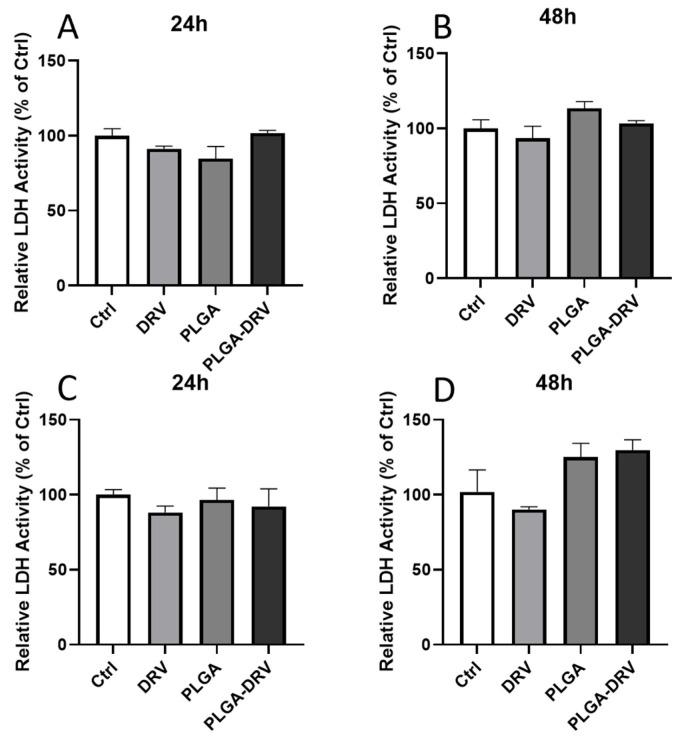
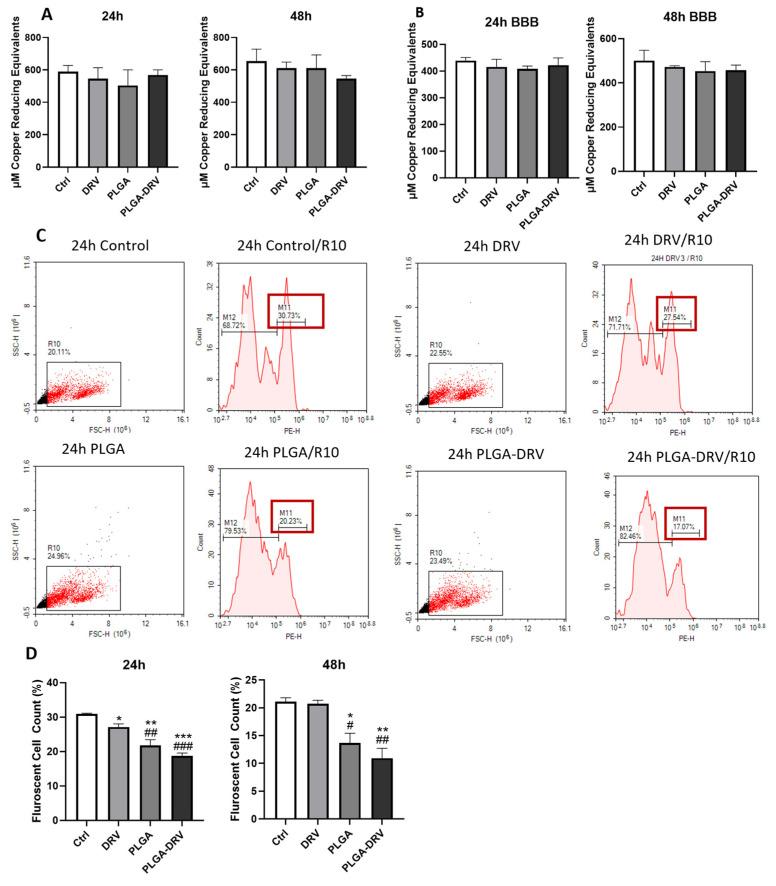
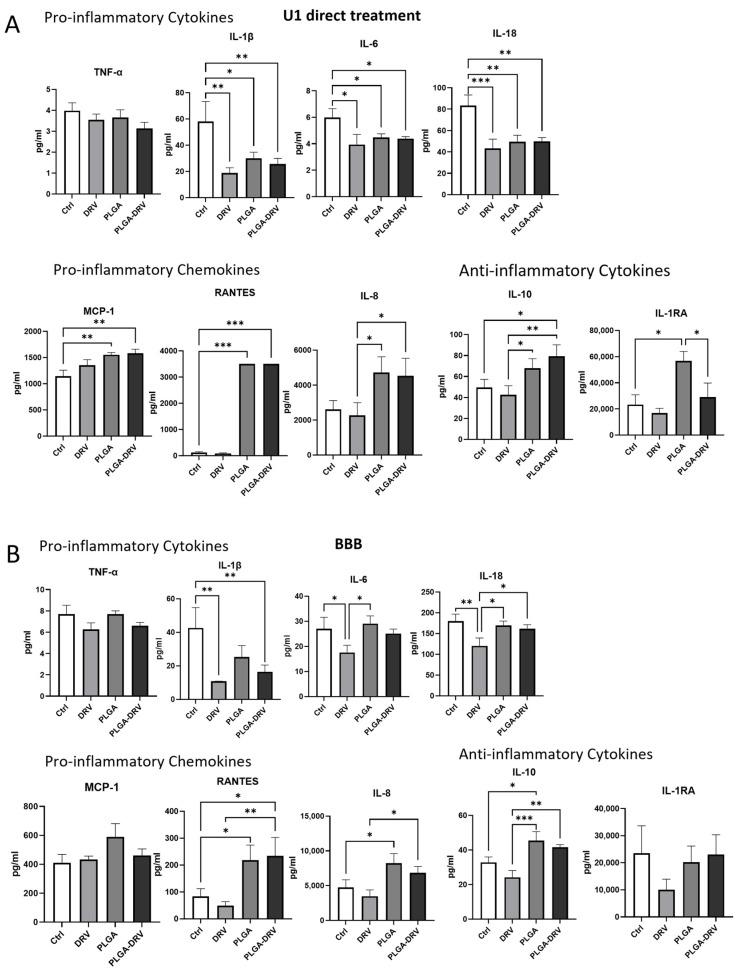
Although antiretroviral therapy (ART) can suppress peripheral HIV, patients still suffer from neuroHIV due to insufficient levels of ART drugs in the brain. Hence, this study focuses on developing a poly lactic-co-glycolic acid (PLGA) nanoparticle-based ART drug delivery system for darunavir (DRV) using an intranasal route that can overcome the limitation of drug metabolic stability and blood-brain barrier (BBB) permeability. The physicochemical properties of PLGA-DRV were characterized. The results indicated that PLGA-DRV formulation inhibits HIV replication in U1 macrophages directly and in the presence of the BBB without inducing cytotoxicity. However, the PLGA-DRV did not inhibit HIV replication more than DRV alone. Notably, the total antioxidant capacity remained unchanged upon treatment with both DRV or PLGA-DRV in U1 cells. Compared to DRV alone, PLGA-DRV further decreased reactive oxygen species, suggesting a decrease in oxidative stress by the formulation. Oxidative stress is generally increased by HIV infection, leading to increased inflammation. Although the PLGA-DRV formulation did not further reduce the inflammatory response, the formulation did not provoke an inflammatory response in HIV-infected U1 macrophages. As expected, in vitro experiments showed higher DRV permeability by PLGA-DRV than DRV alone to U1 macrophages. Importantly, in vivo experiments, especially using intranasal administration of PLGA-DRV in wild-type mice, demonstrated a significant increase in the brain-to-plasma ratio of DRV compared to the free DRV. Overall, findings from this study attest to the potential of the PLGA-DRV nanoformulation in reducing HIV pathogenesis in macrophages and enhancing drug delivery to the brain, offering a promising avenue for treating HIV-related neurological disorders.
尽管抗逆转录病毒疗法(ART)可以抑制外周血中的HIV,但由于大脑中ART药物水平不足,患者仍会遭受神经HIV的折磨。因此,本研究专注于开发一种基于聚乳酸-乙醇酸共聚物(PLGA)纳米颗粒的抗逆转录病毒药物递送系统,用于达芦那韦(DRV),采用鼻内给药途径,该途径可以克服药物代谢稳定性和血脑屏障(BBB)通透性的限制。对PLGA-DRV的物理化学性质进行了表征。结果表明,PLGA-DRV制剂在存在血脑屏障的情况下直接抑制U1巨噬细胞中的HIV复制,且不诱导细胞毒性。然而,PLGA-DRV并不比单独使用DRV更能抑制HIV复制。值得注意的是,在用DRV或PLGA-DRV处理U1细胞后,总抗氧化能力保持不变。与单独使用DRV相比,PLGA-DRV进一步降低了活性氧,表明该制剂降低了氧化应激。HIV感染通常会增加氧化应激,导致炎症加剧。尽管PLGA-DRV制剂没有进一步降低炎症反应,但该制剂在HIV感染的U1巨噬细胞中并未引发炎症反应。正如预期的那样,体外实验表明,PLGA-DRV对U1巨噬细胞的DRV通透性高于单独使用DRV。重要的是,体内实验,特别是在野生型小鼠中鼻内给予PLGA-DRV,与游离DRV相比,DRV的脑-血浆比显著增加。总体而言,本研究结果证明了PLGA-DRV纳米制剂在降低巨噬细胞中HIV发病机制和增强药物向大脑递送方面的潜力,为治疗HIV相关神经疾病提供了一条有前景的途径。


 Zotero 插件