
睡眠依赖的巩固有利于弱记忆吗?
Does sleep-dependent consolidation favour weak memories?
机构信息
School of Psychology and Centre for Human Brain Health, University of Birmingham, Birmingham, UK.
School of Sport, Exercise and Rehabilitation Sciences, University of Birmingham, Birmingham, UK.
出版信息
Cortex. 2021 Jan;134:65-75. doi: 10.1016/j.cortex.2020.10.005. Epub 2020 Oct 28.
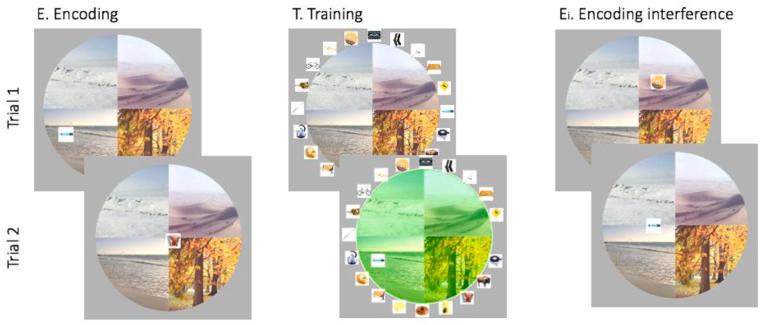
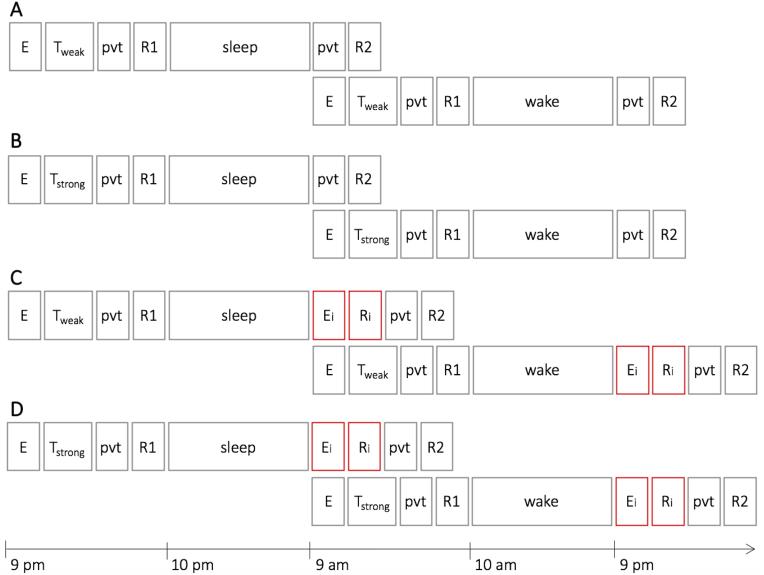
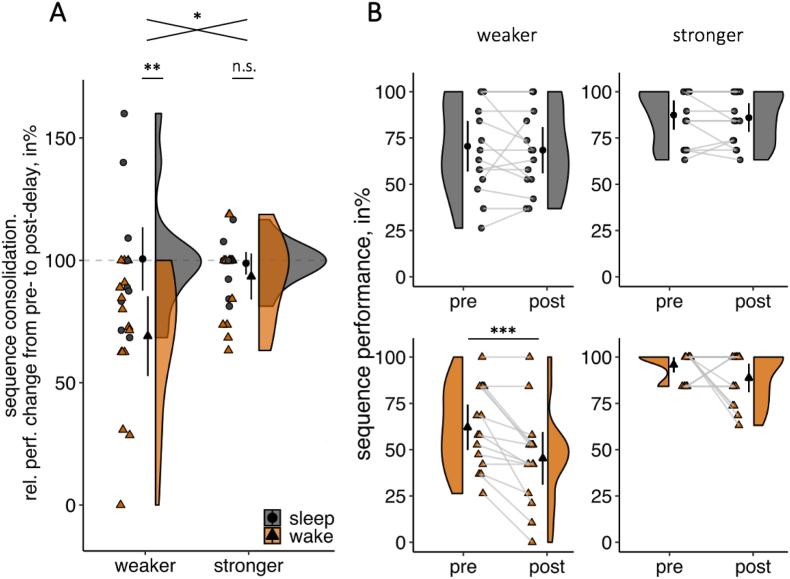
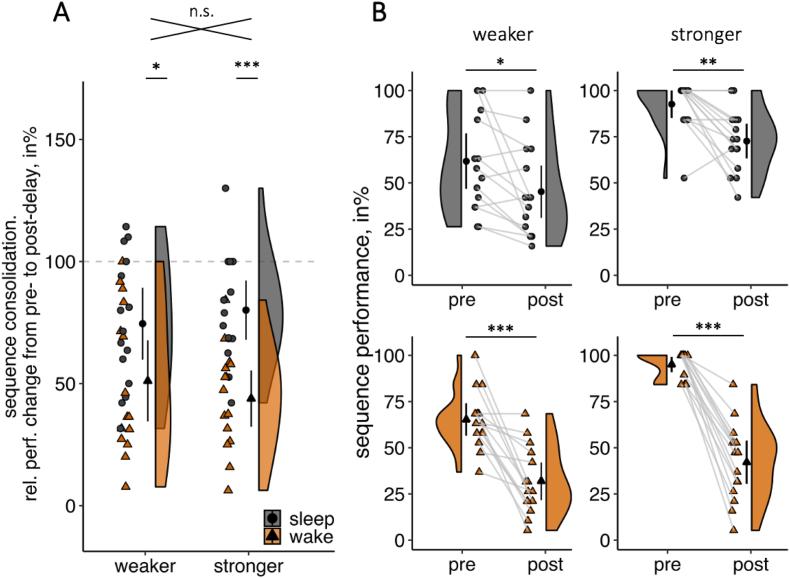
Sleep stabilizes newly acquired memories, a process referred to as memory consolidation. According to recent studies, sleep-dependent consolidation processes might be deployed to different extents for different types of memories. In particular, weaker memories might benefit greater from post-learning sleep than stronger memories. However, under standard testing conditions, sleep-dependent consolidation effects for stronger memories might be obscured by ceiling effects. To test this possibility, we devised a new memory paradigm (Memory Arena) in which participants learned temporospatial arrangements of objects. Prior to a delay period spent either awake or asleep, training thresholds were controlled to yield relatively weak or relatively strong memories. After the delay period, retrieval difficulty was controlled via the presence or absence of a retroactive interference task. Under standard testing conditions (no interference), a sleep-dependent consolidation effect was indeed observed for weaker memories only. Critically though, with increased retrieval demands, sleep-dependent consolidation effects were seen for both weaker and stronger memories. These results suggest that all memories are consolidated during sleep, but that memories of different strengths require different testing conditions to unveil their benefit from post-learning sleep.
睡眠稳定新获得的记忆,这个过程被称为记忆巩固。根据最近的研究,睡眠依赖的巩固过程可能会针对不同类型的记忆以不同的程度展开。特别是,较弱的记忆可能比较强的记忆更受益于学习后的睡眠。然而,在标准的测试条件下,较强记忆的睡眠依赖巩固效应可能会被上限效应所掩盖。为了验证这一可能性,我们设计了一种新的记忆范式(记忆竞技场),参与者在其中学习物体的时空排列。在清醒或睡眠的延迟期之前,通过控制训练阈值,产生相对较弱或相对较强的记忆。在延迟期之后,通过是否存在回溯干扰任务来控制检索难度。在标准测试条件下(无干扰),仅观察到较弱记忆的睡眠依赖巩固效应。但重要的是,随着检索需求的增加,较弱和较强的记忆都出现了睡眠依赖的巩固效应。这些结果表明,所有的记忆都在睡眠中得到巩固,但不同强度的记忆需要不同的测试条件才能揭示它们从学习后睡眠中获益。

 Zotero 插件