
合成的FeO/AC/TiO纳米催化剂上亚甲基蓝染料的光催化降解:降解及可重复使用性研究
Methylene Blue Dye Photocatalytic Degradation over Synthesised FeO/AC/TiO Nano-Catalyst: Degradation and Reusability Studies.
作者信息
Moosavi Seyedehmaryam, Li Rita Yi Man, Lai Chin Wei, Yusof Yusliza, Gan Sinyee, Akbarzadeh Omid, Chowhury Zaira Zaman, Yue Xiao-Guang, Johan Mohd RafieBin
机构信息
Nanotechnology & Catalysis Research Centre (NANOCAT), Institute for Advanced Studies (IAS), University for Malaya (UM), Level 3, Block A, Kuala Lumpur 50603, Malaysia.
Sustainable Real Estate Research Center, Hong Kong Shue Yan University, North Point, Hong Kong.
出版信息
Nanomaterials (Basel). 2020 Nov 27;10(12):2360. doi: 10.3390/nano10122360.
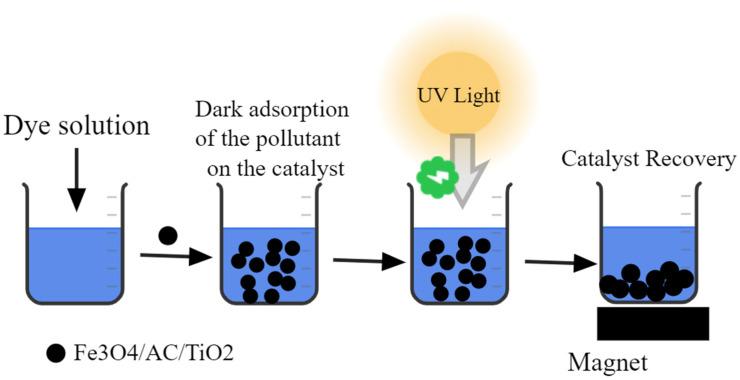
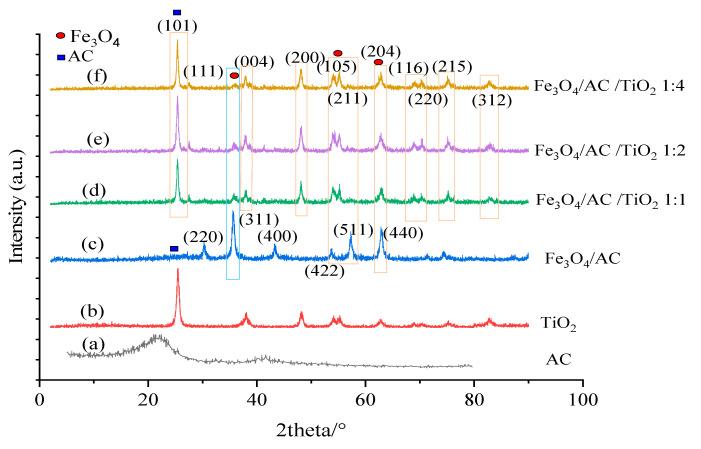
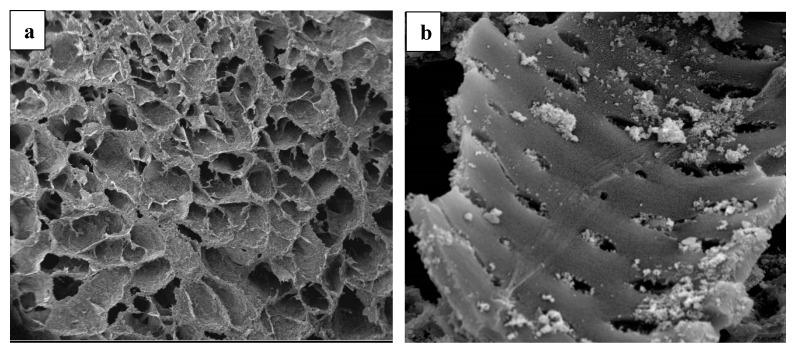
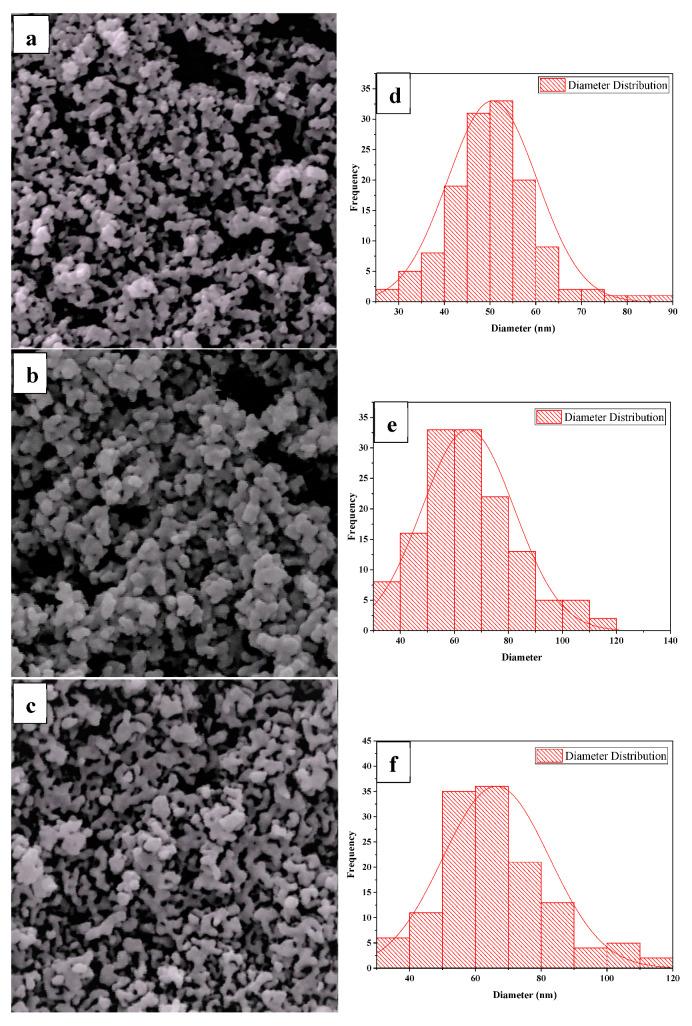
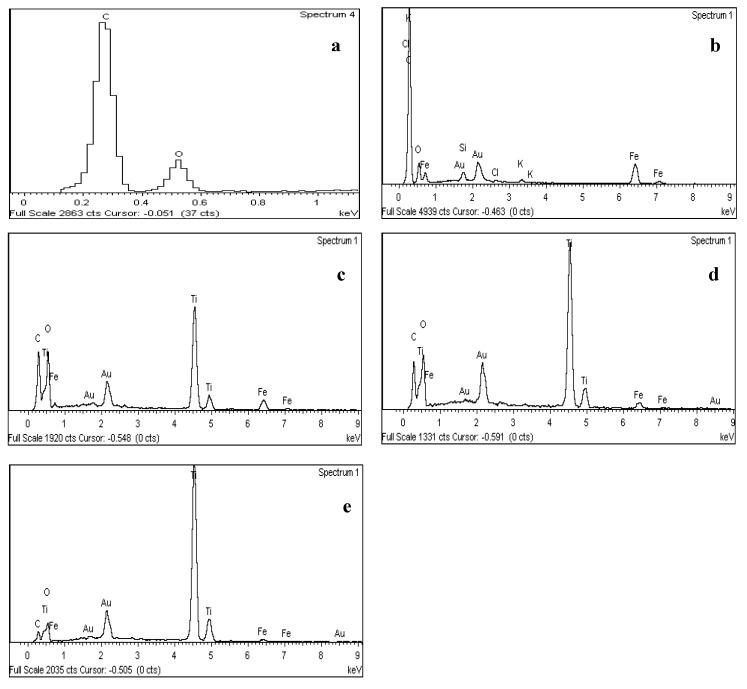
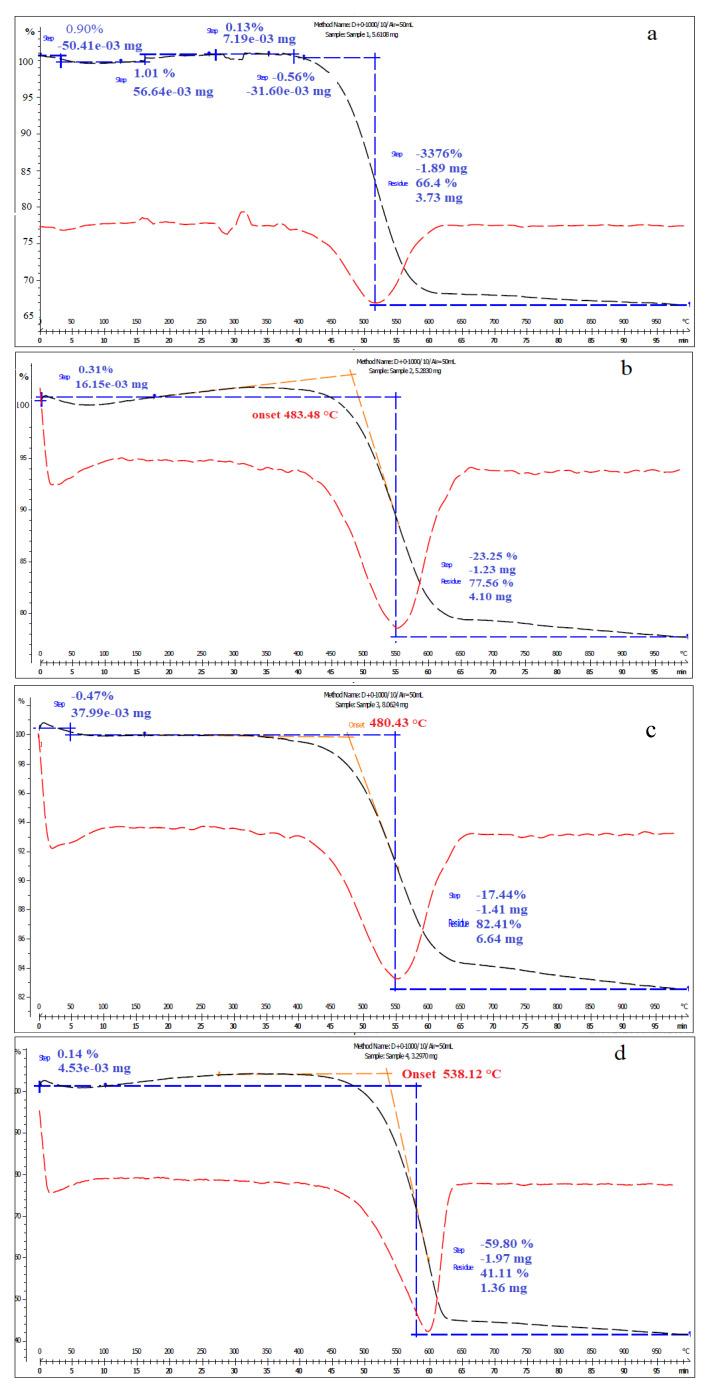
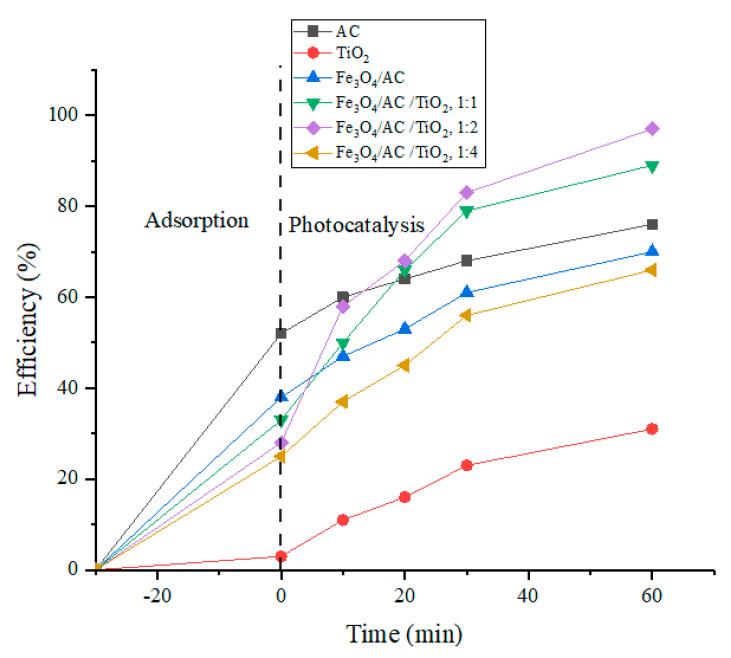
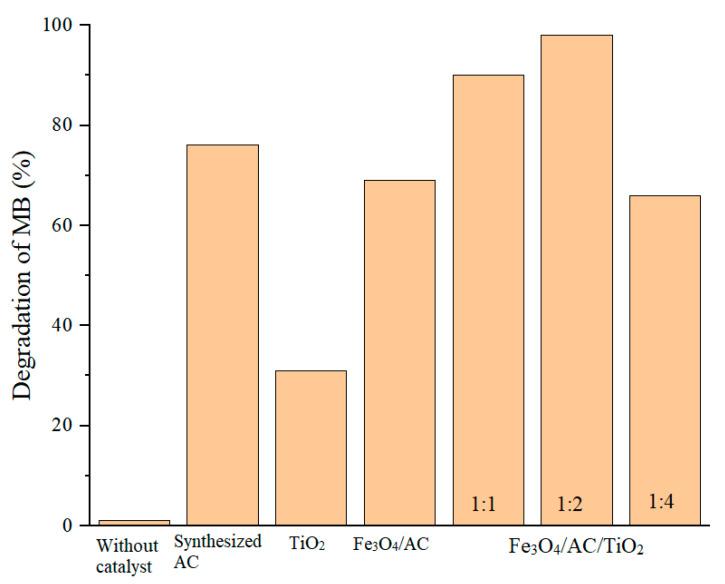
In this study, activated carbon (AC) from coconut shell, as a widely available agricultural waste, was synthesised in a simple one-step procedure and used to produce a magnetic FeO/AC/TiO nano-catalyst for the degradation of methylene blue (MB) dye under UV light. Scanning electron microscopy revealed that TiO nanoparticles, with an average particle size of 45 to 62 nm, covered the surface of the AC porous structure without a reunion of its structure, which according to the TGA results enhanced the stability of the photocatalyst at high temperatures. The photocatalytic activities of synthesised AC, commercial TiO, FeO/AC, and FeO/AC/TiO were compared, with FeO/AC/TiO (1:2) exhibiting the highest catalytic activity (98%). Furthermore, evaluation of the recovery and reusability of the photocatalysts after treatment revealed that seven treatment cycles were possible without a significant reduction in the removal efficiency.
在本研究中,以广泛可得的农业废弃物椰壳活性炭(AC)为原料,通过简单的一步法合成了磁性FeO/AC/TiO纳米催化剂,用于在紫外光下降解亚甲基蓝(MB)染料。扫描电子显微镜显示,平均粒径为45至62nm的TiO纳米颗粒覆盖在AC多孔结构表面,其结构未发生团聚,根据热重分析(TGA)结果,这提高了光催化剂在高温下的稳定性。比较了合成的AC、商用TiO、FeO/AC和FeO/AC/TiO的光催化活性,其中FeO/AC/TiO(1:2)表现出最高的催化活性(98%)。此外,对处理后光催化剂的回收和再利用性评估表明,在去除效率没有显著降低的情况下,可以进行七个处理循环。

 Zotero 插件