
长期糖皮质激素暴露不会加速培养的人成纤维细胞端粒缩短。
Prolonged Glucocorticoid Exposure Does Not Accelerate Telomere Shortening in Cultured Human Fibroblasts.
机构信息
Department of Psychiatry, University of North Carolina, Chapel Hill, NC 27599, USA.
Department of Genetics, University of North Carolina, Chapel Hill, NC 27514, USA.
出版信息
Genes (Basel). 2020 Nov 27;11(12):1425. doi: 10.3390/genes11121425.
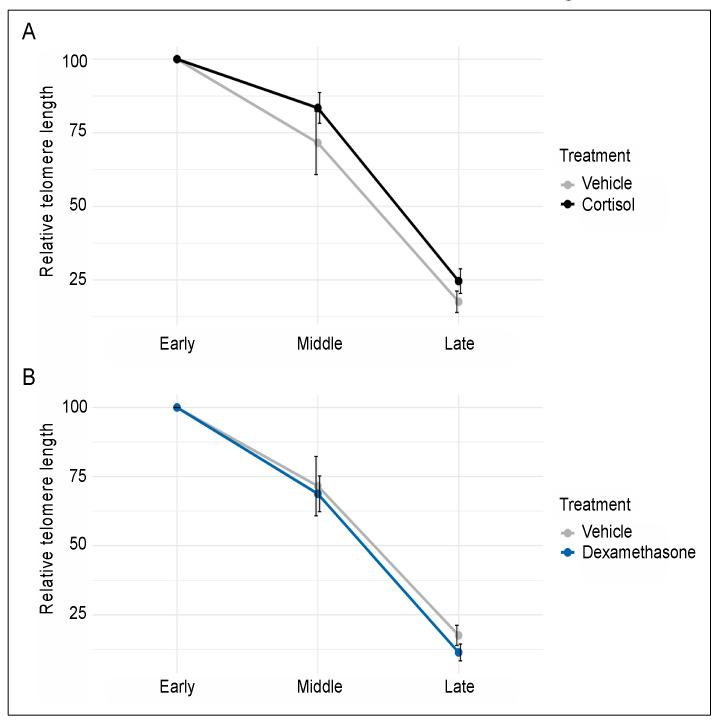
Psychosocial stress, especially when chronic or excessive, can increase disease risk and accelerate biological aging. Although the underlying mechanisms are unclear, in vivo studies have associated exposure to stress and glucocorticoid stress hormones with shorter telomere length. However, the extent to which prolonged glucocorticoid exposure can shorten telomeres in controlled experimental settings remains unknown. Using a well-characterized cell line of human fibroblasts that undergo gradual telomere shortening during serial passaging in culture, we show that prolonged exposure (up to 51 days) to either naturalistic levels of the human endogenous glucocorticoid cortisol or the more potent synthetic glucocorticoid dexamethasone is not sufficient to accelerate telomere shortening. While our findings await extension in other cell types and biological contexts, they indicate that the in vivo association of psychosocial stress with telomere shortening is unlikely to be mediated by a direct and universal glucocorticoid effect on telomere length.
心理社会压力,尤其是慢性或过度的心理社会压力,会增加疾病风险并加速生物衰老。虽然其潜在机制尚不清楚,但体内研究已经将压力和糖皮质激素应激激素的暴露与端粒缩短联系起来。然而,在受控的实验环境中,延长糖皮质激素暴露是否会缩短端粒仍不清楚。我们使用经过充分表征的人成纤维细胞系,这些细胞在培养中连续传代时端粒逐渐缩短,结果表明,长时间(长达 51 天)暴露于内源性糖皮质激素皮质醇的自然水平或更有效的合成糖皮质激素地塞米松,不足以加速端粒缩短。虽然我们的发现有待在其他细胞类型和生物学背景中扩展,但它们表明,体内心理社会压力与端粒缩短的关联不太可能是由糖皮质激素对端粒长度的直接和普遍影响介导的。

 Zotero 插件