
评估葡萄球菌噬菌体Sb-1作为抗生素辅助剂对抗利福平耐药生物膜的效果。
Evaluation of Staphylococcal Bacteriophage Sb-1 as an Adjunctive Agent to Antibiotics Against Rifampin-Resistant Biofilms.
作者信息
Wang Lei, Tkhilaishvili Tamta, Trampuz Andrej, Gonzalez Moreno Mercedes
机构信息
Center for Musculoskeletal Surgery, Humboldt-Universität zu Berlin and Berlin Institute of Health, Corporate Member of Freie Universität Berlin, Charité - Universitätsmedizin Berlin, Berlin, Germany.
BIH Center for Regenerative Therapies, Charité - Universitätsmedizin Berlin, Berlin, Germany.
出版信息
Front Microbiol. 2020 Nov 11;11:602057. doi: 10.3389/fmicb.2020.602057. eCollection 2020.
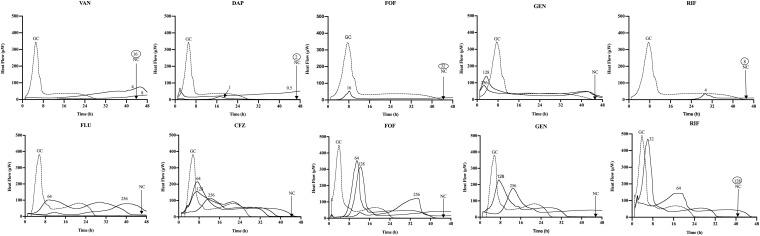
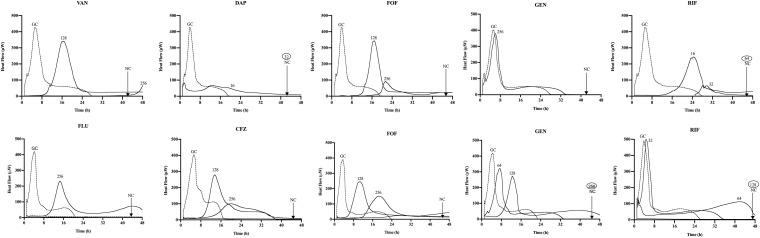
Rifampin plays a crucial role in the treatment of staphylococcal implant-associated infection, as it is the only antibiotic capable of eradicating biofilms. However, the emergence of rifampin resistance strongly limits its use. Combinatorial therapy of antibiotics and bacteriophages may represent a strategy to overcome the resistance. Here, we evaluated the activity of staphylococcal bacteriophage Sb-1 in combination with different antibiotics against the biofilms of 10 rifampin-resistant clinical strains, including MRSA and MSSA. biofilms formed on porous glass beads were exposed to antibiotics alone or combined with Sb-1 simultaneously or staggered (first Sb-1 for 24 h followed by antibiotic). Recovered bacteria were detected by measuring growth-related heat production at 37°C (isothermal microcalorimetry) and the biofilm eradication was assessed by sonication of beads and plating of the resulting sonication fluid. Minimum biofilm eradication concentration (MBEC) was defined as the lowest concentration of antibiotic required to kill all adherent bacteria, resulting in absence of growth after plating the sonication fluid. Tested antibiotics presented high MBEC values when administered alone (64 to > 1,024 μg/ml). The simultaneous or staggered combination of Sb-1 with daptomycin showed the highest activity against all MRSA biofilms, whereas the exposure to Sb-1 with vancomycin showed no improved anti-biofilm activity. Staggered administration of Sb-1 and flucloxacillin, cefazolin, or fosfomycin improved the antibiofilm activity in four out of six MSSA, whereas simultaneous exposure exhibited similar or lesser synergy. In conclusion, the combinatorial effect of Sb-1 and antibiotics enabled to eradicate rifampin-resistant biofilms .
利福平在葡萄球菌植入物相关感染的治疗中起着关键作用,因为它是唯一能够根除生物膜的抗生素。然而,利福平耐药性的出现严重限制了其使用。抗生素与噬菌体的联合治疗可能是克服耐药性的一种策略。在此,我们评估了葡萄球菌噬菌体Sb-1与不同抗生素联合对10株耐利福平临床菌株(包括耐甲氧西林金黄色葡萄球菌和甲氧西林敏感金黄色葡萄球菌)生物膜的活性。在多孔玻璃珠上形成的生物膜单独暴露于抗生素或同时或交错地与Sb-1联合(先将Sb-1处理24小时,然后使用抗生素)。通过测量37°C时与生长相关的产热(等温微量热法)检测回收的细菌,并通过对珠子进行超声处理和对所得超声处理液进行平板接种来评估生物膜的根除情况。最低生物膜根除浓度(MBEC)定义为杀死所有附着细菌所需的最低抗生素浓度,在对接种超声处理液后无生长。单独使用时,受试抗生素的MBEC值较高(64至>1024μg/ml)。Sb-1与达托霉素同时或交错联合对所有耐甲氧西林金黄色葡萄球菌生物膜的活性最高,而Sb-1与万古霉素联合使用时,抗生物膜活性没有提高。Sb-1与氟氯西林、头孢唑林或磷霉素交错给药提高了6株甲氧西林敏感金黄色葡萄球菌中4株的抗生物膜活性,而同时暴露显示出相似或较小的协同作用。总之,Sb-1与抗生素的联合作用能够根除耐利福平生物膜。
 Zotero 插件