
降低细胞因子信号转导抑制因子3(SOCS3)的表达可促进脑出血后M2巨噬细胞极化和功能恢复。
Reducing Suppressors of Cytokine Signaling-3 (SOCS3) Expression Promotes M2 Macrophage Polarization and Functional Recovery After Intracerebral Hemorrhage.
作者信息
Ji Xin-Chao, Shi Ya-Jun, Zhang Yan, Chang Ming-Ze, Zhao Gang
机构信息
Department of Neurology, Xi'an No. 3 Hospital, The Affiliated Hospital of Northwest University, Xi'an, China.
Department of Neurology, Xijing Hospital, Fourth Military Medical University, Xi'an, China.
出版信息
Front Neurol. 2020 Nov 12;11:586905. doi: 10.3389/fneur.2020.586905. eCollection 2020.
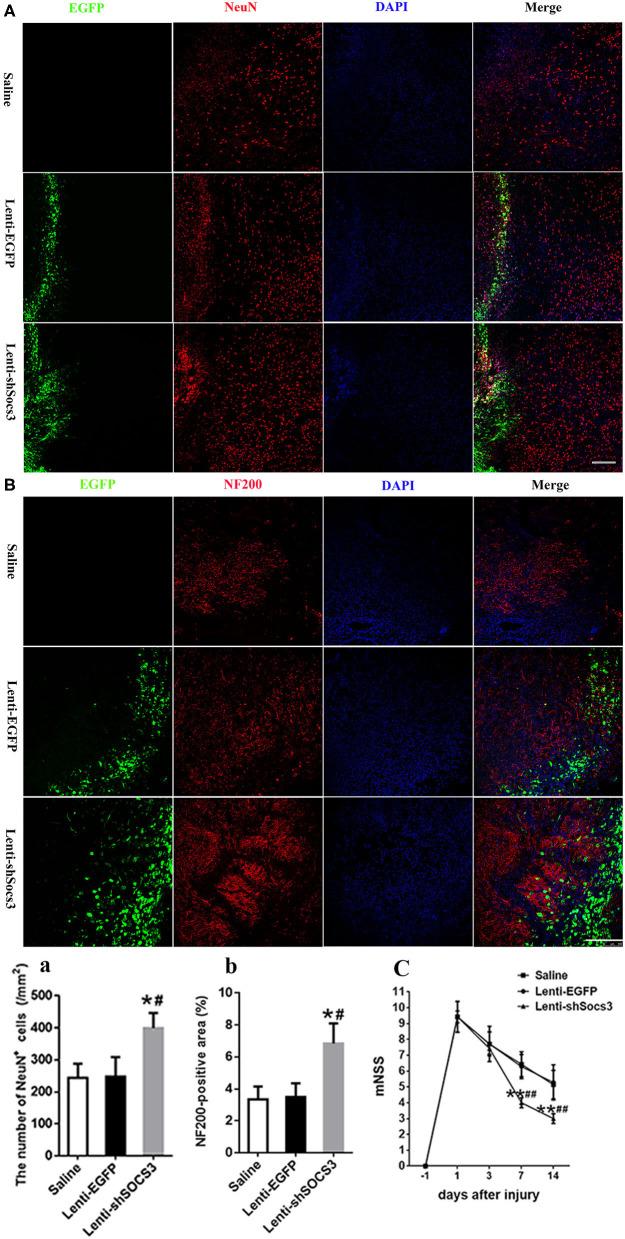
Intracerebral hemorrhage (ICH) is a fatal subtype of stroke, and effective interventions to improve the functional outcomes are still lacking. Suppressor of cytokine signaling 3 (SOCS3) plays critical roles in the inflammatory response by negatively regulating cytokine-Jak-Stat signaling. However, the role of SOCS3 in the regulation of macrophage polarization is highly controversial and the fine regulation exerted by SOCS3 needs further understanding. In this study, rat ICH models were established by infusion of collagenase into the caudate nucleus. To decrease SOCS3 expression into microglia/macrophages in the hemorrhagic lesion area, we injected lentiviral short hairpin RNA (shSOCS3) (Lenti-shSOCS3) into the hematoma cavity at 24 h following ICH. We found that the number of iNOS-positive cells (M1 phenotype) was significantly reduced, whereas arginase-1-positive cells (M2 phenotype) were markedly elevated in animals that received Lenti-shSOCS3 injections compared with those in the Lenti-EGFP and saline groups. The increase in arginase-1-positive cells was associated with a significantly lower pro-inflammatory microenvironment, which included the downregulation of pro-inflammatory cytokines [interleukin (IL)-1β, IL-6, and TNF-α] and concurrent upregulation of anti-inflammatory (IL-10) mediators. In addition, this marked shift toward the M2 phenotype was associated with suppressed NF-κB activation. Furthermore, these changes notably enhanced the neuroprotective effects and functional recovery in Lenti-shSOCS3-injected animals. Our findings indicated that reduction in SOCS3 expression caused a marked bias toward the M2 phenotype and ameliorated the inflammatory microenvironment, which enhanced neuroprotective effects and resulted in notable improvement in functional recovery after ICH.
脑出血(ICH)是中风的一种致命亚型,目前仍缺乏改善功能结局的有效干预措施。细胞因子信号转导抑制因子3(SOCS3)通过负调控细胞因子-Jak-Stat信号通路在炎症反应中发挥关键作用。然而,SOCS3在巨噬细胞极化调节中的作用极具争议,其精细调控机制尚需进一步研究。在本研究中,通过向尾状核注射胶原酶建立大鼠ICH模型。为降低出血性病变区域小胶质细胞/巨噬细胞中SOCS3的表达,我们在ICH后24小时将慢病毒短发夹RNA(shSOCS3)(Lenti-shSOCS3)注入血肿腔。我们发现,与注射Lenti-EGFP和生理盐水的动物相比,接受Lenti-shSOCS3注射的动物中诱导型一氧化氮合酶(iNOS)阳性细胞(M1表型)数量显著减少,而精氨酸酶-1阳性细胞(M2表型)明显增多。精氨酸酶-1阳性细胞的增加与促炎微环境显著降低有关,促炎微环境包括促炎细胞因子[白细胞介素(IL)-1β、IL-6和肿瘤坏死因子-α]的下调以及抗炎(IL-10)介质的同时上调。此外,这种向M2表型的明显转变与核因子κB(NF-κB)激活的抑制有关。此外,这些变化显著增强了注射Lenti-shSOCS3动物的神经保护作用和功能恢复。我们的研究结果表明,SOCS3表达的降低导致明显偏向M2表型并改善了炎症微环境,这增强了神经保护作用并导致ICH后功能恢复显著改善。



 Zotero 插件