
NEK1对YAP的磷酸化促进其稳定性和转录输出。
NEK1 Phosphorylation of YAP Promotes Its Stabilization and Transcriptional Output.
作者信息
Khalil Md Imtiaz, Ghosh Ishita, Singh Vibha, Chen Jing, Zhu Haining, De Benedetti Arrigo
机构信息
Department of Biochemistry and Molecular Biology, LSU Health Sciences Center, Shreveport, LA 71130, USA.
Department of Molecular and Cellular Biochemistry and Proteomics Core, Center for Structural Biology, University of Kentucky, Lexington, KY 40506, USA.
出版信息
Cancers (Basel). 2020 Dec 7;12(12):3666. doi: 10.3390/cancers12123666.
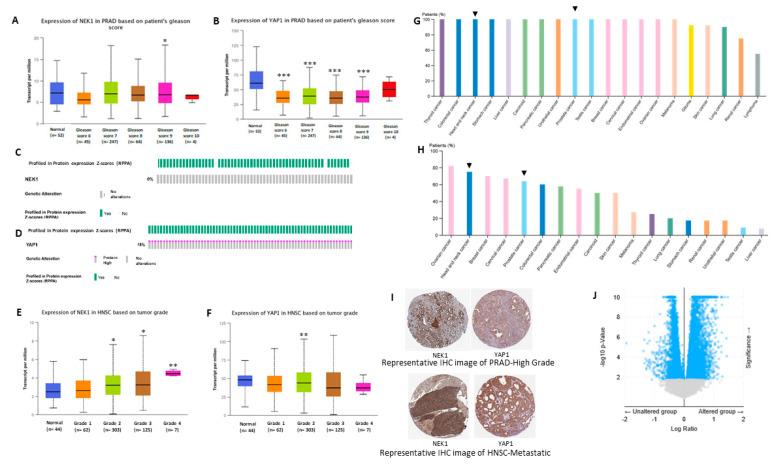
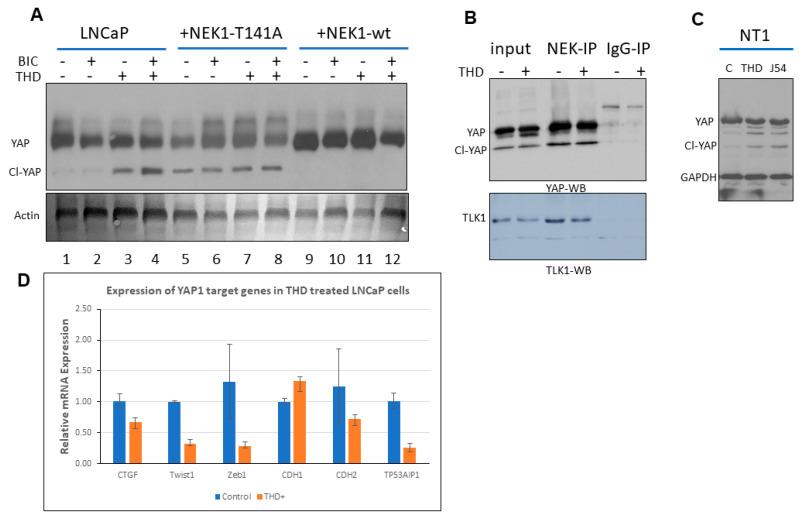
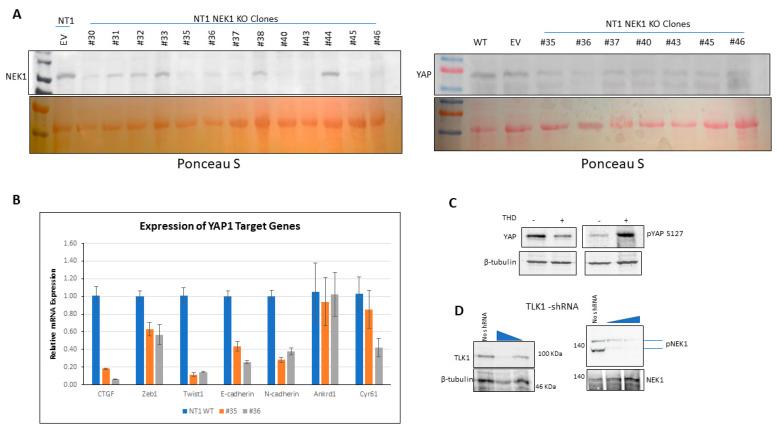
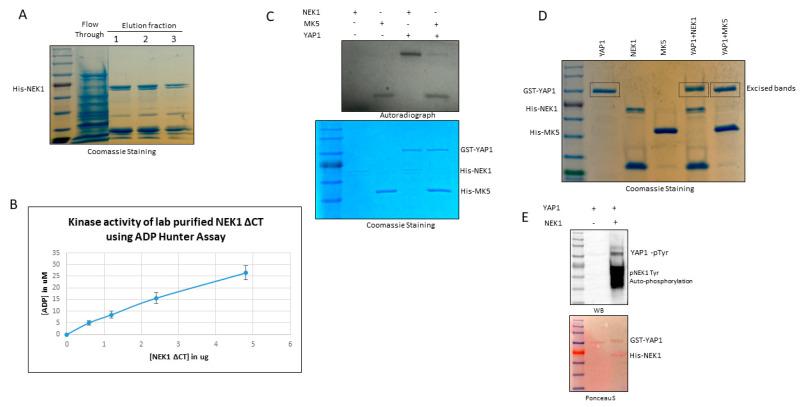
Most prostate cancer (PCa) deaths result from progressive failure in standard androgen deprivation therapy (ADT), leading to metastatic castration-resistant PCa (mCRPC); however, the mechanism and key players leading to this are not fully understood. While studying the role of tousled-like kinase 1 (TLK1) and never in mitosis gene A (NIMA)-related kinase 1 (NEK1) in a DNA damage response (DDR)-mediated cell cycle arrest in LNCaP cells treated with bicalutamide, we uncovered that overexpression of wt-NEK1 resulted in a rapid conversion to androgen-independent (AI) growth, analogous to what has been observed when YAP1 is overexpressed. We now report that overexpression of wt-NEK1 results in accumulation of YAP1, suggesting the existence of a TLK1>NEK1>YAP1 axis that leads to adaptation to AI growth. Further, YAP1 is co-immunoprecipitated with NEK1. Importantly, NEK1 was able to phosphorylate YAP1 on six residues in vitro, which we believe are important for stabilization of the protein, possibly by increasing its interaction with transcriptional partners. In fact, knockout (KO) of NEK1 in NT1 PCa cells resulted in a parallel decrease of YAP1 level and reduced expression of typical YAP-regulated target genes. In terms of cancer potential implications, the expression of NEK1 and YAP1 proteins was found to be increased and correlated in several cancers. These include PCa stages according to Gleason score, head and neck squamous cell carcinoma, and glioblastoma, suggesting that this co-regulation is imparted by increased YAP1 stability when NEK1 is overexpressed or activated by TLK1, and not through transcriptional co-expression. We propose that the TLK1>NEK1>YAP1 axis is a key determinant for cancer progression, particularly during the process of androgen-sensitive to -independent conversion during progression to mCRPC.
大多数前列腺癌(PCa)死亡是由于标准雄激素剥夺疗法(ADT)逐渐失效,导致转移性去势抵抗性PCa(mCRPC);然而,导致这种情况的机制和关键因素尚未完全明确。在研究用比卡鲁胺处理的LNCaP细胞中,蓬乱样激酶1(TLK1)和NIMA相关激酶1(NEK1)在DNA损伤反应(DDR)介导的细胞周期阻滞中的作用时,我们发现野生型NEK1的过表达导致细胞迅速转变为雄激素非依赖性(AI)生长,这与YAP1过表达时所观察到的情况类似。我们现在报告,野生型NEK1的过表达导致YAP1积累,提示存在TLK1>NEK1>YAP1轴,该轴导致细胞适应AI生长。此外,YAP1与NEK1共免疫沉淀。重要的是,NEK1能够在体外使YAP1的六个位点磷酸化,我们认为这些位点对于蛋白质的稳定很重要,可能是通过增加其与转录伴侣的相互作用来实现的。事实上,在NT1 PCa细胞中敲除(KO)NEK1导致YAP1水平平行下降以及典型YAP调控靶基因的表达降低。就癌症潜在影响而言,发现NEK1和YAP1蛋白的表达在几种癌症中增加且相关。这些癌症包括根据Gleason评分的PCa分期、头颈部鳞状细胞癌和胶质母细胞瘤,这表明这种共调节是由于当NEK1过表达或被TLK1激活时YAP1稳定性增加所致,而非通过转录共表达。我们提出TLK1>NEK1>YAP1轴是癌症进展的关键决定因素,尤其是在进展为mCRPC期间雄激素敏感向非敏感转变的过程中。

 Zotero 插件