
弥漫性大B细胞淋巴瘤的新型药物和治疗方案
New agents and regimens for diffuse large B cell lymphoma.
作者信息
Wang Liang, Li Lin-Rong, Young Ken H
机构信息
Department of Hematology, Beijing TongRen Hospital, Capital Medical University, Beijing, 100730, China.
Beijing Advanced Innovation Center for Big Data-Based Precision Medicine, Beihang University & Capital Medical University, Beijing TongRen Hospital, Beijing, 100730, China.
出版信息
J Hematol Oncol. 2020 Dec 14;13(1):175. doi: 10.1186/s13045-020-01011-z.
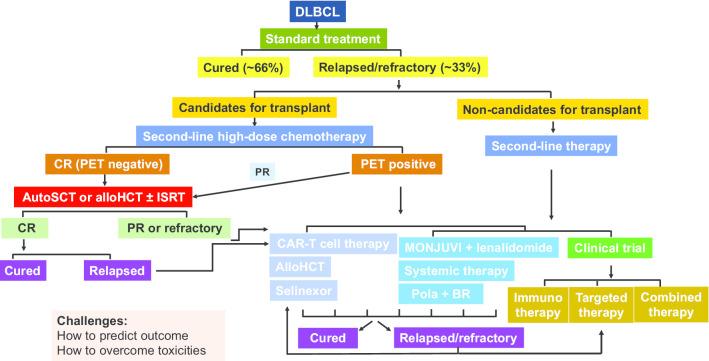
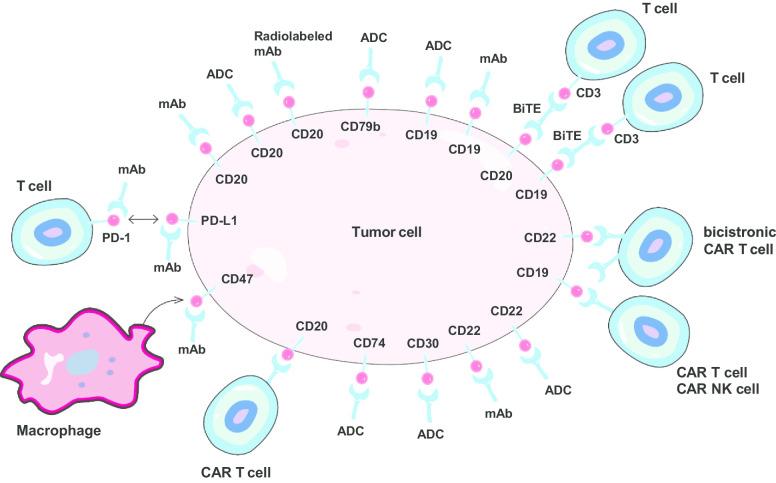
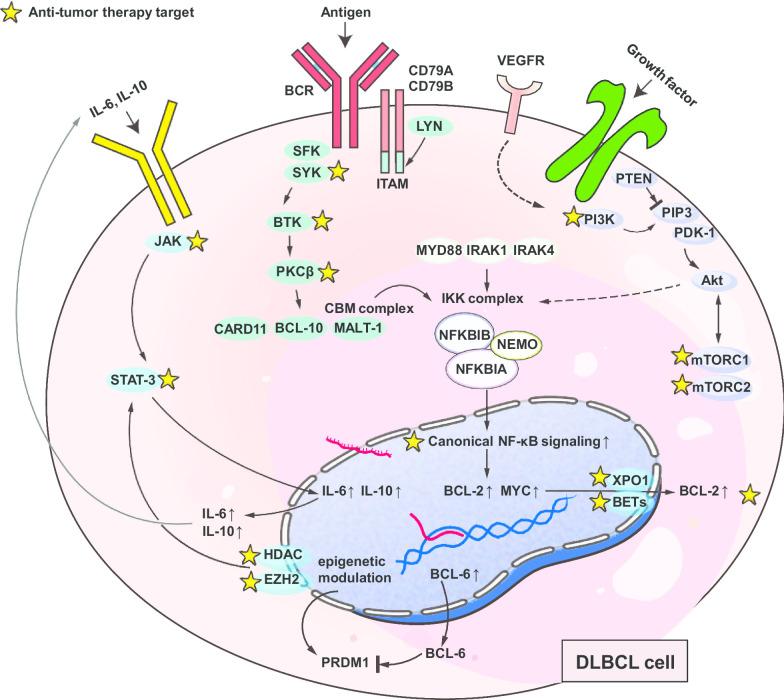
As a widely recognized standard regimen, R-CHOP (rituximab plus cyclophosphamide, doxorubicin, vincristine, and prednisone) is able to cure two-thirds patients with diffuse large B cell lymphoma (DLBCL), and the remaining patients suffer from refractory or relapsed disease due to resistance to R-CHOP and fare poorly. Unsatisfied outcomes for those relapsed/refractory patients prompted efforts to discover new treatment approaches for DLBCL, including chimeric antigen receptor T cells, bispecific T cell engagers, immunomodulatory drugs, immune checkpoint inhibitors, monoclonal antibodies, antibody-drug conjugates, molecular pathway inhibitors, and epigenetic-modifying drugs. Herein, up-to-date data about the most promising treatment approaches for DLBCL are recapitulated, and novel genetic classification systems are introduced to guide individualized treatment for DLBCL.
作为一种广泛认可的标准方案,R-CHOP(利妥昔单抗联合环磷酰胺、阿霉素、长春新碱和泼尼松)能够治愈三分之二的弥漫性大B细胞淋巴瘤(DLBCL)患者,其余患者则因对R-CHOP耐药而患有难治性或复发性疾病,预后较差。这些复发/难治性患者不尽人意的治疗结果促使人们努力寻找DLBCL的新治疗方法,包括嵌合抗原受体T细胞、双特异性T细胞衔接器、免疫调节药物、免疫检查点抑制剂、单克隆抗体、抗体药物偶联物、分子途径抑制剂和表观遗传修饰药物。在此,概述了有关DLBCL最有前景的治疗方法的最新数据,并引入了新的基因分类系统以指导DLBCL的个体化治疗。


 Zotero 插件