
老年复发/难治性大B细胞淋巴瘤患者的CAR-T细胞疗法:益处与挑战
CAR-T cell therapy in older adults with relapsed/refractory LBCL: benefits and challenges.
作者信息
Shune Leyla, Frigault Matthew J, Riedell Peter A
机构信息
Division of Hematologic Malignancies and Cellular Therapeutics, The University of Kansas Medical Center, Kansas City, Kansas, USA
Department of Medicine, Massachusetts General Hospital, Boston, Massachusetts, USA.
出版信息
J Immunother Cancer. 2025 Jun 5;13(6):e009793. doi: 10.1136/jitc-2024-009793.
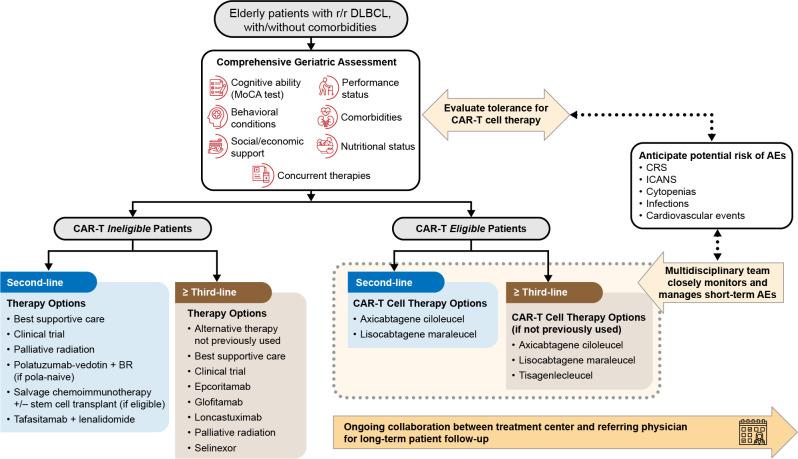
Patients with relapsed or refractory diffuse large B-cell lymphoma (r/r DLBCL) have poor prognosis with a high unmet need for efficacious treatment options. Most patients with r/r large B-cell lymphoma (LBCL) are elderly, which adds to the complexity of choosing the appropriate and effective therapy in these patients. Recently approved therapies, such as CD19-targeted chimeric antigen receptor-T cell therapy, have shown improvements in the outcomes of patients with r/r DLBCL. Several real-world studies also support the use of these newer therapies in elderly patients. However, given the frailty, variability in the risk factors in each elderly patient, and the increased susceptibility for adverse events, a comprehensive geriatric assessment and a multidisciplinary approach could be helpful in guiding the management and treatment choices for these vulnerable patients. Individualized care can aid in giving elderly patients with r/r LBCL the best possible outcome with their chosen treatment regimen.
复发或难治性弥漫性大B细胞淋巴瘤(r/r DLBCL)患者预后较差,对有效治疗方案的需求远未得到满足。大多数r/r大B细胞淋巴瘤(LBCL)患者为老年人,这增加了为这些患者选择合适有效治疗方法的复杂性。最近获批的疗法,如靶向CD19的嵌合抗原受体T细胞疗法,已显示出可改善r/r DLBCL患者的预后。多项真实世界研究也支持在老年患者中使用这些新型疗法。然而,鉴于老年患者身体虚弱、个体风险因素存在差异以及不良事件易感性增加,全面的老年综合评估和多学科方法可能有助于指导这些脆弱患者的管理和治疗选择。个体化护理有助于让老年r/r LBCL患者在其选择的治疗方案下获得尽可能好的治疗效果。
 Zotero 插件