
关于使用……进行表面活性素的厌氧生产
Towards the Anaerobic Production of Surfactin Using .
作者信息
Hoffmann Mareen, Fernandez Cano Luna Diana Stephanie, Xiao Shengbin, Stegemüller Lars, Rief Katharina, Heravi Kambiz Morabbi, Lilge Lars, Henkel Marius, Hausmann Rudolf
机构信息
Department of Bioprocess Engineering (150k), Institute of Food Science and Biotechnology (150), University of Hohenheim, Stuttgart, Germany.
出版信息
Front Bioeng Biotechnol. 2020 Nov 26;8:554903. doi: 10.3389/fbioe.2020.554903. eCollection 2020.
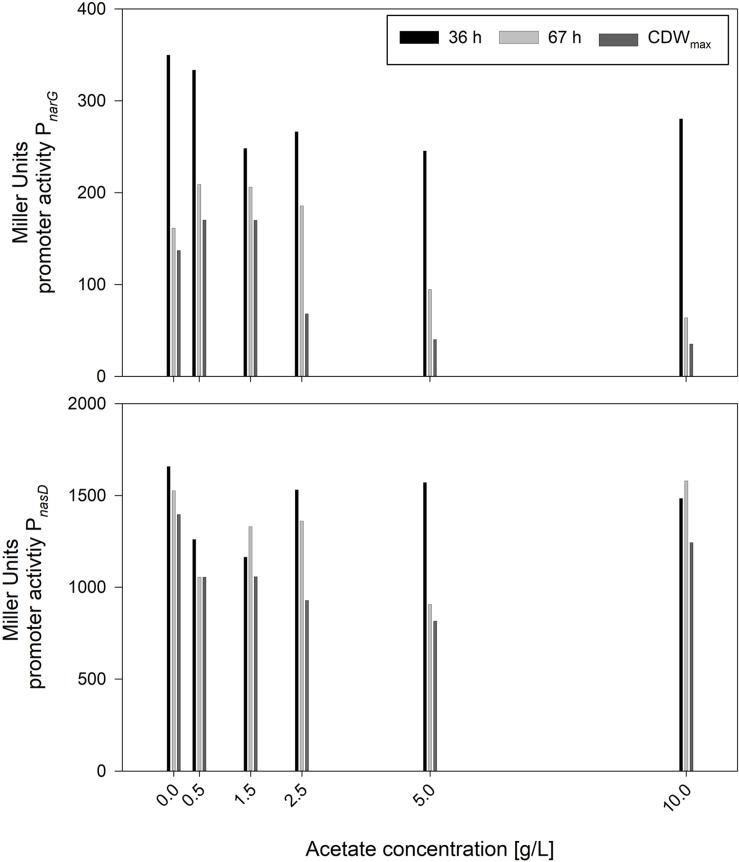
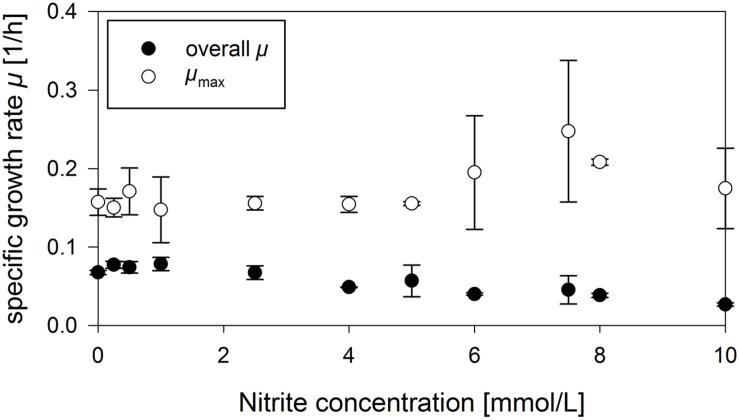
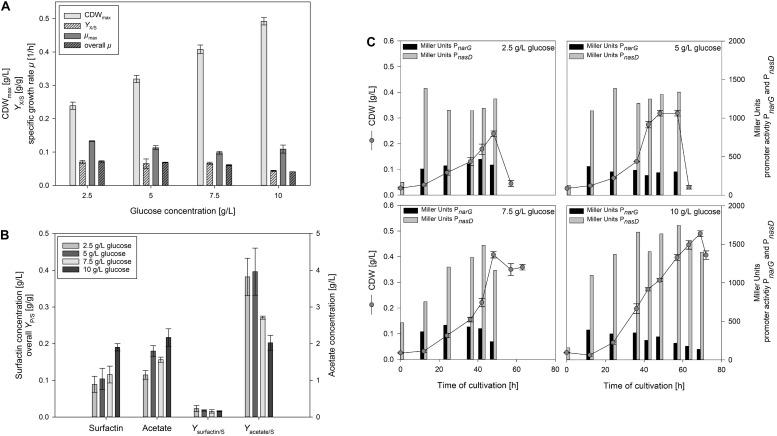
The anaerobic growth of to synthesize surfactin poses an alternative strategy to conventional aerobic cultivations. In general, the strong foam formation observed during aerobic processes represents a major obstacle. Anaerobic processes have, amongst others, the distinct advantage that the total bioreactor volume can be exploited as foaming does not occur. Recent studies also reported on promising product per biomass yields. However, anaerobic growth in comparison to aerobic processes has several disadvantages. For example, the overall titers are comparably low and cultivations are time-consuming due to low growth rates. JABs24, a derivate of strain 168 with the ability to synthesize surfactin, was used as model strain in this study. Ammonium and nitrite were hypothesized to negatively influence anaerobic growth. Ammonium with initial concentrations up to 0.2 mol/L was shown to have no significant impact on growth, but increasing concentrations resulted in decreased surfactin titers and reduced nitrate reductase expression. Anaerobic cultivations spiked with increasing nitrite concentrations resulted in prolonged lag-phases. Indeed, growth rates were in a similar range after the lag-phase indicating that nitrite has a neglectable effect on the observed decreasing growth rates. In bioreactor cultivations, the specific growth rate decreased with increasing glucose concentrations during the time course of both batch and fed-batch processes to less than 0.05 1/h. In addition, surfactin titers, overall and were 53%, ∼42%, and ∼57% lower than in serum flask with 0.190 g/L, 0.344 g/g and 0.015 g/g. The , on the contrary, was 30% lower in the serum flask with 0.044 g/g. The productivities were similar with ∼0.005 g/(g⋅h). However, acetate strongly accumulated during cultivation and was posed as further metabolite that might negatively influence anaerobic growth. Acetate added to anaerobic cultivations in a range from 0 g/L up to 10 g/L resulted in a reduced maximum and overall growth rate μ by 44% and 30%, respectively. To conclude, acetate was identified as a promising target for future process enhancement and strain engineering. Though, the current study demonstrates that the anaerobic cultivation to synthesize surfactin represents a reasonable perspective and feasible alternative to conventional processes.
通过厌氧生长来合成表面活性素为传统需氧培养提供了一种替代策略。一般来说,需氧过程中观察到的强烈泡沫形成是一个主要障碍。厌氧过程具有诸多显著优势,其中之一是由于不会产生泡沫,整个生物反应器体积都可得到利用。近期研究还报道了有前景的单位生物量产品产量。然而,与需氧过程相比,厌氧生长存在一些缺点。例如,总体滴度相对较低,且由于生长速率低,培养耗时较长。在本研究中,使用了具有合成表面活性素能力的168菌株衍生物JABs24作为模型菌株。据推测,铵和亚硝酸盐会对厌氧生长产生负面影响。初始浓度高达0.2 mol/L的铵对生长没有显著影响,但浓度增加会导致表面活性素滴度降低以及硝酸还原酶表达减少。添加亚硝酸盐浓度不断增加的厌氧培养导致延滞期延长。实际上,延滞期过后生长速率处于相似范围,这表明亚硝酸盐对观察到的生长速率下降影响可忽略不计。在生物反应器培养中,在分批和补料分批过程的时间进程中,比生长速率随着葡萄糖浓度增加而降低至小于0.05 1/h。此外,表面活性素滴度、总体 和 分别比血清瓶中的低53%、约42%和约57%,血清瓶中的值分别为0.190 g/L、0.344 g/g和0.015 g/g。相反,血清瓶中的 为0.044 g/g,低30%。生产率相似,约为0.005 g/(g⋅h)。然而,在培养过程中乙酸强烈积累,并且被认为是可能对厌氧生长产生负面影响的另一种代谢物。添加到厌氧培养中的乙酸浓度范围从0 g/L到10 g/L,分别导致最大生长速率和总体生长速率μ降低44%和30%。总之,乙酸被确定为未来工艺改进和菌株工程的一个有前景的目标。不过,当前研究表明,通过厌氧培养来合成表面活性素是传统工艺的一个合理前景和可行替代方案。


 Zotero 插件