
醋酸盐代谢与醋酸盐对细菌生长的抑制作用。
Acetate Metabolism and the Inhibition of Bacterial Growth by Acetate.
机构信息
Univ. Grenoble Alpes, CNRS, Laboratoire Interdisciplinaire de Physique, Grenoble, France.
Univ. Grenoble Alpes, Inria, Grenoble, France.
出版信息
J Bacteriol. 2019 Jun 10;201(13). doi: 10.1128/JB.00147-19. Print 2019 Jul 1.
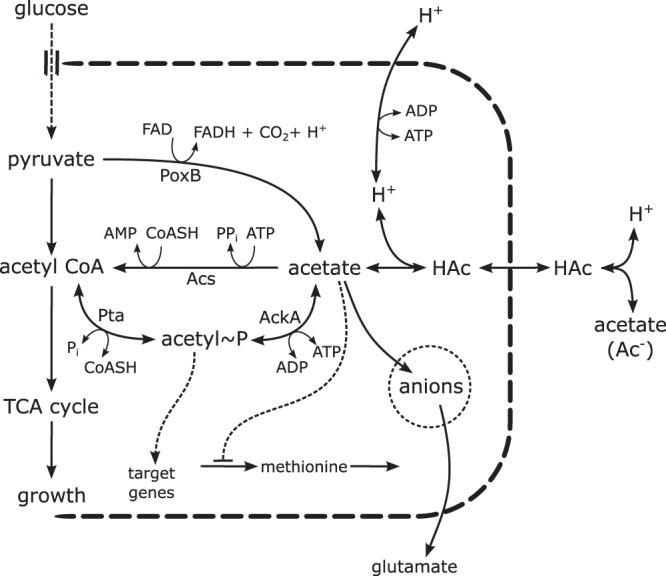
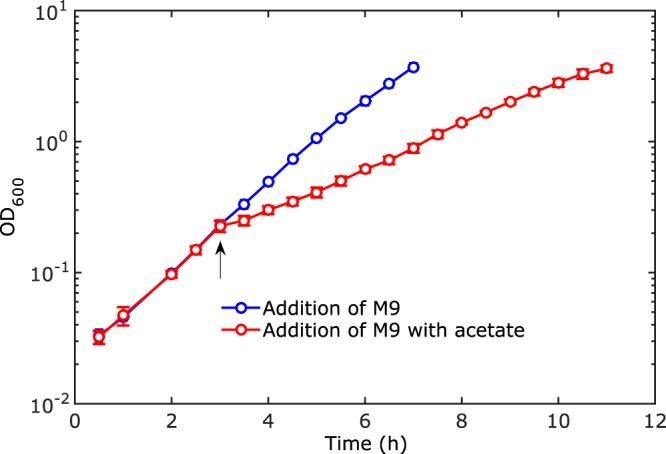
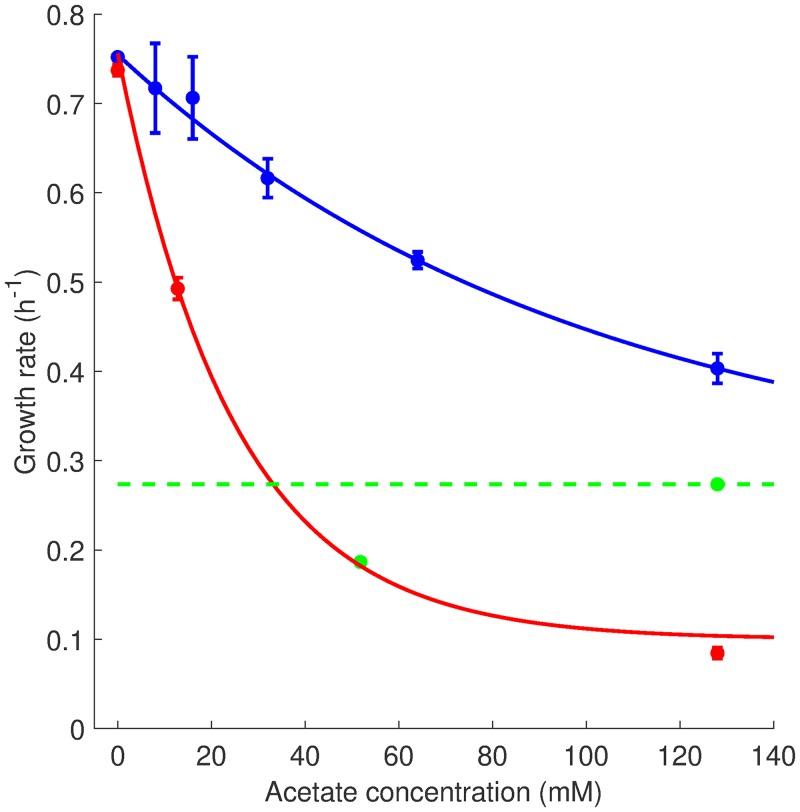
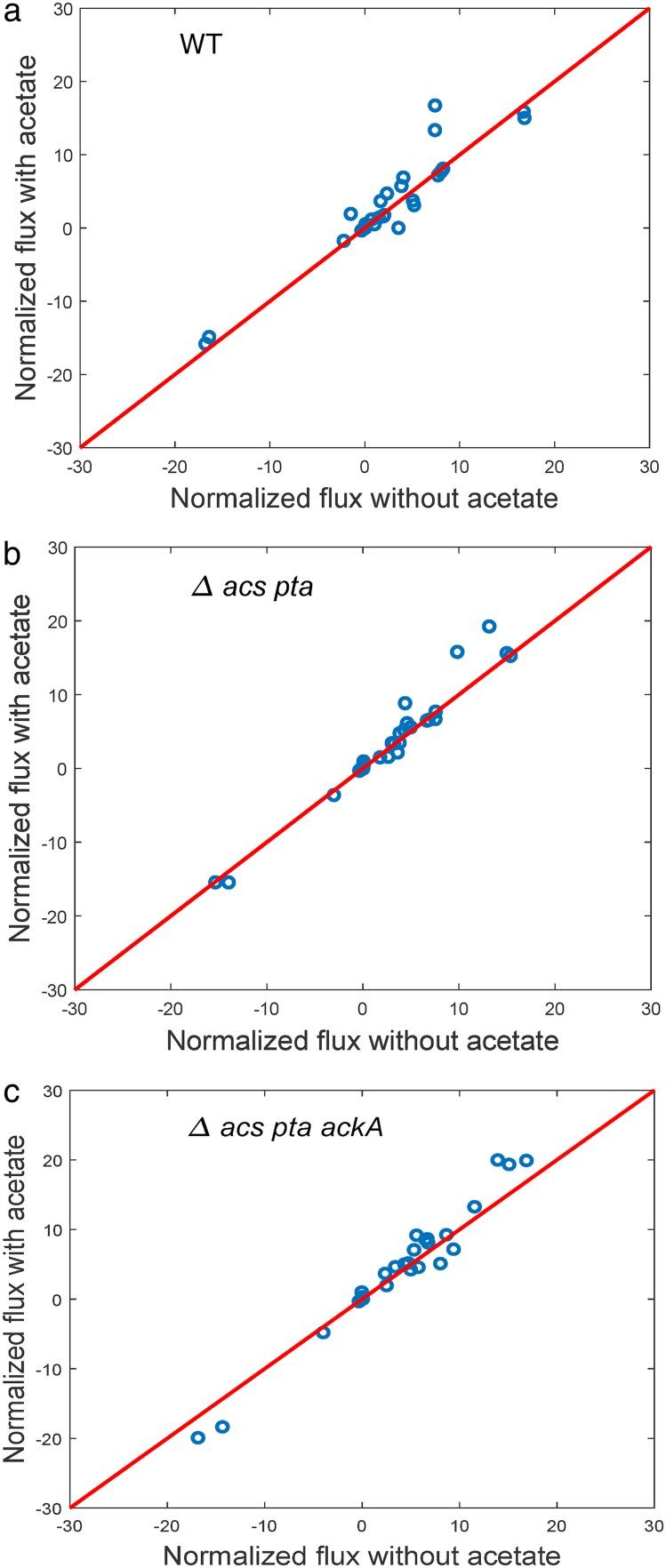
During aerobic growth on glucose, excretes acetate, a mechanism called "overflow metabolism." At high concentrations, the secreted acetate inhibits growth. Several mechanisms have been proposed for explaining this phenomenon, but a thorough analysis is hampered by the diversity of experimental conditions and strains used in these studies. Here, we describe the construction of a set of isogenic strains that remove different parts of the metabolic network involved in acetate metabolism. Analysis of these strains reveals that (i) high concentrations of acetate in the medium inhibit growth without significantly perturbing central metabolism; (ii) growth inhibition persists even when acetate assimilation is completely blocked; and (iii) regulatory interactions mediated by acetyl-phosphate play a small but significant role in growth inhibition by acetate. The major contribution to growth inhibition by acetate may originate in systemic effects like the uncoupling effect of organic acids or the perturbation of the anion composition of the cell, as previously proposed. Our data suggest, however, that under the conditions considered here, the uncoupling effect plays only a limited role. High concentrations of organic acids such as acetate inhibit growth of and other bacteria. This phenomenon is of interest for understanding bacterial physiology but is also of practical relevance. Growth inhibition by organic acids underlies food preservation and causes problems during high-density fermentation in biotechnology. What causes this phenomenon? Classical explanations invoke the uncoupling effect of acetate and the establishment of an anion imbalance. Here, we propose and investigate an alternative hypothesis: the perturbation of acetate metabolism due to the inflow of excess acetate. We find that this perturbation accounts for 20% of the growth-inhibitory effect through a modification of the acetyl phosphate concentration. Moreover, we argue that our observations are not expected based on uncoupling alone.
在葡萄糖有氧生长过程中,会排泄出乙酸,这一机制被称为“溢出代谢”。在高浓度下,分泌出的乙酸会抑制生长。已经提出了几种解释这种现象的机制,但由于这些研究中使用的实验条件和菌株的多样性,对其进行全面分析受到了阻碍。在这里,我们描述了一组同基因菌株的构建,这些菌株去除了参与乙酸代谢的代谢网络的不同部分。对这些菌株的分析表明:(i)培养基中高浓度的乙酸会抑制生长,而不会显著扰乱中心代谢;(ii)即使完全阻断乙酸同化,生长抑制仍然存在;(iii)乙酰磷酸介导的调节相互作用在乙酸对生长的抑制中起着很小但很重要的作用。乙酸对生长的抑制作用的主要贡献可能源自于系统性效应,如有机酸的解偶联效应或细胞阴离子组成的扰动,如先前提出的那样。然而,我们的数据表明,在考虑到的条件下,解偶联效应只起有限的作用。高浓度的有机酸,如乙酸,会抑制 和其他细菌的生长。这种现象对于理解细菌生理学很重要,但也具有实际意义。有机酸(如乙酸)对生长的抑制是食品保存的基础,并在生物技术中的高密度发酵中引起问题。那么是什么导致了这种现象呢?经典的解释涉及到乙酸的解偶联效应和阴离子失衡的建立。在这里,我们提出并研究了另一种假设:由于过量乙酸的流入,导致乙酸代谢的紊乱。我们发现,通过乙酰磷酸浓度的改变,这种紊乱解释了 20%的生长抑制效应。此外,我们认为我们的观察结果不应仅基于解偶联来解释。



 Zotero 插件