
探索肥胖对老年人骨骼肌功能的影响。
Exploring the Impact of Obesity on Skeletal Muscle Function in Older Age.
作者信息
Morgan Paul T, Smeuninx Benoit, Breen Leigh
机构信息
School of Sport, Exercise and Rehabilitation Sciences, University of Birmingham, Birmingham, United Kingdom.
Cellular & Molecular Metabolism Laboratory, Monash Institute of Pharmacological Sciences, Monash University, Parkville, VIC, Australia.
出版信息
Front Nutr. 2020 Dec 1;7:569904. doi: 10.3389/fnut.2020.569904. eCollection 2020.
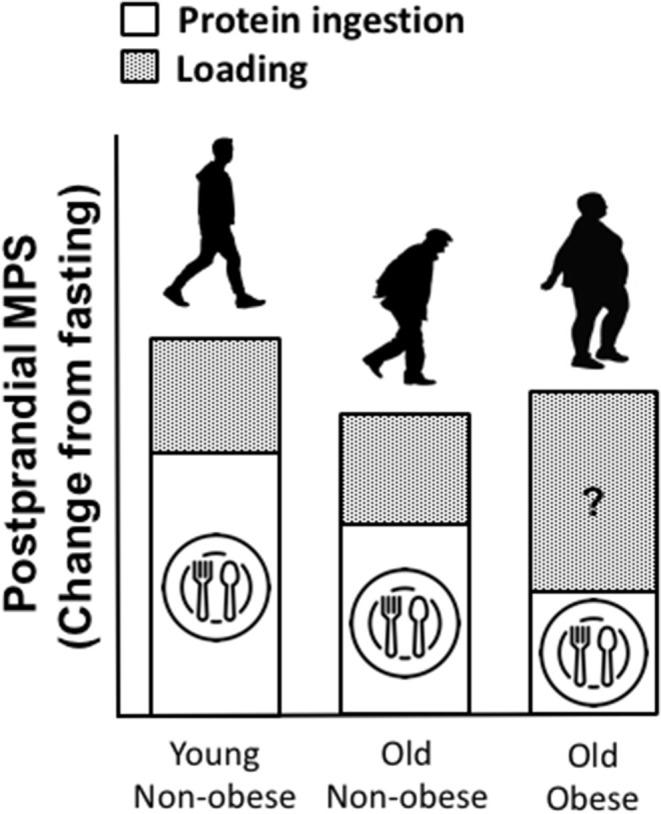
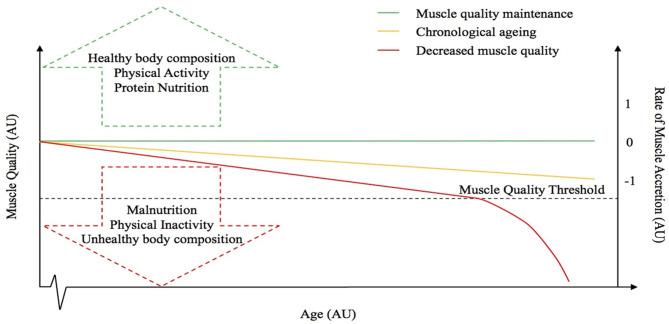
Sarcopenia is of important clinical relevance for loss of independence in older adults. The prevalence of obesity in combination with sarcopenia ("sarcopenic-obesity") is increasing at a rapid rate. However, whilst the development of sarcopenia is understood to be multi-factorial and harmful to health, the role of obesity from a protective and damaging perspective on skeletal muscle in aging, is poorly understood. Specifically, the presence of obesity in older age may be accompanied by a greater volume of skeletal muscle mass in weight-bearing muscles compared with lean older individuals, despite impaired physical function and resistance to anabolic stimuli. Collectively, these findings support a potential in which obesity may protect skeletal muscle mass in older age. One explanation for these paradoxical findings may be that the anabolic response to weight-bearing activity could be greater in obese vs. lean older individuals due to a larger mechanical stimulus, compensating for the heightened muscle anabolic resistance. However, it is likely that there is a complex interplay between muscle, adipose, and external influences in the aging process that are ultimately harmful to health in the long-term. This narrative briefly explores of the potential mechanisms regulating changes in skeletal muscle mass and function in aging combined with obesity and the interplay with sarcopenia, with a particular focus on muscle morphology and the regulation of muscle proteostasis. In addition, whilst highly complex, we attempt to provide an updated summary for the role of obesity from a protective and damaging perspective on muscle mass and function in older age. We conclude with a brief discussion on treatment of sarcopenia and obesity and a summary of future directions for this research field.
肌肉减少症对于老年人失去独立生活能力具有重要的临床意义。肥胖与肌肉减少症(“肌少症性肥胖”)同时存在的患病率正在迅速上升。然而,虽然人们认为肌肉减少症的发生是多因素的且对健康有害,但从保护和损害的角度来看,肥胖在衰老过程中对骨骼肌的作用却知之甚少。具体而言,尽管身体功能受损且对合成代谢刺激有抵抗,但与瘦的老年人相比,老年肥胖者负重肌肉中的骨骼肌质量可能更大。总的来说,这些发现支持了肥胖可能在老年时保护骨骼肌质量的可能性。对这些矛盾发现的一种解释可能是,由于更大的机械刺激,肥胖老年人对负重活动的合成代谢反应可能比对瘦的老年人更大,从而补偿了增强的肌肉合成代谢抵抗。然而,在衰老过程中,肌肉、脂肪和外部影响之间可能存在复杂的相互作用,从长远来看,这最终对健康有害。本叙述简要探讨了调节衰老合并肥胖时骨骼肌质量和功能变化的潜在机制,以及与肌肉减少症的相互作用,特别关注肌肉形态和肌肉蛋白质稳态的调节。此外,虽然非常复杂,但我们试图从保护和损害的角度,对肥胖在老年时对肌肉质量和功能的作用提供一个最新的总结。我们最后简要讨论了肌肉减少症和肥胖的治疗方法以及该研究领域的未来方向总结。

 Zotero 插件