
健康与疾病中的神经肌肉接头:调控突触形成和稳态的分子机制
The Neuromuscular Junction in Health and Disease: Molecular Mechanisms Governing Synaptic Formation and Homeostasis.
作者信息
Rodríguez Cruz Pedro M, Cossins Judith, Beeson David, Vincent Angela
机构信息
Nuffield Department of Clinical Neurosciences, University of Oxford, Oxford, United Kingdom.
Neurosciences Group, Weatherall Institute of Molecular Medicine, University of Oxford, The John Radcliffe Hospital, Oxford, United Kingdom.
出版信息
Front Mol Neurosci. 2020 Dec 3;13:610964. doi: 10.3389/fnmol.2020.610964. eCollection 2020.
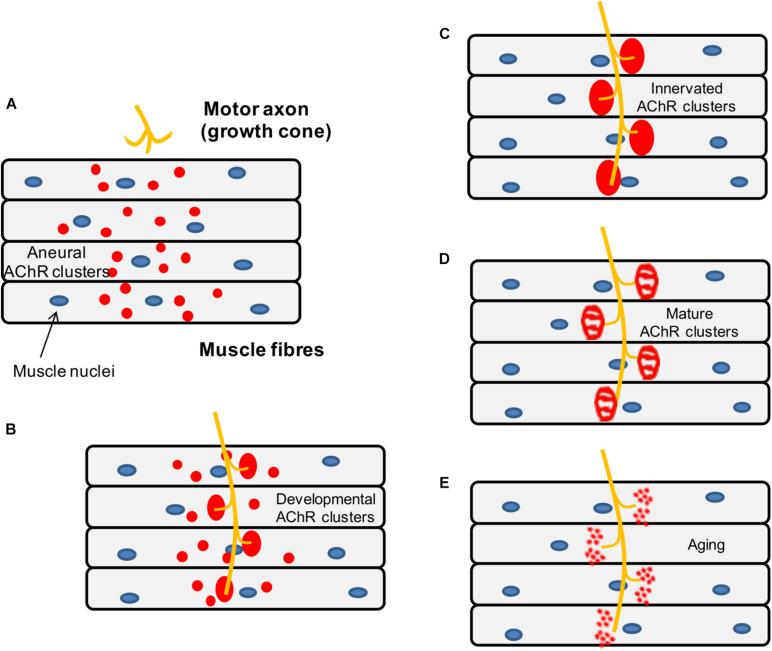
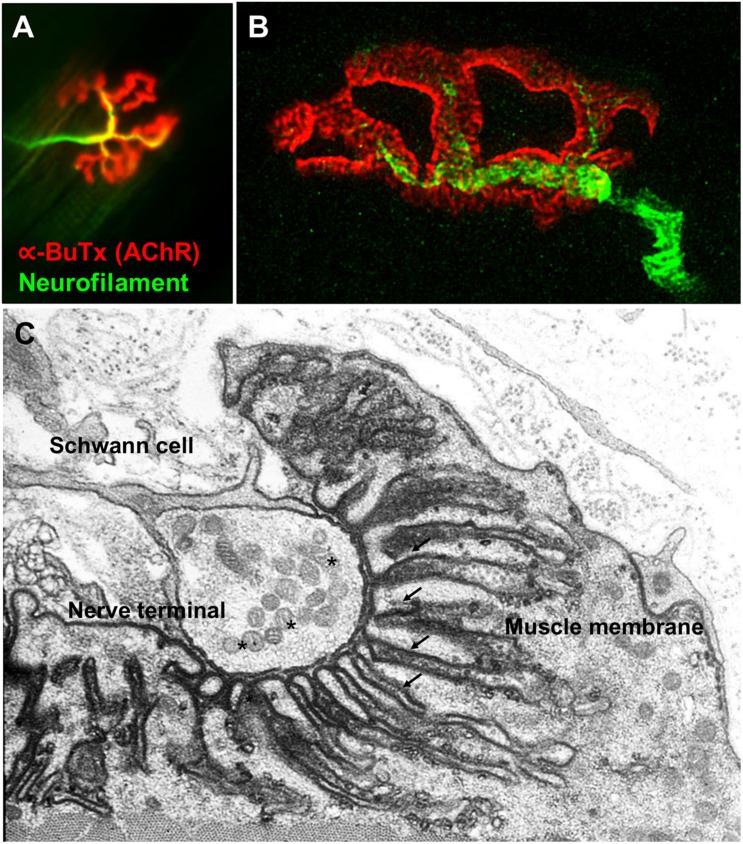
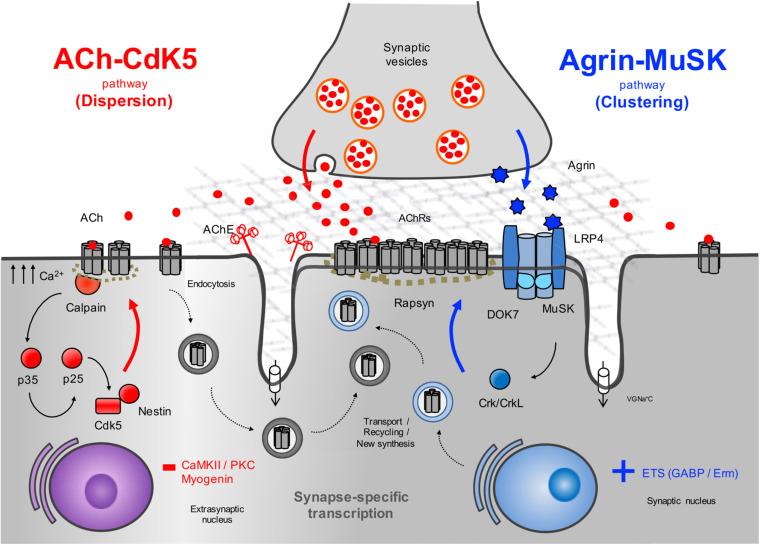
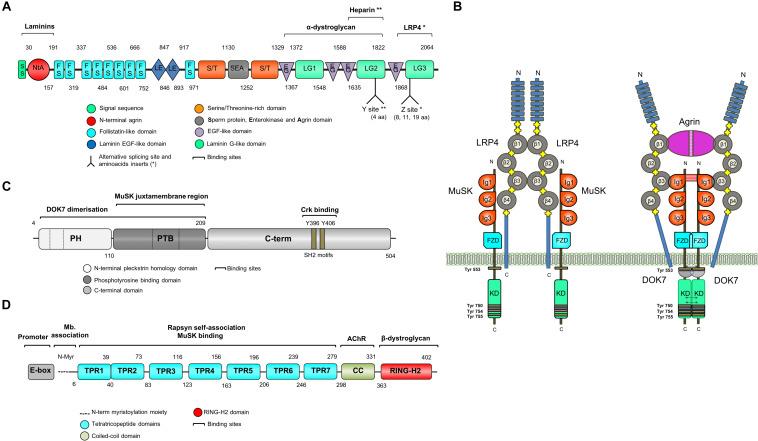
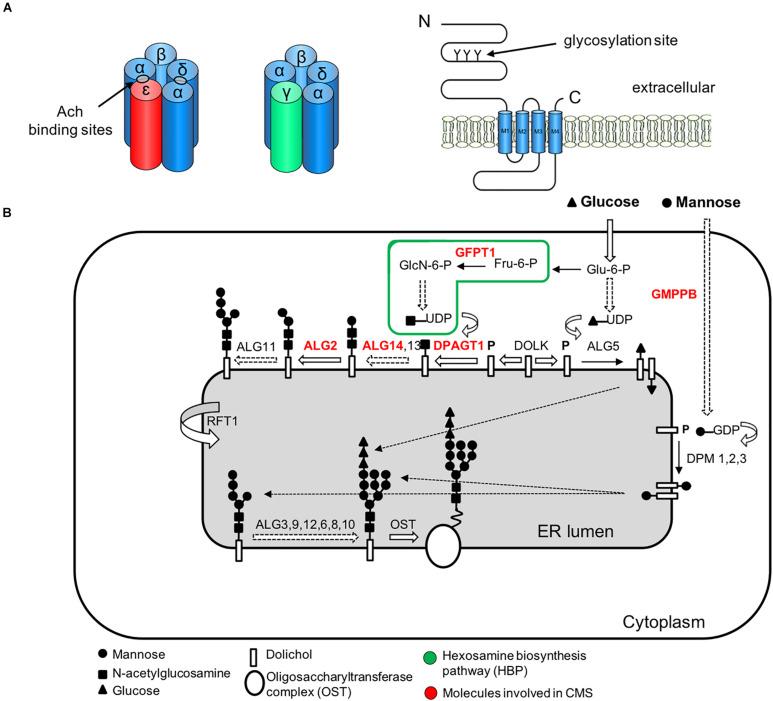
The neuromuscular junction (NMJ) is a highly specialized synapse between a motor neuron nerve terminal and its muscle fiber that are responsible for converting electrical impulses generated by the motor neuron into electrical activity in the muscle fibers. On arrival of the motor nerve action potential, calcium enters the presynaptic terminal, which leads to the release of the neurotransmitter acetylcholine (ACh). ACh crosses the synaptic gap and binds to ACh receptors (AChRs) tightly clustered on the surface of the muscle fiber; this leads to the endplate potential which initiates the muscle action potential that results in muscle contraction. This is a simplified version of the events in neuromuscular transmission that take place within milliseconds, and are dependent on a tiny but highly structured NMJ. Much of this review is devoted to describing in more detail the development, maturation, maintenance and regeneration of the NMJ, but first we describe briefly the most important molecules involved and the conditions that affect their numbers and function. Most important clinically worldwide, are myasthenia gravis (MG), the Lambert-Eaton myasthenic syndrome (LEMS) and congenital myasthenic syndromes (CMS), each of which causes specific molecular defects. In addition, we mention the neurotoxins from bacteria, snakes and many other species that interfere with neuromuscular transmission and cause potentially fatal diseases, but have also provided useful probes for investigating neuromuscular transmission. There are also changes in NMJ structure and function in motor neuron disease, spinal muscle atrophy and sarcopenia that are likely to be secondary but might provide treatment targets. The NMJ is one of the best studied and most disease-prone synapses in the nervous system and it is amenable to and investigation and to systemic therapies that can help restore normal function.
神经肌肉接头(NMJ)是运动神经元神经末梢与其肌纤维之间高度特化的突触,负责将运动神经元产生的电冲动转化为肌纤维中的电活动。运动神经动作电位到达时,钙离子进入突触前终末,导致神经递质乙酰胆碱(ACh)释放。ACh穿过突触间隙并与紧密聚集在肌纤维表面的ACh受体(AChRs)结合;这导致终板电位,引发肌肉动作电位,从而导致肌肉收缩。这是神经肌肉传递过程中在数毫秒内发生的事件的简化版本,并且依赖于一个微小但结构高度有序的神经肌肉接头。本综述的大部分内容致力于更详细地描述神经肌肉接头的发育、成熟、维持和再生,但首先我们简要描述一下其中最重要的分子以及影响它们数量和功能的条件。在全球范围内临床上最重要的是重症肌无力(MG)、兰伯特 - 伊顿肌无力综合征(LEMS)和先天性肌无力综合征(CMS),每一种都导致特定的分子缺陷。此外,我们还提到了来自细菌、蛇和许多其他物种的神经毒素,它们干扰神经肌肉传递并导致潜在的致命疾病,但也为研究神经肌肉传递提供了有用的探针。在运动神经元疾病、脊髓性肌萎缩和肌肉减少症中,神经肌肉接头的结构和功能也存在变化,这些变化可能是继发性的,但可能提供治疗靶点。神经肌肉接头是神经系统中研究最深入且最易患疾病的突触之一,它适合进行研究以及采用有助于恢复正常功能的全身治疗。
 Zotero 插件