
长链非编码RNA-信使核糖核酸共表达分析确定AL133346.1/CCN2为儿童B细胞急性淋巴细胞白血病的生物标志物。
LncRNA-mRNA Co-Expression Analysis Identifies AL133346.1/CCN2 as Biomarkers in Pediatric B-Cell Acute Lymphoblastic Leukemia.
作者信息
Cuadros Marta, García Daniel J, Andrades Alvaro, Arenas Alberto M, Coira Isabel F, Baliñas-Gavira Carlos, Peinado Paola, Rodríguez María I, Álvarez-Pérez Juan Carlos, Ruiz-Cabello Francisco, Camós Mireia, Jiménez-Velasco Antonio, Medina Pedro P
机构信息
Department of Biochemistry and Molecular Biology III and Immunology, University of Granada, Av. de la Investigación 11, 18016 Granada, Spain.
GENYO, Centre for Genomics and Oncological Research, Pfizer/University of Granada/Andalusian Regional Government, Av. de la Ilustración 114, 18016 Granada, Spain.
出版信息
Cancers (Basel). 2020 Dec 17;12(12):3803. doi: 10.3390/cancers12123803.
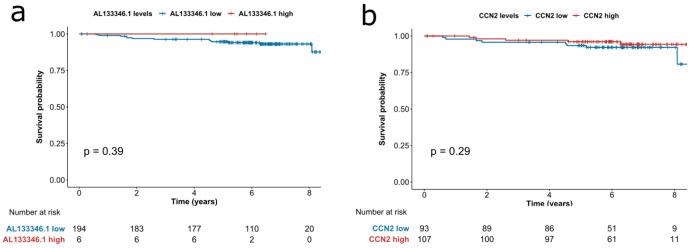
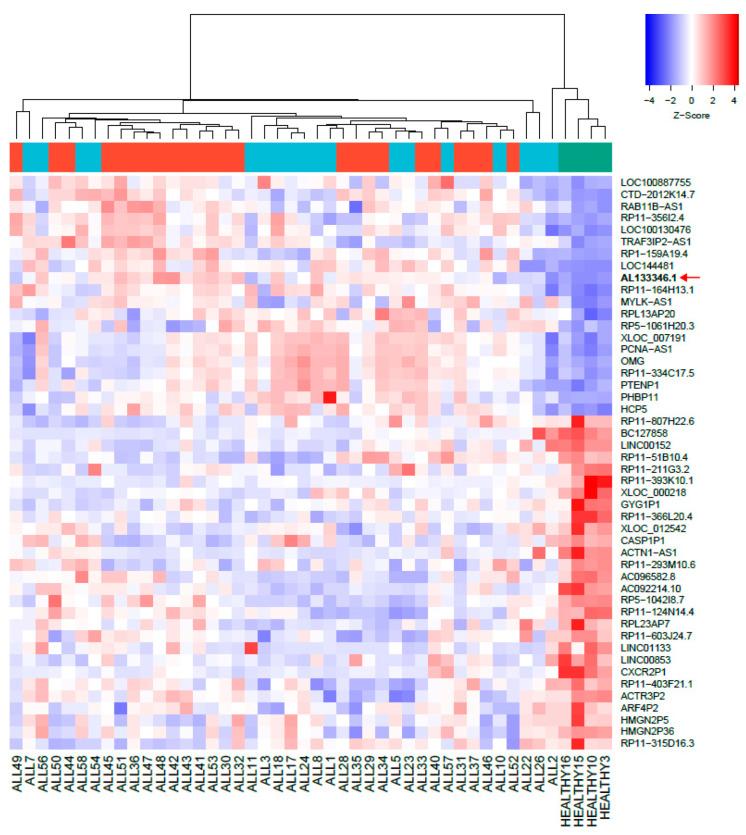
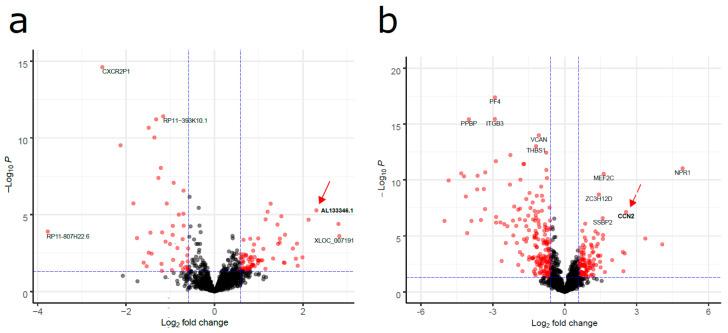
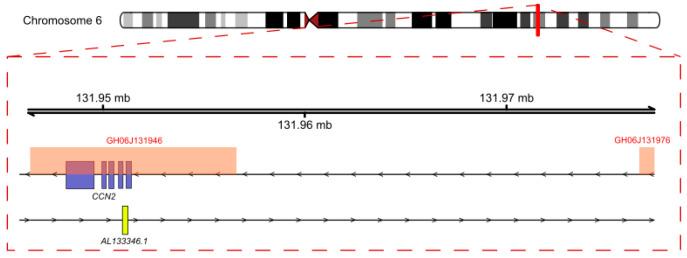
Pediatric acute B-cell lymphoblastic leukemia (B-ALL) constitutes a heterogeneous and aggressive neoplasia in which new targeted therapies are required. Long non-coding RNAs have recently emerged as promising disease-specific biomarkers for the clinic. Here, we identified pediatric B-ALL-specific lncRNAs and associated mRNAs by comparing the transcriptomic signatures of tumoral and non-tumoral samples. We identified 48 lncRNAs that were differentially expressed between pediatric B-ALL and healthy bone marrow samples. The most relevant lncRNA/mRNA pair was AL133346.1/CCN2 (previously known as RP11-69I8.3/CTGF), whose expression was positively correlated and increased in B-ALL samples. Their differential expression pattern and their strong correlation were validated in external B-ALL datasets (Therapeutically Applicable Research to Generate Effective Treatments, Cancer Cell Line Encyclopedia). Survival curve analysis demonstrated that patients with "high" expression levels of CCN2 had higher overall survival than those with "low" levels ( = 0.042), and this gene might be an independent prognostic biomarker in pediatric B-ALL. These findings provide one of the first detailed descriptions of lncRNA expression profiles in pediatric B-ALL and indicate that these potential biomarkers could help in the classification of leukemia subtypes and that CCN2 expression could predict the survival outcome of pediatric B-cell acute lymphoblastic leukemia patients.
小儿急性B淋巴细胞白血病(B-ALL)是一种异质性侵袭性肿瘤,需要新的靶向治疗方法。长链非编码RNA最近已成为临床上有前景的疾病特异性生物标志物。在此,我们通过比较肿瘤和非肿瘤样本的转录组特征,鉴定了小儿B-ALL特异性lncRNA和相关mRNA。我们鉴定出48种在小儿B-ALL和健康骨髓样本之间差异表达的lncRNA。最相关的lncRNA/mRNA对是AL133346.1/CCN2(以前称为RP11-69I8.3/CTGF),其表达呈正相关且在B-ALL样本中增加。它们的差异表达模式及其强相关性在外部B-ALL数据集(治疗应用研究以产生有效治疗,癌细胞系百科全书)中得到验证。生存曲线分析表明,CCN2“高”表达水平的患者总生存率高于“低”表达水平的患者(P = 0.042),并且该基因可能是小儿B-ALL的独立预后生物标志物。这些发现首次详细描述了小儿B-ALL中lncRNA的表达谱,并表明这些潜在的生物标志物有助于白血病亚型的分类,并且CCN2表达可以预测小儿B细胞急性淋巴细胞白血病患者的生存结果。




 Zotero 插件