
硫化氢与肌肽:对肾脑轴氧化应激和炎症的调节作用
Hydrogen Sulfide and Carnosine: Modulation of Oxidative Stress and Inflammation in Kidney and Brain Axis.
作者信息
Calabrese Vittorio, Scuto Maria, Salinaro Angela Trovato, Dionisio Giuseppe, Modafferi Sergio, Ontario Maria Laura, Greco Valentina, Sciuto Sebastiano, Schmitt Claus Peter, Calabrese Edward J, Peters Verena
机构信息
Department of Biomedical and Biotechnological Sciences, University of Catania, 95125 Catania, Italy.
Department of Molecular Biology and Genetics, Research Center Flakkebjerg, Aarhus University, Forsøgsvej 1, 4200 Slagelse, Denmark.
出版信息
Antioxidants (Basel). 2020 Dec 18;9(12):1303. doi: 10.3390/antiox9121303.
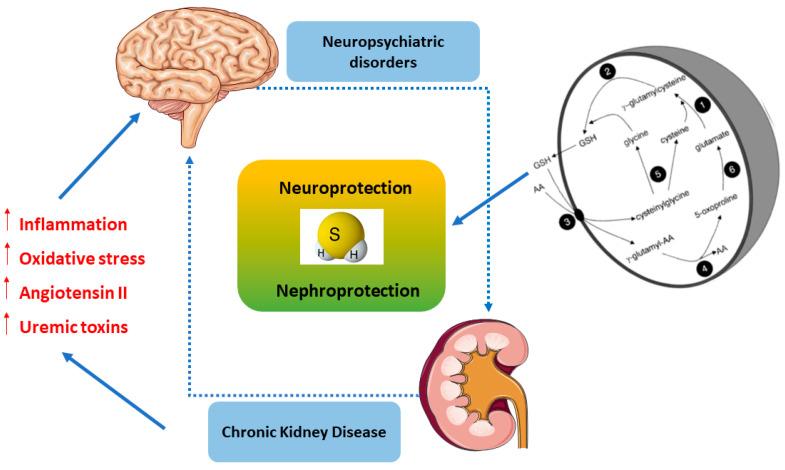
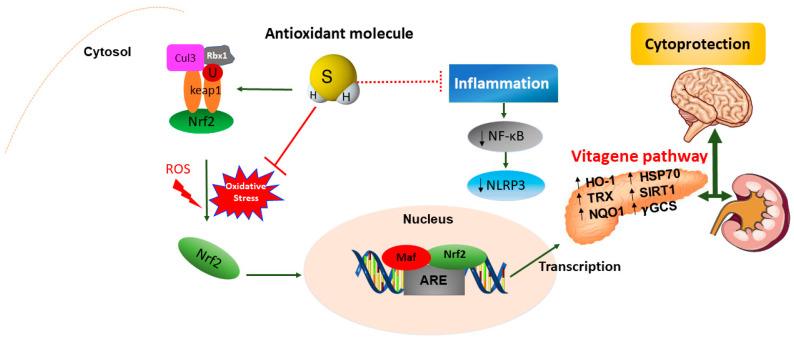
Emerging evidence indicates that the dysregulation of cellular redox homeostasis and chronic inflammatory processes are implicated in the pathogenesis of kidney and brain disorders. In this light, endogenous dipeptide carnosine (β-alanyl-L-histidine) and hydrogen sulfide (HS) exert cytoprotective actions through the modulation of redox-dependent resilience pathways during oxidative stress and inflammation. Several recent studies have elucidated a functional crosstalk occurring between kidney and the brain. The pathophysiological link of this crosstalk is represented by oxidative stress and inflammatory processes which contribute to the high prevalence of neuropsychiatric disorders, cognitive impairment, and dementia during the natural history of chronic kidney disease. Herein, we provide an overview of the main pathophysiological mechanisms related to high levels of pro-inflammatory cytokines, including interleukin-1β (IL-1β), tumor necrosis factor-α (TNF-α), interleukin-6 (IL-6), and neurotoxins, which play a critical role in the kidney-brain crosstalk. The present paper also explores the respective role of HS and carnosine in the modulation of oxidative stress and inflammation in the kidney-brain axis. It suggests that these activities are likely mediated, at least in part, via hormetic processes, involving Nrf2 (Nuclear factor-like 2), Hsp 70 (heat shock protein 70), SIRT-1 (Sirtuin-1), Trx (Thioredoxin), and the glutathione system. Metabolic interactions at the kidney and brain axis level operate in controlling and reducing oxidant-induced inflammatory damage and therefore, can be a promising potential therapeutic target to reduce the severity of renal and brain injuries in humans.
新出现的证据表明,细胞氧化还原稳态失调和慢性炎症过程与肾脏和脑部疾病的发病机制有关。有鉴于此,内源性二肽肌肽(β-丙氨酰-L-组氨酸)和硫化氢(HS)在氧化应激和炎症过程中通过调节氧化还原依赖性恢复途径发挥细胞保护作用。最近的几项研究阐明了肾脏和大脑之间存在的功能相互作用。这种相互作用的病理生理联系表现为氧化应激和炎症过程,这些过程导致慢性肾脏病自然病程中神经精神疾病、认知障碍和痴呆的高发病率。在此,我们概述了与高水平促炎细胞因子(包括白细胞介素-1β(IL-1β)、肿瘤坏死因子-α(TNF-α)、白细胞介素-6(IL-6))和神经毒素相关的主要病理生理机制,这些因子在肾-脑相互作用中起关键作用。本文还探讨了HS和肌肽在调节肾-脑轴氧化应激和炎症中的各自作用。研究表明,这些活性可能至少部分是通过应激反应过程介导的,涉及核因子样2(Nrf2)、热休克蛋白70(Hsp 70)、沉默调节蛋白1(SIRT-1)、硫氧还蛋白(Trx)和谷胱甘肽系统。肾-脑轴水平的代谢相互作用在控制和减少氧化剂诱导的炎症损伤方面发挥作用,因此,可能是减轻人类肾损伤和脑损伤严重程度的一个有前景的潜在治疗靶点。


 Zotero 插件