
微塑料污染对食品安全和保障构成的无形潜在威胁、政策挑战及未来发展方向
Microplastics Pollution as an Invisible Potential Threat to Food Safety and Security, Policy Challenges and the Way Forward.
机构信息
Natural Medicines and Products Research Laboratory, Institute of Bioscience, Universiti Putra Malaysia, 43400 UPM Serdang, Selangor, Malaysia.
Department of Food Science, Faculty of Food Science and Technology, Universiti Putra Malaysia, 43400 UPM Serdang, Selangor, Malaysia.
出版信息
Int J Environ Res Public Health. 2020 Dec 21;17(24):9591. doi: 10.3390/ijerph17249591.
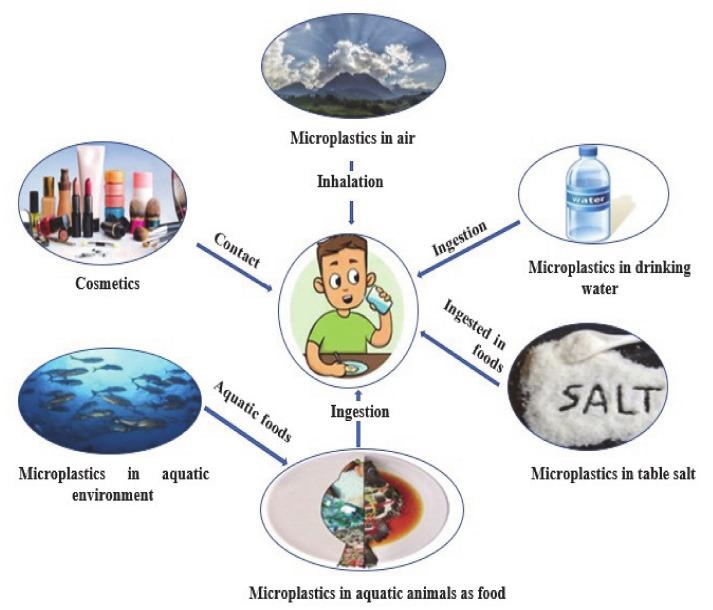
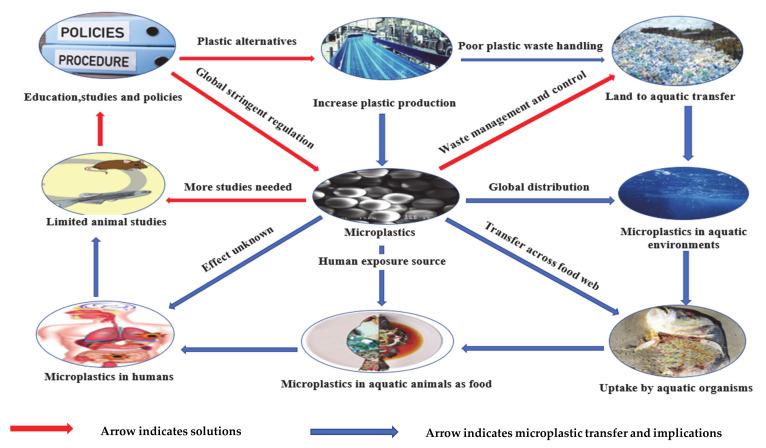
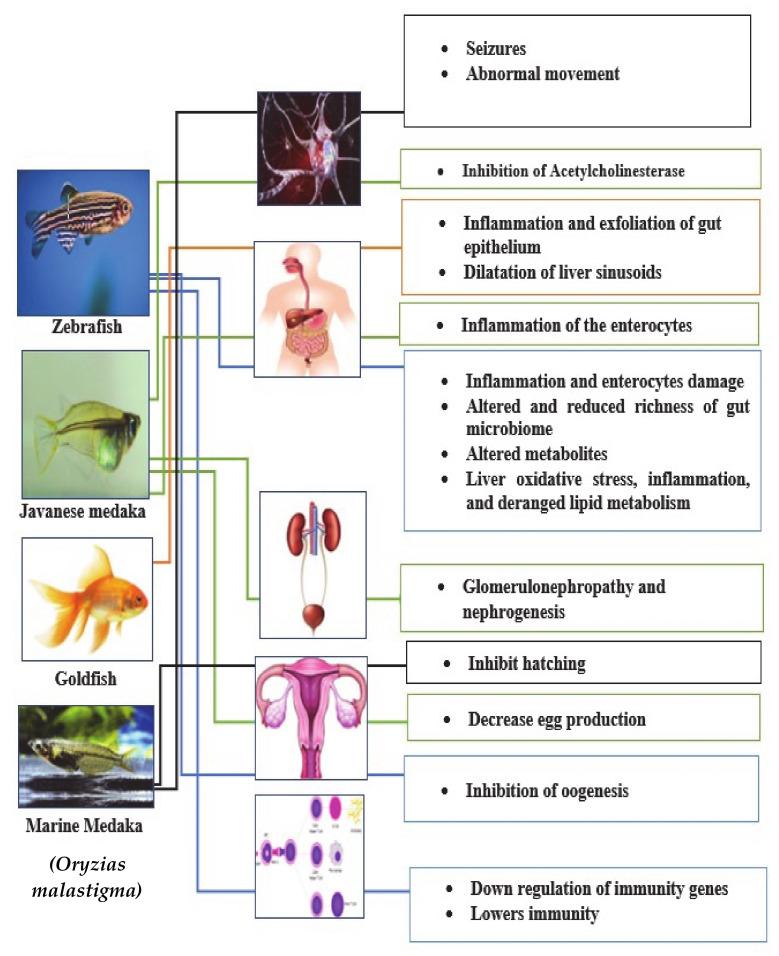
Technological advances, coupled with increasing demands by consumers, have led to a drastic increase in plastic production. After serving their purposes, these plastics reach our water bodies as their destination and become ingested by aquatic organisms. This ubiquitous phenomenon has exposed humans to microplastics mostly through the consumption of sea food. This has led the World Health Organization (WHO) to make an urgent call for the assessment of environmental pollution due to microplastics and its effect on human health. This review summarizes studies between 1999 and 2020 in relation to microplastics in aquatic ecosystems and human food products, their potential toxic effects as elicited in animal studies, and policies on their use and disposal. There is a paucity of information on the toxicity mechanisms of microplastics in animal studies, and despite their documented presence in food products, no policy has been in place so far, to monitor and regulates microplastics in commercial foods meant for human consumption. Although there are policies and regulations with respect to plastics, these are only in a few countries and in most instances are not fully implemented due to socioeconomic reasons, so they do not address the problem across the entire life cycle of plastics from production to disposal. More animal research to elucidate pathways and early biomarkers of microplastic toxicity that can easily be detected in humans is needed. This is to create awareness and influence policies that will address this neglected threat to food safety and security.
技术进步,加上消费者需求的增加,导致塑料产量的急剧增加。这些塑料在完成其用途后,作为它们的目的地到达我们的水体,并被水生生物摄入。这种普遍存在的现象使人类主要通过食用海鲜来接触微塑料。这促使世界卫生组织(WHO)紧急呼吁评估由于微塑料及其对人类健康的影响而造成的环境污染。这篇综述总结了 1999 年至 2020 年期间有关水生生态系统和人类食品中微塑料的研究,动物研究中微塑料的潜在毒性作用,以及关于其使用和处置的政策。关于动物研究中微塑料毒性机制的信息很少,尽管在食品中已经有文件记录,但迄今为止,还没有制定政策来监测和监管供人类食用的商业食品中的微塑料。尽管有关于塑料的政策和法规,但这些政策仅在少数几个国家实施,而且在大多数情况下,由于社会经济原因,这些政策并没有得到全面实施,因此这些政策并没有解决从生产到处置整个塑料生命周期中的问题。需要进行更多的动物研究来阐明微塑料毒性的途径和早期生物标志物,这些标志物可以在人类中很容易地检测到。这是为了提高认识,并影响政策,以解决这一被忽视的对食品安全和保障的威胁。

 Zotero 插件