
通过反应网络分析揭示 SARS-CoV-2 感染动力学模型的结构和层次
Structure and Hierarchy of SARS-CoV-2 Infection Dynamics Models Revealed by Reaction Network Analysis.
机构信息
Ernst-Abbe University of Applied Sciences Jena, Department of Fundamental Sciences, Carl-Zeiss-Promenade 2, 07745 Jena, Germany.
Bio Systems Analysis Group, Department of Mathematics and Computer Science, University of Jena, Ernst-Abbe-Platz 2, 07743 Jena, Germany.
出版信息
Viruses. 2020 Dec 23;13(1):14. doi: 10.3390/v13010014.
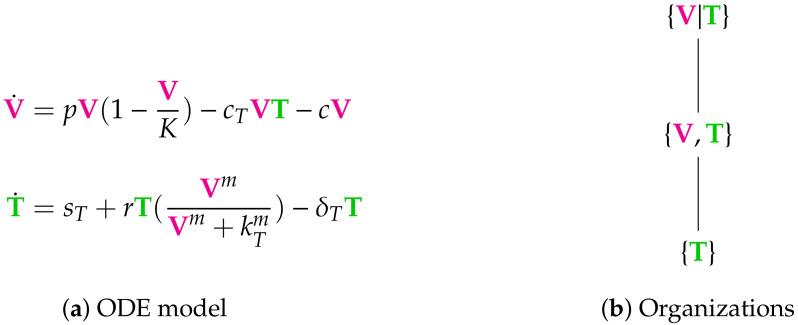
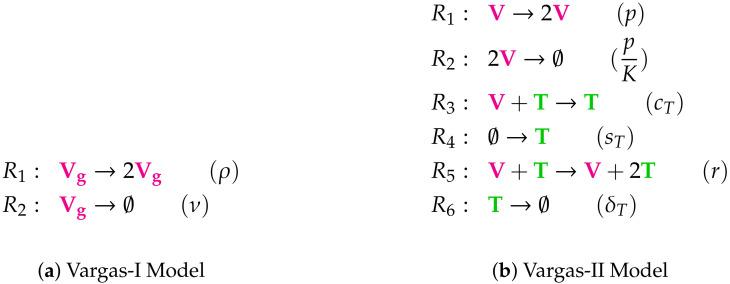
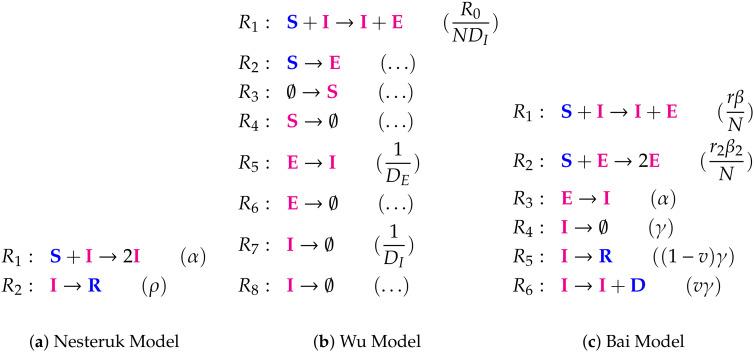
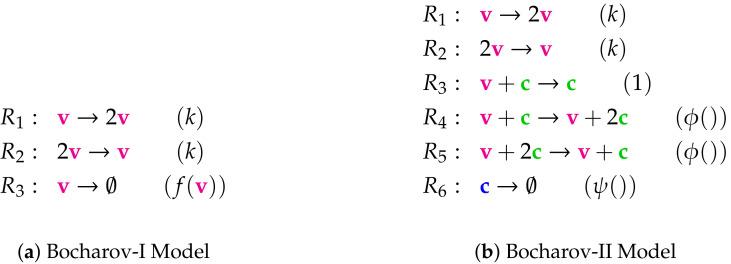
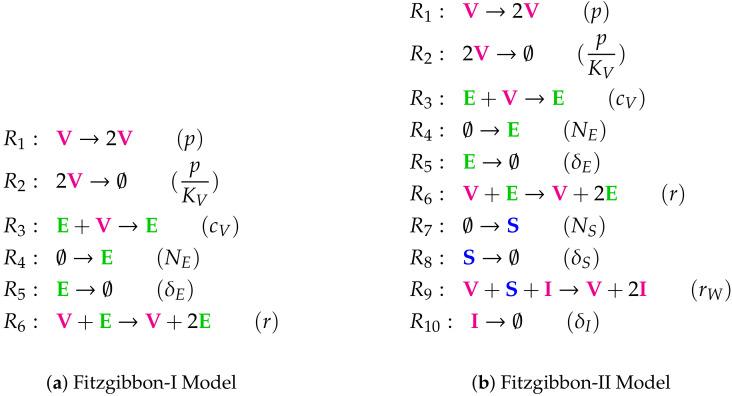
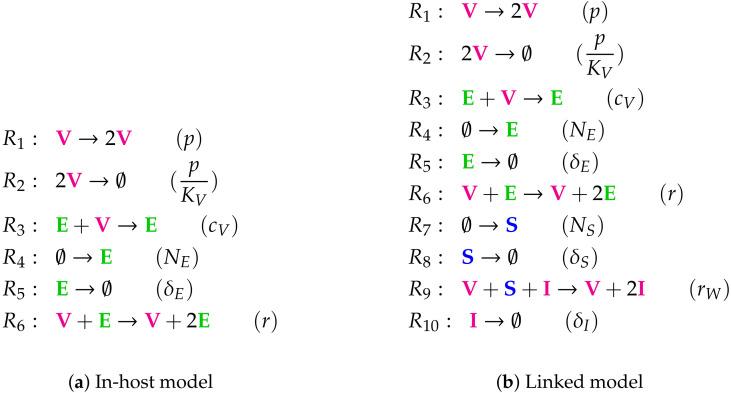
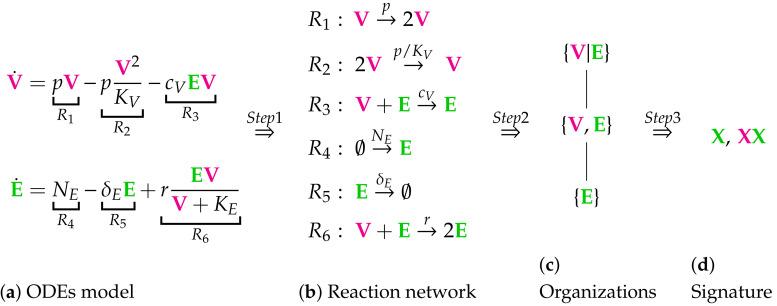
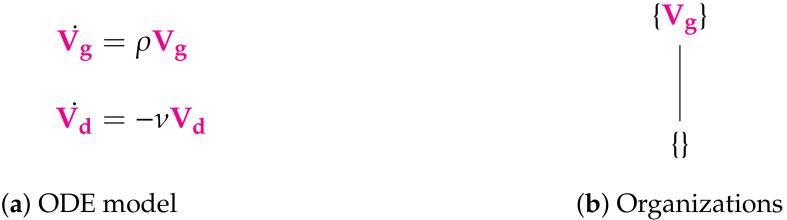
This work provides a mathematical technique for analyzing and comparing infection dynamics models with respect to their potential long-term behavior, resulting in a hierarchy integrating all models. We apply our technique to coupled ordinary and partial differential equation models of SARS-CoV-2 infection dynamics operating on different scales, that is, within a single organism and between several hosts. The structure of a model is assessed by the theory of chemical organizations, not requiring quantitative kinetic information. We present the Hasse diagrams of organizations for the twelve virus models analyzed within this study. For comparing models, each organization is characterized by the types of species it contains. For this, each species is mapped to one out of four types, representing uninfected, infected, immune system, and bacterial species, respectively. Subsequently, we can integrate these results with those of our former work on Influenza-A virus resulting in a single joint hierarchy of 24 models. It appears that the SARS-CoV-2 models are simpler with respect to their long term behavior and thus display a simpler hierarchy with little dependencies compared to the Influenza-A models. Our results can support further development towards more complex SARS-CoV-2 models targeting the higher levels of the hierarchy.
这项工作提供了一种分析和比较感染动力学模型的数学技术,以研究它们的潜在长期行为,从而形成一个集成所有模型的层次结构。我们将我们的技术应用于 SARS-CoV-2 感染动力学的耦合常微分和偏微分方程模型,这些模型在不同的尺度上运作,即在单个生物体内部和几个宿主之间。模型的结构是通过化学组织理论来评估的,不需要定量的动力学信息。我们为在本研究中分析的 12 个病毒模型展示了组织的哈塞图。为了比较模型,每个组织都由它包含的物种类型来表示。为此,每个物种都映射到四个类型之一,分别代表未感染、感染、免疫系统和细菌物种。随后,我们可以将这些结果与我们之前关于甲型流感病毒的工作结果整合在一起,形成一个包含 24 个模型的单一联合层次结构。与甲型流感病毒模型相比,SARS-CoV-2 模型在其长期行为方面更为简单,因此在层次结构中显示出更为简单的层次结构,依赖性较小。我们的结果可以支持针对更高层次的 SARS-CoV-2 模型的进一步发展。


 Zotero 插件