
氨基酸转运蛋白是调控 mTORC1 信号和癌症的关键焦点。
Amino Acid Transporters Are a Vital Focal Point in the Control of mTORC1 Signaling and Cancer.
机构信息
Department of Molecular Metabolism, Harvard T.H. Chan School of Public Health, Boston, MA 02115, USA.
Department of Medical Biology, Centre Scientifique de Monaco (CSM), 98000 Monaco, Monaco.
出版信息
Int J Mol Sci. 2020 Dec 22;22(1):23. doi: 10.3390/ijms22010023.
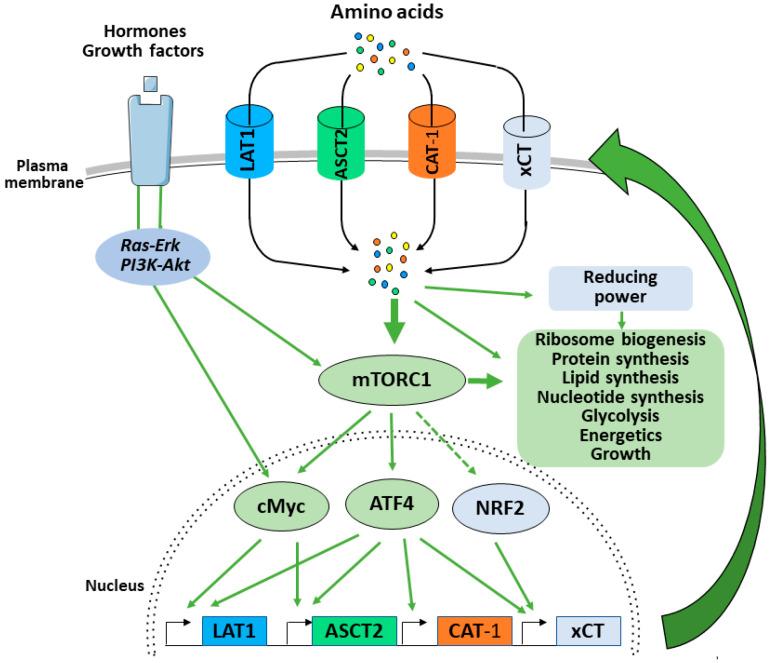
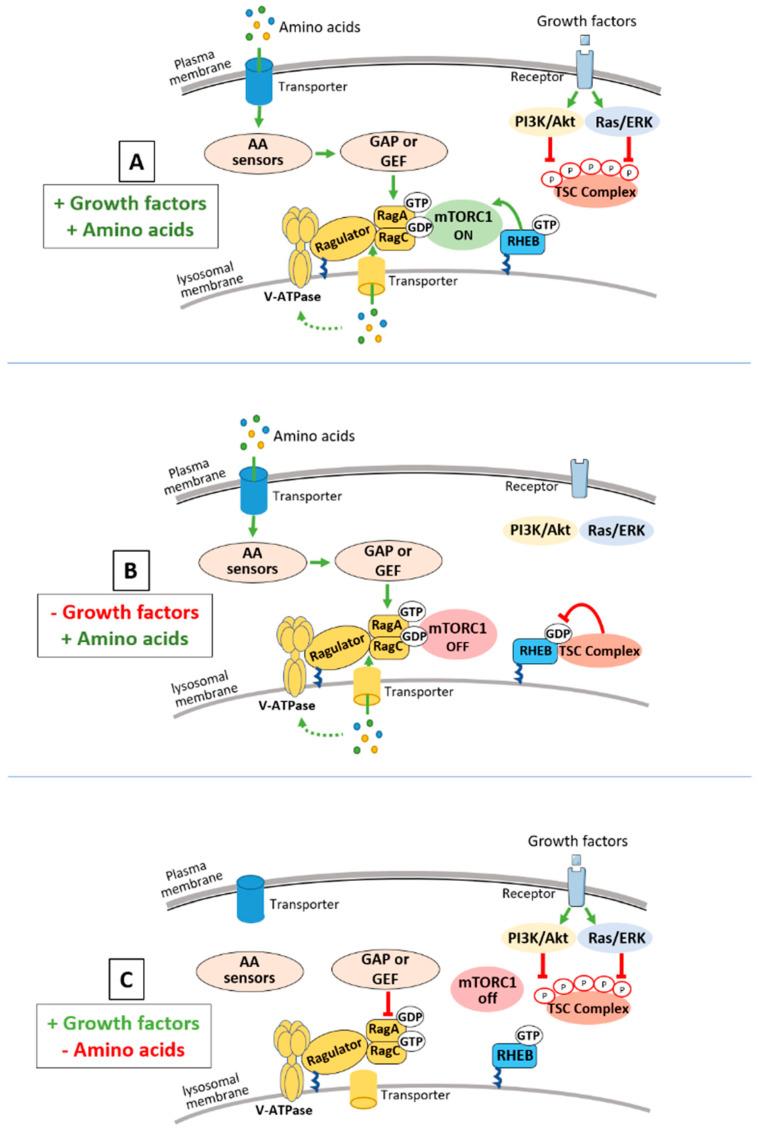
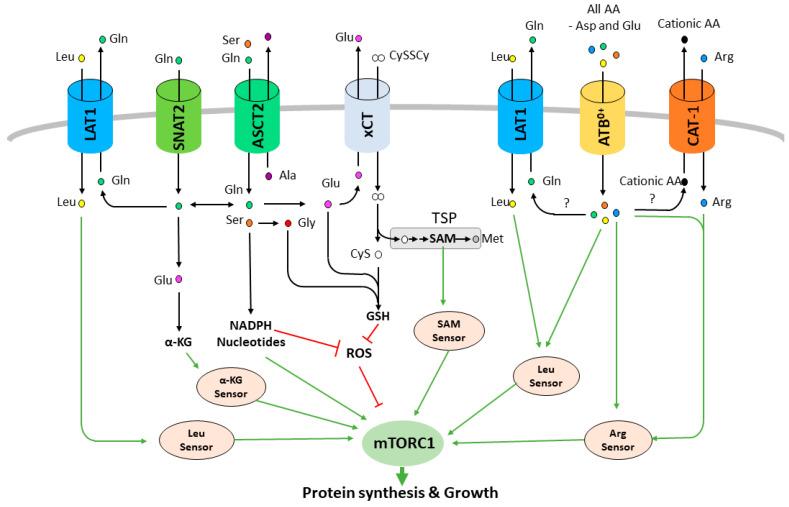
The mechanistic target of rapamycin complex 1 (mTORC1) integrates signals from growth factors and nutrients to control biosynthetic processes, including protein, lipid, and nucleic acid synthesis. Dysregulation in the mTORC1 network underlies a wide array of pathological states, including metabolic diseases, neurological disorders, and cancer. Tumor cells are characterized by uncontrolled growth and proliferation due to a reduced dependency on exogenous growth factors. The genetic events underlying this property, such as mutations in the PI3K-Akt and Ras-Erk signaling networks, lead to constitutive activation of mTORC1 in nearly all human cancer lineages. Aberrant activation of mTORC1 has been shown to play a key role for both anabolic tumor growth and resistance to targeted therapeutics. While displaying a growth factor-independent mTORC1 activity and proliferation, tumors cells remain dependent on exogenous nutrients such as amino acids (AAs). AAs are an essential class of nutrients that are obligatory for the survival of any cell. Known as the building blocks of proteins, AAs also act as essential metabolites for numerous biosynthetic processes such as fatty acids, membrane lipids and nucleotides synthesis, as well as for maintaining redox homeostasis. In most tumor types, mTORC1 activity is particularly sensitive to intracellular AA levels. This dependency, therefore, creates a targetable vulnerability point as cancer cells become dependent on AA transporters to sustain their homeostasis. The following review will discuss the role of AA transporters for mTORC1 signaling in cancer cells and their potential as therapeutic drug targets.
雷帕霉素靶蛋白复合物 1(mTORC1)整合了来自生长因子和营养物质的信号,以控制生物合成过程,包括蛋白质、脂质和核酸合成。mTORC1 网络的失调是多种病理状态的基础,包括代谢疾病、神经紊乱和癌症。肿瘤细胞的特征是由于对外源生长因子的依赖性降低而导致不受控制的生长和增殖。导致这种特性的遗传事件,如 PI3K-Akt 和 Ras-Erk 信号网络中的突变,导致几乎所有人类癌症谱系中 mTORC1 的组成性激活。异常激活 mTORC1 已被证明在肿瘤生长的合成代谢和对靶向治疗的耐药性方面都起着关键作用。虽然肿瘤细胞显示出生长因子独立的 mTORC1 活性和增殖,但仍依赖于外源性营养物质,如氨基酸(AAs)。AAs 是一类必需的营养物质,是任何细胞生存所必需的。作为蛋白质的构建块,AAs 还作为许多生物合成过程的必需代谢物发挥作用,如脂肪酸、膜脂质和核苷酸合成,以及维持氧化还原稳态。在大多数肿瘤类型中,mTORC1 活性对细胞内 AA 水平特别敏感。因此,这种依赖性为癌细胞对 AA 转运蛋白的依赖性创造了一个可靶向的脆弱点,以维持其体内平衡。以下综述将讨论 AA 转运蛋白在肿瘤细胞中对 mTORC1 信号的作用及其作为治疗药物靶点的潜力。

 Zotero 插件