
参与酒精诱导行为的神经递质。
The Neurotransmitters Involved in Alcohol-Induced Behaviors.
作者信息
Chvilicek Maggie M, Titos Iris, Rothenfluh Adrian
机构信息
Department of Psychiatry, University of Utah, Salt Lake City, UT, United States.
Molecular Medicine Program, University of Utah, Salt Lake City, UT, United States.
出版信息
Front Behav Neurosci. 2020 Dec 15;14:607700. doi: 10.3389/fnbeh.2020.607700. eCollection 2020.
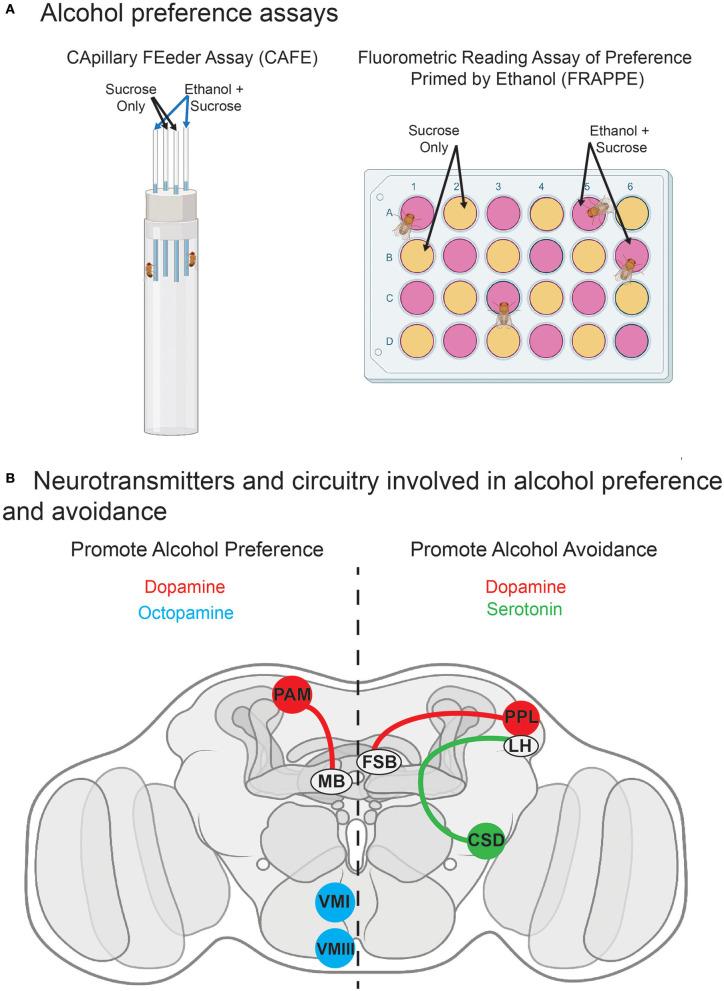
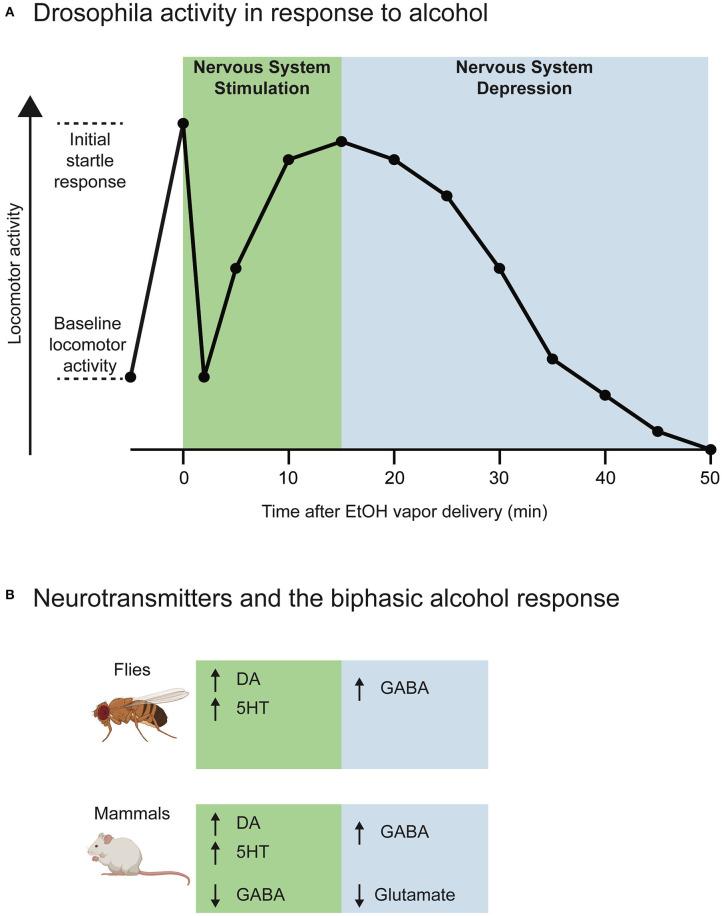
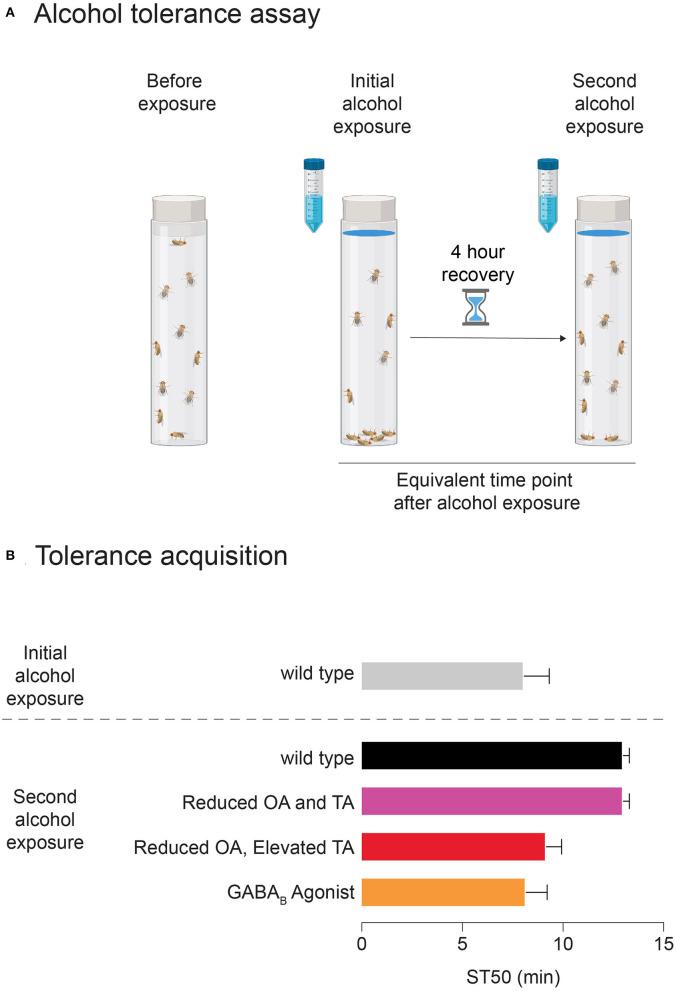
Alcohol is a widely used and abused substance with numerous negative consequences for human health and safety. Historically, alcohol's widespread, non-specific neurobiological effects have made it a challenge to study in humans. Therefore, model organisms are a critical tool for unraveling the mechanisms of alcohol action and subsequent effects on behavior. is genetically tractable and displays a vast behavioral repertoire, making it a particularly good candidate for examining the neurobiology of alcohol responses. In addition to being experimentally amenable, have high face and mechanistic validity: their alcohol-related behaviors are remarkably consistent with humans and other mammalian species, and they share numerous conserved neurotransmitters and signaling pathways. Flies have a long history in alcohol research, which has been enhanced in recent years by the development of tools that allow for manipulating individual neurotransmitters. Through advancements such as the GAL4/UAS system and CRISPR/Cas9 mutagenesis, investigation of specific neurotransmitters in small subsets of neurons has become ever more achievable. In this review, we describe recent progress in understanding the contribution of seven neurotransmitters to fly behavior, focusing on their roles in alcohol response: dopamine, octopamine, tyramine, serotonin, glutamate, GABA, and acetylcholine. We chose these small-molecule neurotransmitters due to their conservation in mammals and their importance for behavior. While neurotransmitters like dopamine and octopamine have received significant research emphasis regarding their contributions to behavior, others, like glutamate, GABA, and acetylcholine, remain relatively unexplored. Here, we summarize recent genetic and behavioral findings concerning these seven neurotransmitters and their roles in the behavioral response to alcohol, highlighting the fitness of the fly as a model for human alcohol use.
酒精是一种广泛使用且滥用的物质,对人类健康和安全有诸多负面影响。从历史上看,酒精广泛的、非特异性的神经生物学效应使其在人体研究中具有挑战性。因此,模式生物是揭示酒精作用机制及其对行为后续影响的关键工具。[模式生物名称]具有遗传易处理性,并展现出丰富的行为表现,使其成为研究酒精反应神经生物学的特别合适的候选对象。除了易于实验操作外,[模式生物名称]还具有高度的表面效度和机制效度:它们与酒精相关的行为与人类和其他哺乳动物物种非常一致,并且它们共享许多保守的神经递质和信号通路。果蝇在酒精研究方面有着悠久的历史,近年来,随着允许操纵单个[神经递质名称]的工具的开发,这一研究得到了加强。通过诸如GAL4/UAS系统和CRISPR/Cas9诱变等技术进步,对小部分神经元中特定神经递质的研究变得越来越可行。在这篇综述中,我们描述了在理解七种神经递质对果蝇行为的贡献方面的最新进展,重点关注它们在酒精反应中的作用:多巴胺、章鱼胺、酪胺、5-羟色胺、谷氨酸、γ-氨基丁酸和乙酰胆碱。我们选择这些小分子神经递质是因为它们在哺乳动物中的保守性以及它们对行为的重要性。虽然多巴胺和章鱼胺等神经递质对行为的贡献已经得到了大量的研究关注,但其他神经递质,如谷氨酸、γ-氨基丁酸和乙酰胆碱,仍相对未被充分探索。在这里,我们总结了关于这七种神经递质及其在对酒精行为反应中的作用的最新遗传和行为学发现,突出了果蝇作为人类酒精使用模型的适用性。
 Zotero 插件