
地理变异是否混淆了宿主因素与人类肠道微生物群之间的关系:基于人群的中国研究。
Does geographical variation confound the relationship between host factors and the human gut microbiota: a population-based study in China.
机构信息
Department of Bioinformatics and Genomics, University of North Carolina at Charlotte, Charlotte, North Carolina, USA.
National Institute for Nutrition and Health, Chinese Center for Disease Control and Prevention, Beijing, Beijing, China.
出版信息
BMJ Open. 2020 Nov 19;10(11):e038163. doi: 10.1136/bmjopen-2020-038163.
OBJECTIVE
The human gut microbiota plays important roles in human health but is also known to be highly diverse between populations from different regions. Yet most studies inadequately account for this regional diversity in their analyses. This study examines the extent to which geographical variation can act as a confounding variable for studies that associate the microbiota with human phenotypic variation.
DESIGN
Population-based study.
SETTING
China.
PARTICIPANTS
2164 participants from 15 province-level divisions in China.
PRIMARY AND SECONDARY OUTCOME MEASURES
We analysed the impact of geographic location on associations between the human gut microbiota and 72 host factors representing a wide variety of environmental-level, household-level and individual-level factors.
RESULTS
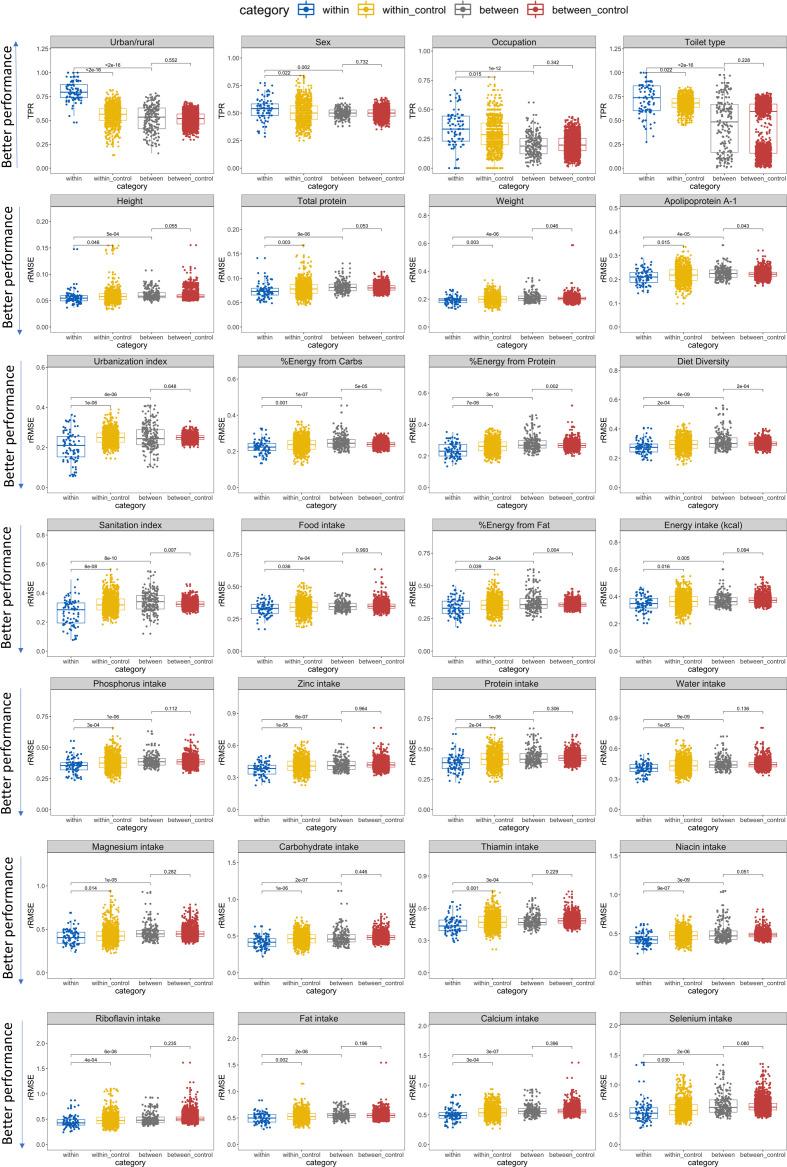
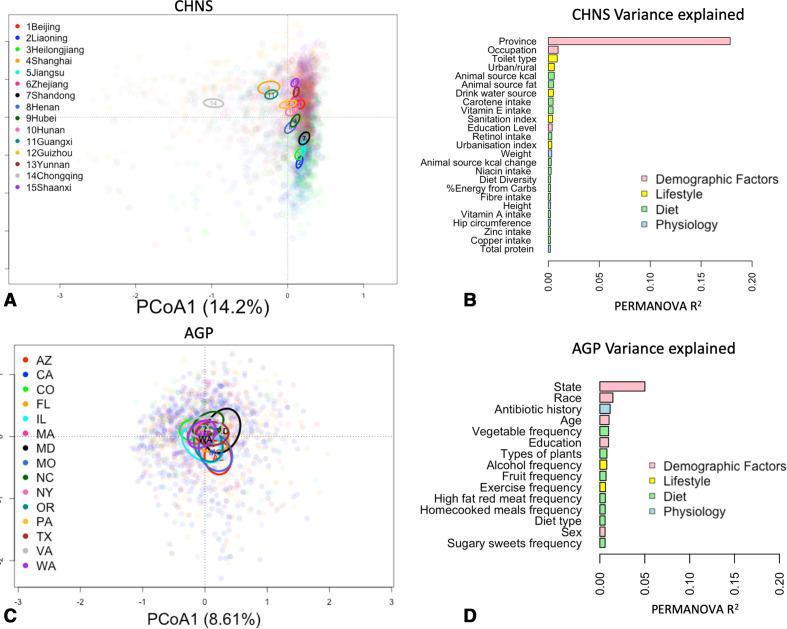
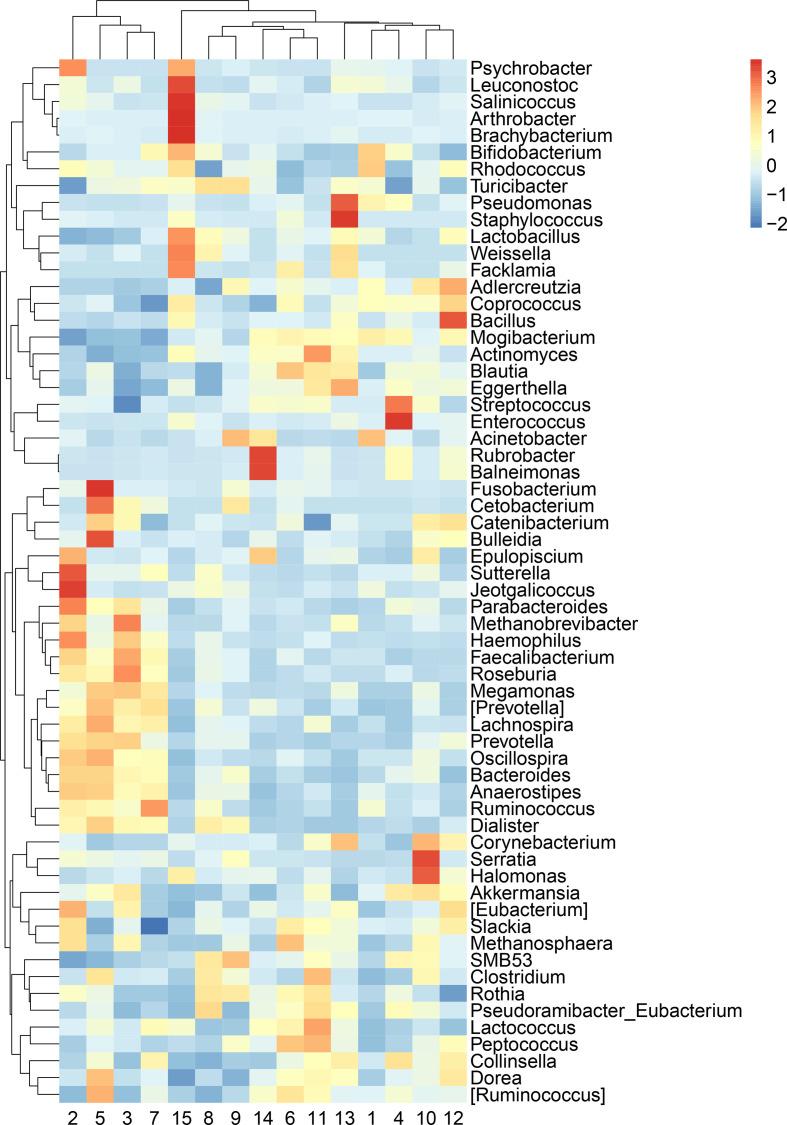
While the gut microbiota varied across a wide range of host factors including urbanisation, occupation and dietary variables, the geographic region (province/megacity) of the participants explained the largest proportion of the variance (17.9%). The estimated effect sizes for other host factors varied substantially by region with little evidence of a reproducible signal across different areas as measured by permutational multivariate analysis of variance and random forest models.
CONCLUSIONS
Our results suggest that geographic variation is an essential factor that should be explicitly considered when generalising microbiota-based models to host phenotype across different populations.
目的
人类肠道微生物群在人类健康中发挥着重要作用,但已知其在不同地区的人群之间存在高度多样性。然而,大多数研究在分析中都没有充分考虑到这种区域多样性。本研究考察了地理变异在将微生物组与人类表型变异相关联的研究中作为混杂变量的程度。
设计
基于人群的研究。
地点
中国。
参与者
来自中国 15 个省级行政区的 2164 名参与者。
主要和次要结果
我们分析了地理位置对人类肠道微生物群与代表广泛环境水平、家庭水平和个体水平因素的 72 个宿主因素之间关联的影响。
结果
虽然肠道微生物群在包括城市化、职业和饮食变量在内的广泛宿主因素中存在差异,但参与者的地理区域(省/特大城市)解释了最大比例的方差(17.9%)。其他宿主因素的估计效应大小因地区而异,在不同地区几乎没有证据表明通过置换多元方差分析和随机森林模型可重复性信号。
结论
我们的研究结果表明,地理变异是一个重要因素,在将基于微生物组的模型推广到不同人群的宿主表型时,应该明确考虑这一因素。

 Zotero 插件