
利用非致病性流感嗜血杆菌的摄取和表面展示研究酮去氧壬酮酸在宿主-病原体相互作用中的影响。
Exploring the Impact of Ketodeoxynonulosonic Acid in Host-Pathogen Interactions Using Uptake and Surface Display by Nontypeable Haemophilus influenzae.
机构信息
Glycobiology Research and Training Center, University of California, San Diego, La Jolla, California, USA.
Center for Academic Research and Training in Anthropogeny, University of California, San Diego, La Jolla, California, USA.
出版信息
mBio. 2021 Jan 19;12(1):e03226-20. doi: 10.1128/mBio.03226-20.
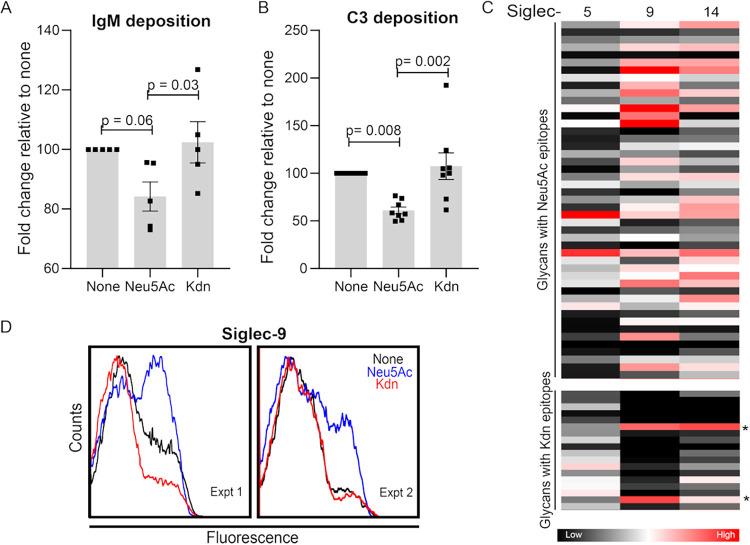
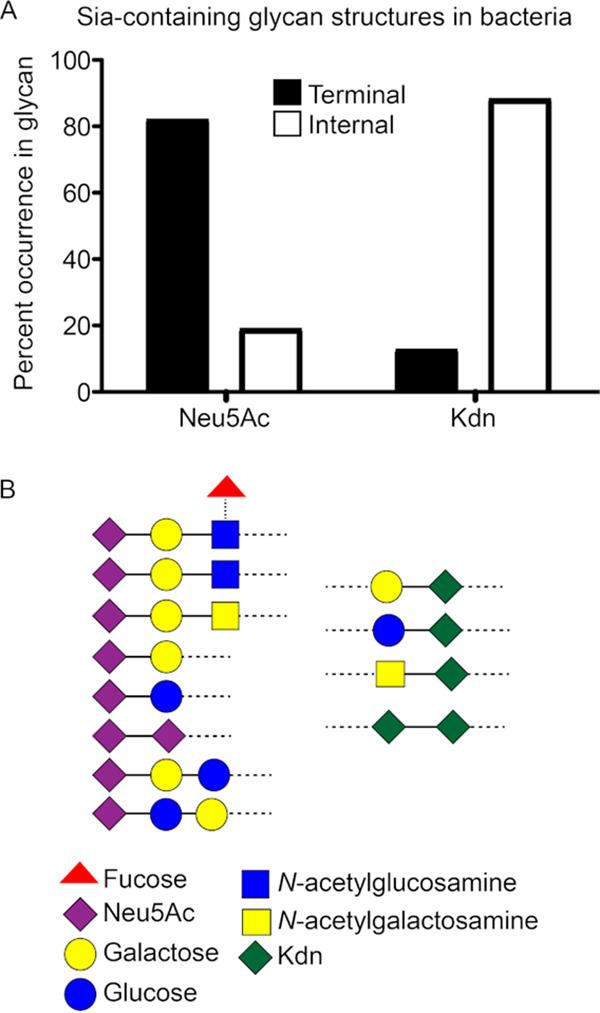
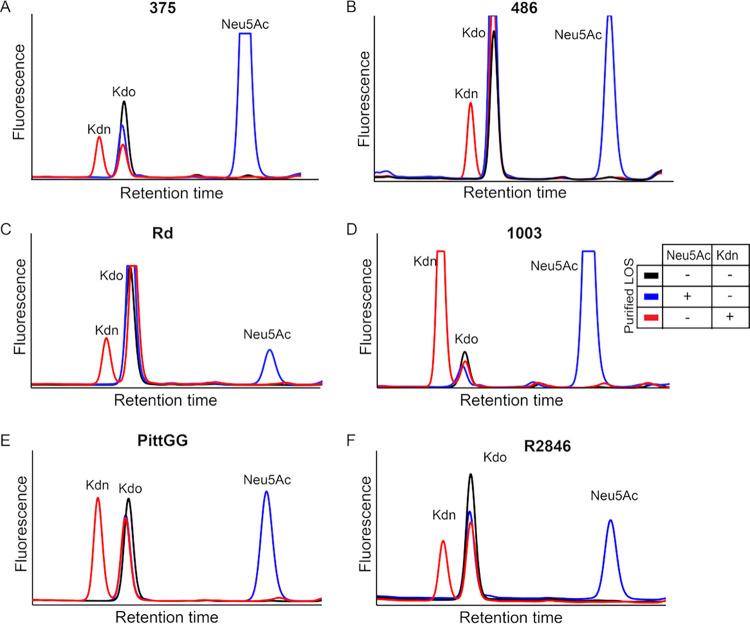
Surface expression of the common vertebrate sialic acid (Sia) -acetylneuraminic acid (Neu5Ac) by commensal and pathogenic microbes appears structurally to represent "molecular mimicry" of host sialoglycans, facilitating multiple mechanisms of host immune evasion. In contrast, ketodeoxynonulosonic acid (Kdn) is a more ancestral Sia also present in prokaryotic glycoconjugates that are structurally quite distinct from vertebrate sialoglycans. We detected human antibodies against Kdn-terminated glycans, and sialoglycan microarray studies found these anti-Kdn antibodies to be directed against Kdn-sialoglycans structurally similar to those on human cell surface Neu5Ac-sialoglycans. Anti-Kdn-glycan antibodies appear during infancy in a pattern similar to those generated following incorporation of the nonhuman Sia -glycolylneuraminic acid (Neu5Gc) onto the surface of nontypeable (NTHi), a human commensal and opportunistic pathogen. NTHi grown in the presence of free Kdn took up and incorporated the Sia into its lipooligosaccharide (LOS). Surface display of the Kdn within NTHi LOS blunted several virulence attributes of the pathogen, including Neu5Ac-mediated resistance to complement and whole blood killing, complement C3 deposition, IgM binding, and engagement of Siglec-9. Upper airway administration of Kdn reduced NTHi infection in human-like null (Neu5Gc-deficient) mice that express a Neu5Ac-rich sialome. We propose a mechanism for the induction of anti-Kdn antibodies in humans, suggesting that Kdn could be a natural and/or therapeutic "Trojan horse" that impairs colonization and virulence phenotypes of free Neu5Ac-assimilating human pathogens. All cells in vertebrates are coated with a dense array of glycans often capped with sugars called sialic acids. Sialic acids have many functions, including serving as a signal for recognition of "self" cells by the immune system, thereby guiding an appropriate immune response against foreign "nonself" and/or damaged cells. Several pathogenic bacteria have evolved mechanisms to cloak themselves with sialic acids and evade immune responses. Here we explore a type of sialic acid called "Kdn" (ketodeoxynonulosonic acid) that has not received much attention in the past and compare and contrast how it interacts with the immune system. Our results show potential for the use of Kdn as a natural intervention against pathogenic bacteria that take up and coat themselves with external sialic acid from the environment.
共生和致病微生物表面表达常见脊椎动物唾液酸 (Sia)-乙酰神经氨酸 (Neu5Ac),在结构上代表宿主唾液糖蛋白的“分子模拟”,从而促进宿主免疫逃避的多种机制。相比之下,酮基脱氧壬酮糖酸 (Kdn) 是一种更古老的 Sia,也存在于结构上与脊椎动物唾液糖蛋白截然不同的原核糖缀合物中。我们检测到针对 Kdn 末端聚糖的人抗体,并且唾液糖蛋白微阵列研究发现这些抗 Kdn 抗体针对的是结构上与人类细胞表面 Neu5Ac-唾液糖蛋白相似的 Kdn-唾液糖蛋白。抗 Kdn-聚糖抗体在婴儿期出现,其出现模式类似于将非人类 Sia-甘油神经氨酸酸 (Neu5Gc) 掺入非分型 (NTHi) 表面后产生的模式,NTHi 是一种人类共生和机会性病原体。在存在游离 Kdn 的情况下生长的 NTHi 摄取并将 Sia 掺入其脂寡糖 (LOS) 中。NTHi LOS 中 Kdn 的表面显示削弱了病原体的几种毒力特性,包括 Neu5Ac 介导的对补体和全血杀伤、补体 C3 沉积、IgM 结合和 Siglec-9 结合的抗性。上呼吸道给予 Kdn 可减少在表达富含 Neu5Ac 的唾液蛋白的人类样 NeulGc 缺陷型 (Neu5Gc 缺乏型) 小鼠中的 NTHi 感染。我们提出了一种在人类中诱导抗 Kdn 抗体的机制,表明 Kdn 可能是一种天然的和/或治疗性的“特洛伊木马”,可损害自由摄取 Neu5Ac 的人类病原体的定植和毒力表型。脊椎动物中的所有细胞都被一层密集的聚糖覆盖,这些聚糖通常被称为唾液酸的糖所覆盖。唾液酸具有许多功能,包括作为免疫系统识别“自身”细胞的信号,从而指导针对外来“非自身”和/或受损细胞的适当免疫反应。几种致病性细菌已经进化出用唾液酸伪装自己并逃避免疫反应的机制。在这里,我们研究了一种称为“Kdn”(酮基脱氧壬酮糖酸)的唾液酸类型,过去它并没有受到太多关注,并比较和对比了它与免疫系统的相互作用。我们的结果表明,Kdn 有潜力作为一种天然干预措施,用于对抗从环境中摄取并覆盖自身外部唾液酸的致病性细菌。



 Zotero 插件