
免疫检查点抑制剂和嵌合抗原受体 T 细胞治疗相关的免疫治疗相关性心脏毒性:诊断和管理挑战及策略。
Immunotherapy-Associated Cardiotoxicity of Immune Checkpoint Inhibitors and Chimeric Antigen Receptor T Cell Therapy: Diagnostic and Management Challenges and Strategies.
机构信息
Division of Cardiology, Department of Medicine, University of California, Los Angeles, Los Angeles, CA, USA.
David Geffen School of Medicine, University of California, Los Angeles, Los Angeles, CA, USA.
出版信息
Curr Cardiol Rep. 2021 Jan 22;23(3):11. doi: 10.1007/s11886-021-01440-3.
PURPOSE OF REVIEW
Immunotherapies have demonstrated robust clinical efficacy in treating malignancies with increasing use and FDA approvals. We review the epidemiology, risk factors, diagnosis, and treatment of immunotherapy-associated cardiovascular toxicities.
RECENT FINDINGS
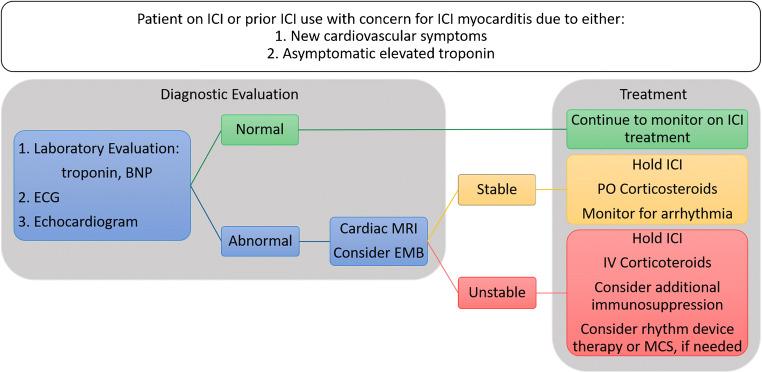
Cardiotoxicity is reported in patients receiving immune checkpoint inhibitors (ICI) and chimeric antigen receptor (CAR) T cell therapies. The incidence of ICI-related cardiotoxicity is above 1% and includes myocarditis, pericardial disease, arrhythmia, acute coronary syndrome, and vasculitis. The incidence of CAR T cell-associated cardiotoxicities was shown to be as high as 26% and thought to be primarily mediated by cytokine release syndrome. The presentations of cardiotoxicities are variable but are associated with significant morbidity and mortality and benefit from prompt initiation of immunosuppressive therapy. There is increasing evidence for cardiotoxicities following cancer immunotherapy. Available evidence suggests that pretreatment evaluation, close monitoring, and early intervention may reduce cardiovascular morbidity and improve outcomes in the cancer immunotherapy population.
目的综述
免疫疗法在治疗恶性肿瘤方面具有显著的临床疗效,其应用越来越广泛,也得到了 FDA 的批准。我们综述了免疫治疗相关心血管毒性的流行病学、危险因素、诊断和治疗。
最近的发现
接受免疫检查点抑制剂(ICI)和嵌合抗原受体(CAR)T 细胞治疗的患者会发生心脏毒性。ICI 相关心脏毒性的发生率超过 1%,包括心肌炎、心包疾病、心律失常、急性冠状动脉综合征和血管炎。CAR T 细胞相关心脏毒性的发生率高达 26%,被认为主要是由细胞因子释放综合征介导的。心脏毒性的表现多种多样,但与显著的发病率和死亡率相关,并受益于及早开始免疫抑制治疗。癌症免疫治疗后也会出现心脏毒性。现有证据表明,在癌症免疫治疗人群中,进行预处理评估、密切监测和早期干预可能会降低心血管发病率并改善结局。
 Zotero 插件