
中国在 COVID-19 大流行期间的环境困境:一次性塑料废物的激增。
An Environmental Dilemma for China During the COVID-19 Pandemic: The Explosion of Disposable Plastic Wastes.
机构信息
School of Textile Science and Engineering, Jiangnan University, Wuxi, 214021, China.
Deltares, Marine and Coastal Systems, Boussinesqweg 1, Delft, 2629 HV, the Netherlands.
出版信息
Bull Environ Contam Toxicol. 2021 Feb;106(2):237-240. doi: 10.1007/s00128-021-03121-x. Epub 2021 Jan 29.
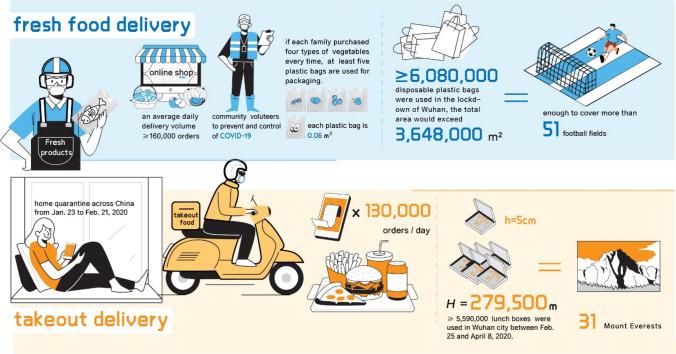
Plastic pollution control has been on top of the political agenda in China. In January 2020, China announced a phased ban on the production and usage of various types of single-use plastics as a solution to environmental pollution problems. However, the outbreak of COVID-19 seems to be a new obstacle to the ban on single-use plastic products. To basically satisfied the daily necessities and contain the spread of SARS-CoV-2 under the background of the regular epidemic prevention and control in China, online ordering, contactless delivery and wearing mask have become an important and feasible way of daily life. However, the unrestrained use of disposable plastic bags, lunch boxes and masks within the nationwide quarantine leads to hundreds of millions of plastics wastes every day. The potential environmental pollution caused by the use of disposable plastic products during the pandemic should arouse social concern. The Chinese government should manage environmental protection in parallel with anti-pandemic endeavors as the situation of the pandemic evolves.
塑料污染治理已经成为中国的政治议题之首。2020 年 1 月,中国宣布分阶段禁止生产和使用各种类型的一次性塑料用品,以解决环境污染问题。然而,新冠疫情的爆发似乎成为了一次性塑料产品禁令的新障碍。为了在疫情常态化防控背景下基本满足人民群众的日常生活需要并遏制 SARS-CoV-2 的传播,线上订购、无接触配送和佩戴口罩已经成为日常生活的重要且可行的方式。然而,全国性隔离期间一次性塑料袋、餐盒和口罩的无节制使用,导致每天产生数亿塑料制品垃圾。疫情期间一次性塑料产品的使用所造成的潜在环境污染应该引起社会关注。中国政府应该在疫情形势变化的同时,并行开展环境保护工作。
 Zotero 插件