
在 COVID-19 大流行期间印度的生物医学废物产生和管理:挑战和可能的管理策略。
Biomedical waste generation and management during COVID-19 pandemic in India: challenges and possible management strategies.
机构信息
Chemical and Hazardous Waste Management Division, CSIR-National Environmental Engineering Research Institute, Nagpur, 440020, India.
Academy of Scientific and Innovative Research (AcSIR), Ghaziabad, 201002, India.
出版信息
Environ Sci Pollut Res Int. 2022 Feb;29(10):14830-14845. doi: 10.1007/s11356-021-16736-8. Epub 2021 Oct 7.
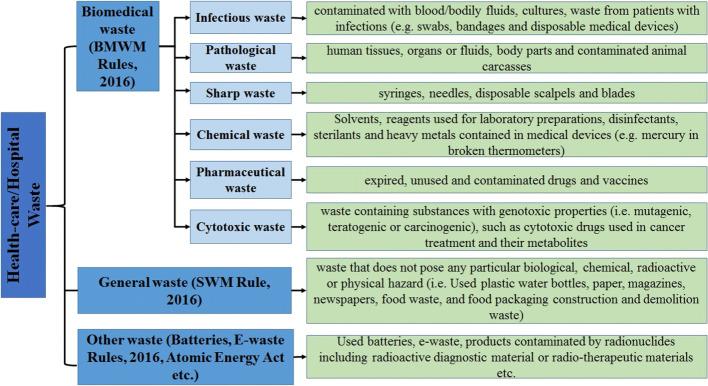
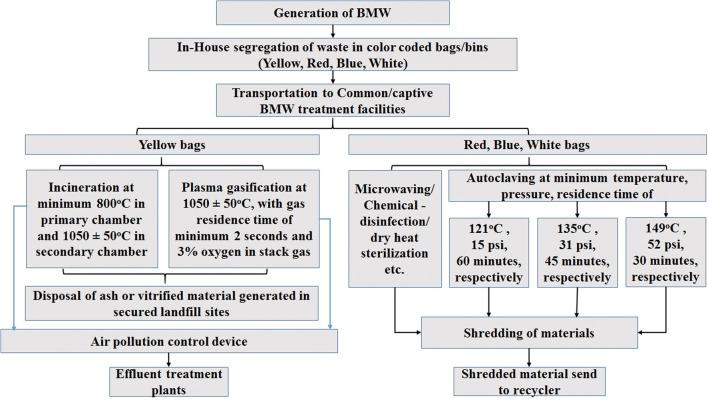
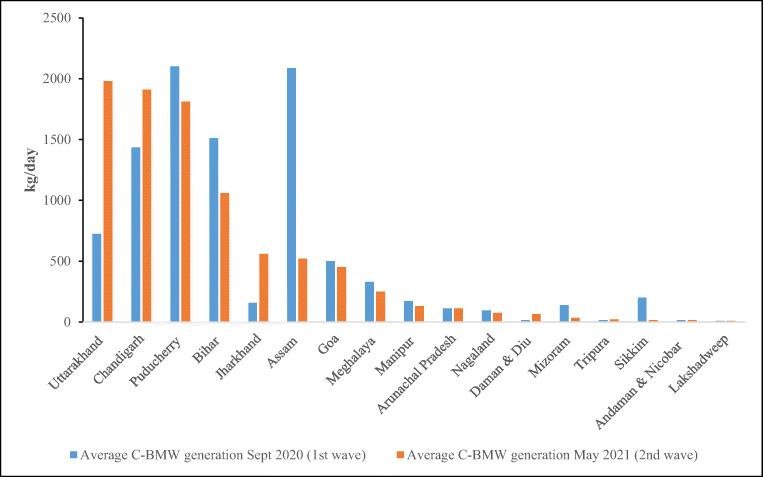
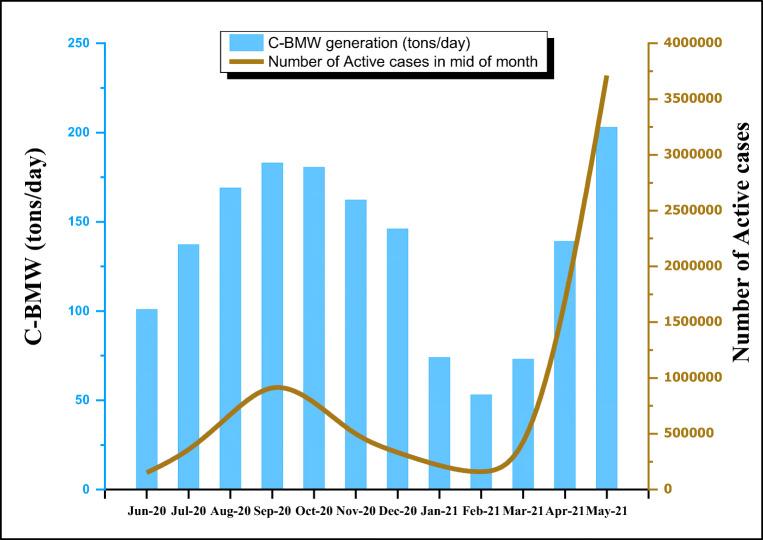
The COVID-19 pandemic has resulted in the massive generation of biomedical waste (BMW) and plastic waste (PW). This sudden spike in BMW and PW has created challenges to the existing waste management infrastructure, especially in developing countries. Safe disposal of PW and BMW is essential; otherwise, this virus will lead to a waste pandemic. This paper reviews the generation of BMW and PW before and during the COVID-19 pandemic, the regulatory framework for BMW management, policy interventions for COVID-19-based BMW (C-BMW), the capacity of BMW treatment and disposal facilities to cope with the challenges, possible management strategies, and perspectives in the Indian context. This study indicated that policy intervention helped minimize the general waste treated as C-BMW, especially during the second pandemic. Inadequacy of common BMW treatment facilities' (CBMWTFs) capacity to cope with the BMW daily generation was observed in some states resulting in compromised treatment conditions. Suggestions for better management of BMW and PW include decontamination of used personal protective equipment (PPEs) and recycling, alternate materials for PPEs, segregation strategies, and use of BMW for co-processing in cement kilns. All upcoming CBMWTFs should be equipped with higher capacity and efficient incinerators for the sound management of BMW. Post-pandemic monitoring of environmental compartments is imperative to assess the possible impacts of pandemic waste.
COVID-19 大流行导致了大量生物医学废物(BMW)和塑料废物(PW)的产生。这种 BMW 和 PW 的突然激增对现有的废物管理基础设施造成了挑战,尤其是在发展中国家。安全处理 PW 和 BMW 至关重要;否则,这种病毒将引发废物大流行。本文回顾了 COVID-19 大流行前后 BMW 和 PW 的产生情况、BMW 管理的监管框架、基于 COVID-19 的 BMW(C-BMW)的政策干预措施、BMW 处理和处置设施应对挑战的能力、可能的管理策略以及印度的情况。本研究表明,政策干预有助于最大限度地减少作为 C-BMW 处理的一般废物,尤其是在第二次大流行期间。在某些州,常见的 BMW 处理设施(CBMWTF)的容量不足以应对 BMW 的日常产生,导致处理条件受损。更好地管理 BMW 和 PW 的建议包括对使用过的个人防护设备(PPEs)进行去污和回收、PPEs 的替代材料、隔离策略以及将 BMW 用于水泥窑的协同处理。所有即将建成的 CBMWTF 都应配备更高容量和高效的焚烧炉,以妥善管理 BMW。大流行后对环境的监测至关重要,以评估大流行废物的可能影响。






 Zotero 插件