
治疗慢性粒细胞白血病的未来方法:CRISPR疗法。
Future Approaches for Treating Chronic Myeloid Leukemia: CRISPR Therapy.
作者信息
Vuelta Elena, García-Tuñón Ignacio, Hernández-Carabias Patricia, Méndez Lucía, Sánchez-Martín Manuel
机构信息
Departamento de Medicina, Universidad de Salamanca, 37007 Salamanca, Spain.
Institute de Investigación Biomédica de Salamanca (IBSAL), 37007 Salamanca, Spain.
出版信息
Biology (Basel). 2021 Feb 4;10(2):118. doi: 10.3390/biology10020118.
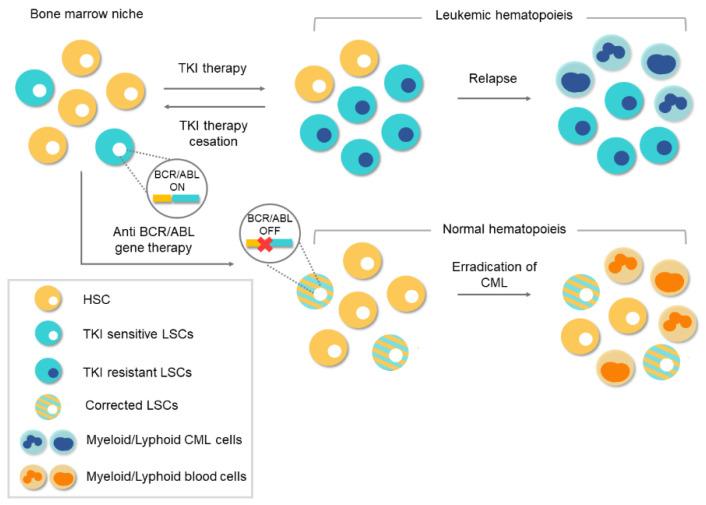
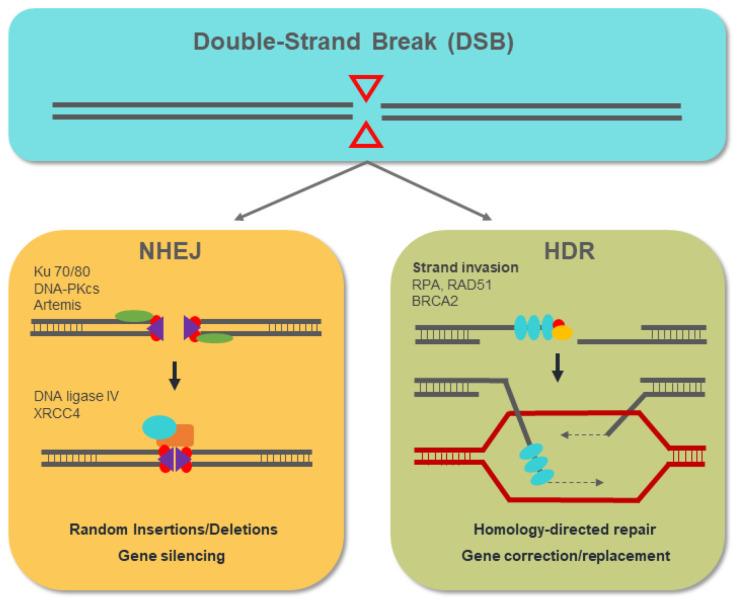
The constitutively active tyrosine-kinase oncogene plays a key role in human chronic myeloid leukemia development and disease maintenance, and determines most of the features of this leukemia. For this reason, tyrosine-kinase inhibitors are the first-line treatment, offering most patients a life expectancy like that of an equivalent healthy person. However, since the oncogene stays intact, lifelong oral medication is essential, even though this triggers adverse effects in many patients. Furthermore, leukemic stem cells remain quiescent and resistance is observed in approximately 25% of patients. Thus, new therapeutic alternatives are still needed. In this scenario, the interruption/deletion of the oncogenic sequence might be an effective therapeutic option. The emergence of CRISPR (clustered regularly interspaced short palindromic repeats) technology can offer a definitive treatment based on its capacity to induce a specific DNA double strand break. Besides, it has the advantage of providing complete and permanent oncogene knockout, while tyrosine kinase inhibitors (TKIs) only ensure that oncoprotein is inactivated during treatment. CRISPR/Cas9 cuts DNA in a sequence-specific manner making it possible to turn oncogenes off in a way that was not previously feasible in humans. This review describes chronic myeloid leukemia (CML) disease and the main advances in the genome-editing field by which it may be treated in the future.
组成型激活的酪氨酸激酶癌基因在人类慢性髓性白血病的发展和疾病维持中起关键作用,并决定了这种白血病的大多数特征。因此,酪氨酸激酶抑制剂是一线治疗药物,能让大多数患者拥有与健康人相当的预期寿命。然而,由于癌基因保持完整,终身口服药物必不可少,尽管这会在许多患者中引发不良反应。此外,白血病干细胞仍处于静止状态,约25%的患者会出现耐药性。因此,仍需要新的治疗选择。在这种情况下,致癌序列的中断/缺失可能是一种有效的治疗选择。CRISPR(成簇规律间隔短回文重复序列)技术的出现,基于其诱导特定DNA双链断裂的能力,可提供一种确定性治疗方法。此外,它具有完全和永久敲除癌基因的优势,而酪氨酸激酶抑制剂(TKIs)仅能确保在治疗期间癌蛋白失活。CRISPR/Cas9以序列特异性方式切割DNA,使得以一种以前在人类中不可行的方式关闭癌基因成为可能。本综述描述了慢性髓性白血病(CML)疾病以及基因组编辑领域的主要进展,未来可能通过这些进展来治疗该疾病。


 Zotero 插件