
人类肠道巨噬细胞参与溃疡性结肠炎和克罗恩病的病理学过程。
Human Intestinal Macrophages Are Involved in the Pathology of Both Ulcerative Colitis and Crohn Disease.
机构信息
Clinical and Experimental Sciences, Sir Henry Wellcome Laboratories, University of Southampton School of Medicine, Southampton, United Kingdom.
University Hospital Southampton NHS FT, Southampton, United Kingdom.
出版信息
Inflamm Bowel Dis. 2021 Oct 18;27(10):1641-1652. doi: 10.1093/ibd/izab029.
BACKGROUND
Intestinal macrophages are key immune cells in the maintenance of intestinal immune homeostasis and have a role in the pathogenesis of inflammatory bowel disease (IBD). However, the mechanisms by which macrophages exert a pathological influence in both ulcerative colitis (UC) and Crohn disease (CD) are not yet well understood.
METHODS
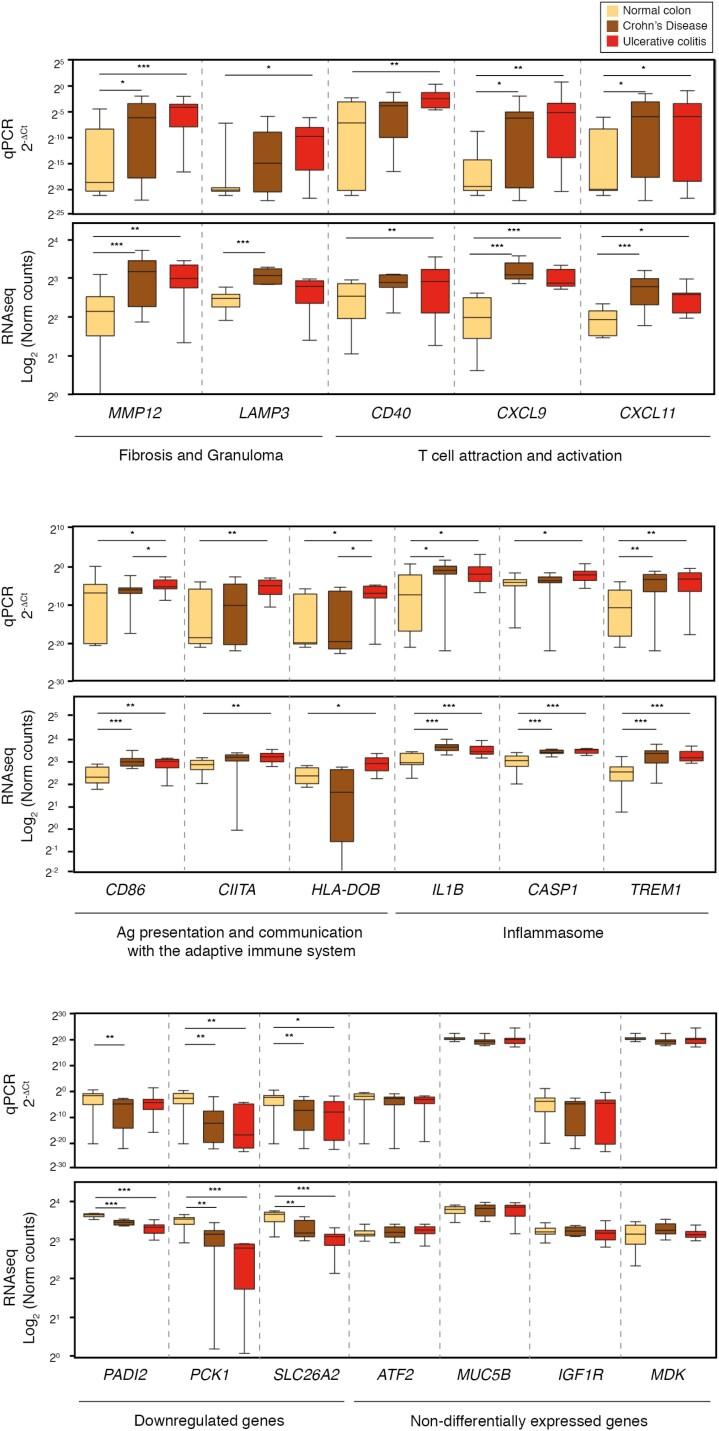
We purified intestinal macrophages from gastrointestinal mucosal biopsies (patients with UC, patients with CD, and healthy donors) and analyzed their transcriptome by RNA sequencing and bioinformatics, confirming results with quantitative polymerase chain reaction and immunohistochemistry.
RESULTS
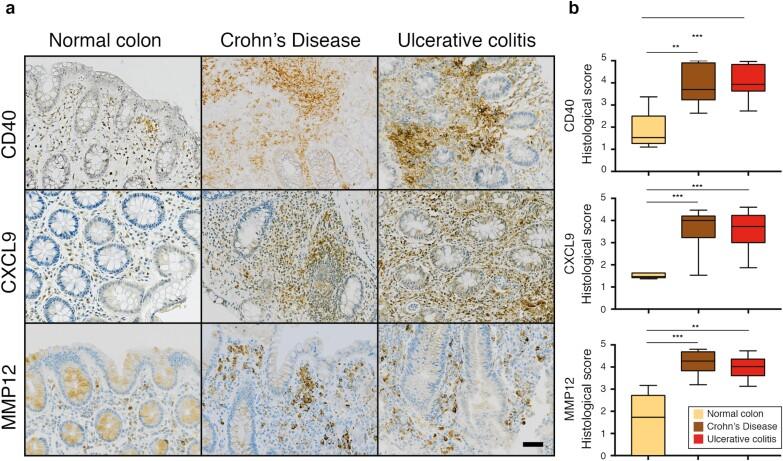
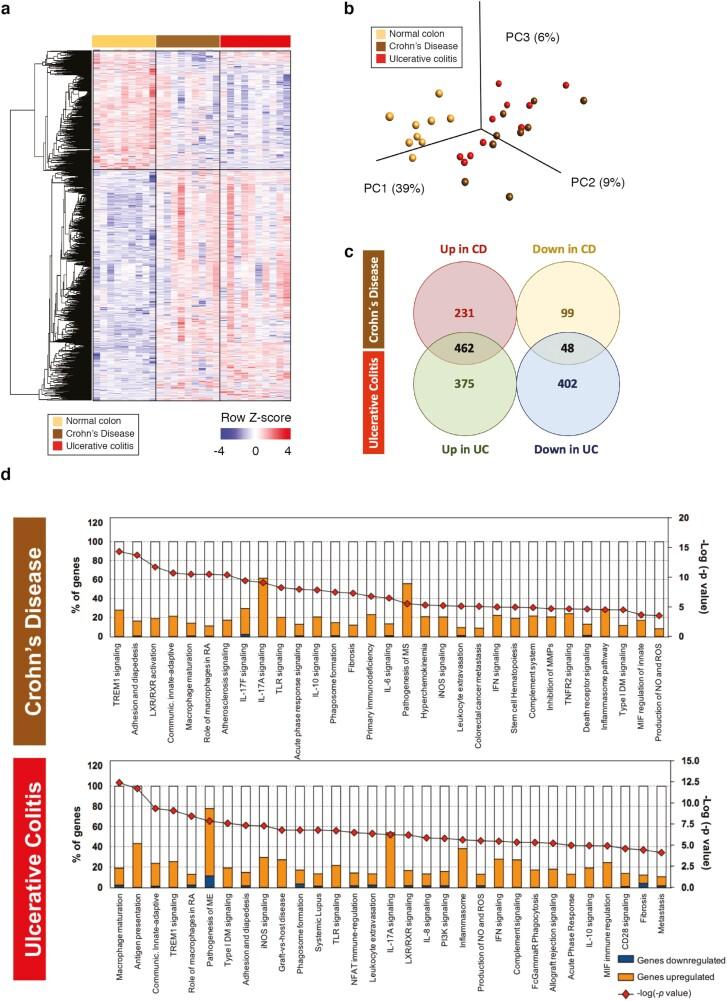
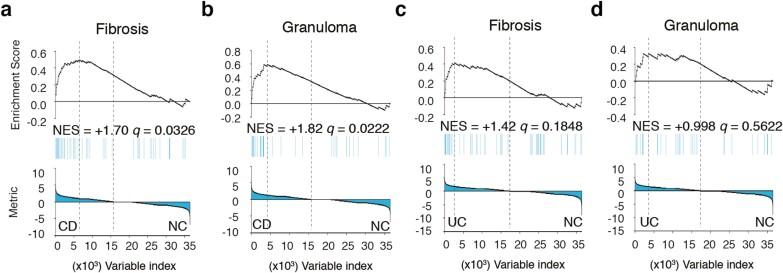
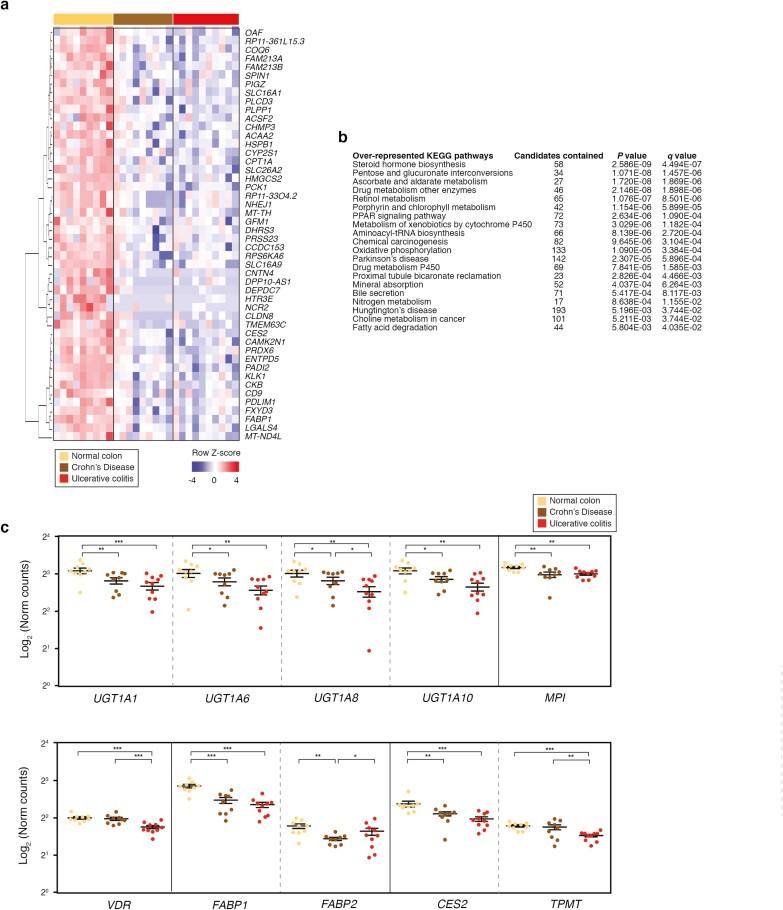
Compared with those of healthy donors, intestinal macrophages in patients with UC and with CD showed cellular reprograming of 1287 and 840 dysregulated genes, respectively (false discovery rate ≤ 0.1). The UC and CD intestinal macrophages showed an activated M1 inflammatory phenotype and the downregulation of genes engaged in drug/xenobiotic metabolism. Only macrophages from CD showed, concomitant to an M1 phenotype, a significant enrichment in the expression of M2 and fibrotic and granuloma-related genes. For the first time, we showed (and validated by quantitative polymerase chain reaction and immunohistochemistry) that intestinal macrophages in patients with IBD present both M1 and M2 features, as recently described for tumor-associated macrophages, that affect key pathways for IBD pathology, represented by key markers such as MMP12 (fibrosis), CXCL9 (T-cell attraction), and CD40 (T-cell activation).
CONCLUSIONS
Our data support the therapeutic targeting of macrophages to maintain remission in IBD but also indicate that a shift toward an M2 program-as proposed by some reports-may not limit the recruitment and activation of T cells because M2 features do not preclude M1 activation in patients with UC or CD and could exacerbate M2-related CD-specific features such as fibrosis and the formation of granulomas.
背景
肠道巨噬细胞是维持肠道免疫稳态的关键免疫细胞,在炎症性肠病(IBD)的发病机制中起作用。然而,巨噬细胞在溃疡性结肠炎(UC)和克罗恩病(CD)中发挥病理影响的机制尚不清楚。
方法
我们从胃肠道黏膜活检中纯化了肠道巨噬细胞(UC 患者、CD 患者和健康供体),并通过 RNA 测序和生物信息学分析其转录组,通过定量聚合酶链反应和免疫组织化学验证结果。
结果
与健康供体相比,UC 患者和 CD 患者的肠道巨噬细胞分别有 1287 和 840 个失调基因发生细胞重编程(错误发现率≤0.1)。UC 和 CD 肠道巨噬细胞表现出激活的 M1 炎症表型,参与药物/外源性代谢的基因下调。只有来自 CD 的巨噬细胞表现出与 M1 表型同时显著富集的 M2 以及纤维化和肉芽肿相关基因。我们首次显示(并通过定量聚合酶链反应和免疫组织化学验证),IBD 患者的肠道巨噬细胞具有 M1 和 M2 特征,这与最近报道的肿瘤相关巨噬细胞相似,影响 IBD 病理学的关键途径,以关键标志物如 MMP12(纤维化)、CXCL9(T 细胞吸引)和 CD40(T 细胞激活)为代表。
结论
我们的数据支持针对巨噬细胞的治疗靶向以维持 IBD 的缓解,但也表明向 M2 方案的转变——正如一些报道所提出的——可能不会限制 T 细胞的募集和激活,因为 M2 特征并不能排除 UC 或 CD 患者的 M1 激活,并且可能加剧与 M2 相关的 CD 特异性特征,如纤维化和肉芽肿的形成。

 Zotero 插件